

Spotlight
Featured Articles
Our most popular and trending reads
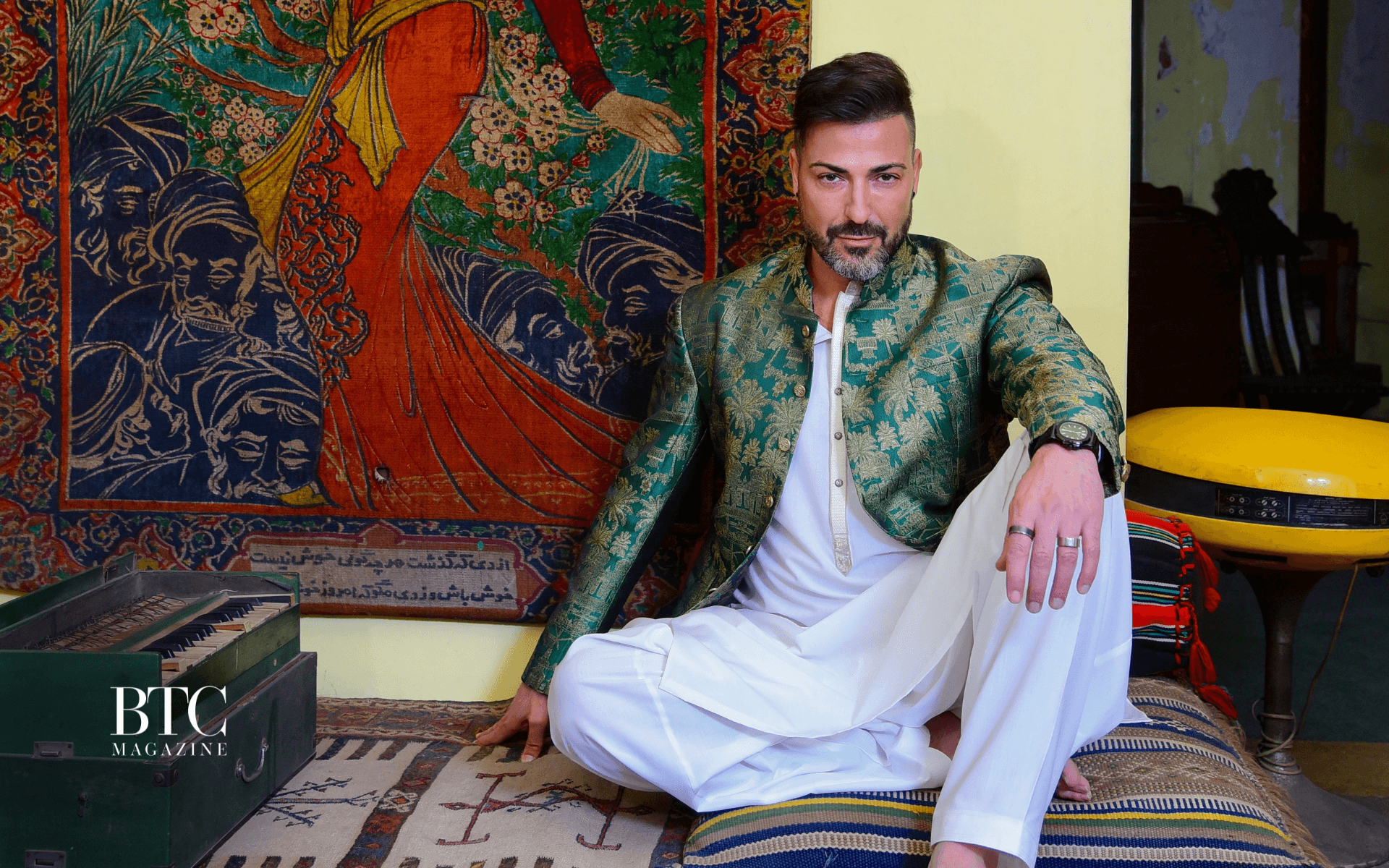
THE QUIET REBELLION
I built my media company in Pakistan when everyone told me not to. Pakistan’s youth proved them wrong.When I told people I was building my media company in Pakistan, the warnings came fast.Be careful.Why would you do that?Do you have security?My followers acted like I’d announced I was relocating to an active war zone. Some of them literally thought I was going to Afghanistan.One message said: “You’re a Gora. Be careful out there.”For those who don’t know: gora is a slang term some Pakistanis use for white foreigners. And yes, I’m very white. Italian-Canadian. Loud. Zero filter. I stand out. I don’t blend. I’m not mysterious. I’m not subtle. I’m a walking neon sign.But here’s what those warnings ignored: I’d been working with fourteen Pakistanis for a year and a half. Remotely. Building my company from Canada while they built it from Lahore and Islamabad. Day after day. Deadline after deadline. They showed up early, stayed late, pushed back when I was wrong, and delivered work that was better than anything I’d paid for in Toronto or New York.So I came to Pakistan to meet the people who were already building my company.What I found wasn’t what North America thinks Pakistan is.It was a country in the middle of a quiet revolution—economic, generational, personal—and the West is too busy clinging to its old story to notice.The Flight Everyone QuestionedThe warnings started the moment I booked the ticket.Friends: “Have you told your family?”My mother: “Why can’t you run it from here?”Random people online: “Do you have a security detail?”The subtext was always the same: Pakistan is dangerous. Pakistan is backwards. Pakistan is a place people like me don’t belong.I get why people think that. The narrative has been sold for decades: Pakistan equals instability. Terrorism. Poverty. Religious extremism. A place to fear, not a place to build.But fear based on what?None of the people messaging me had been there. None of them had worked with Pakistanis. They were reacting to a story they’d absorbed, not a reality they’d experienced.I’d spent eighteen months working with my team through Zoom calls and What’s App messages—watching them solve problems, build systems, ship product, and handle pressure with the kind of calm competence that makes you realize how much of North American “professionalism” is just performance. I knew what they could do.What I didn’t know was who they were beyond the screen.So I went.And the moment I landed, I realized how much of what we’re told about Pakistan is less about Pakistan—and more about the West needing somewhere to project its fear.I Didn’t Do Pakistan a FavorLet me be clear about something before we go any further: I didn’t build my company in Pakistan out of charity. I didn’t do it because I’m noble. I didn’t do it because I wanted to “help.”I built here because the talent is better—and North America is pricing itself out of relevance.Here’s the math that no one wants to discuss at dinner parties:In late 2025, the United States imposed a $100,000 fee tied to new H-1B visa petitions. One hundred thousand dollars to hire a single skilled foreign worker—on top of the existing filing costs.The stated goal was to force American companies to hire Americans instead of foreign workers.The real result is a brain drain with consequences no one wants to own.A huge share of H-1B holders are Indian and Pakistani professionals—software engineers, data scientists, doctors, researchers, the kind of people who built the modern economy. People with graduate degrees and specialized skills. People American companies depend on.And when you make it that expensive—or that humiliating—to hire them, you don’t suddenly create a domestic workforce overnight.You just push talent away.Canada tried to capitalize on that shift. But Canada is also becoming unlivable for many people. The cost of living is punishing. Housing is obscene. Winters are brutal. And immigrants get tired of being treated like they should be grateful for the privilege of enriching a country that still keeps them slightly outside the circle.So people go home.And here’s the part North America still isn’t saying out loud: Pakistan is ready for them.The Economy We Refuse to SeeThe numbers don’t lie, even when the narrative does.In October 2025, Pakistan’s IT exports hit a record $386 million in a single month.Pakistan’s broader targets are even more ambitious: multi-billion-dollar annual IT exports now, with a stated push toward $10 billion in the coming years.Pakistan has a deep pool of English-speaking IT and business-process professionals, and tens of thousands of new tech graduates each year trained in the same languages and frameworks Silicon Valley uses: Python, JavaScript, React, Node, backend systems, full-stack engineering. This isn’t “cheap labor.” It’s modern talent.And yes—Pakistan’s developers cost dramatically less than North American developers.Not because they’re less skilled.Because currency exchange rates make the same work cheaper in dollars. Because a massive, young workforce creates scale. Because Pakistan’s economic instability—devastating for everyday people—has created a brutal reality: their world-class skill is undervalued in Western currency.The work is the work. The quality is the quality. The only thing that changes is what the West pays for it.And while the West argues about immigration, Pakistan keeps building.Large multinational companies have long had operations in Pakistan—real engineering, consulting, and R&D work. Not the caricature of “call centers reading scripts.” Actual technical infrastructure.So when Western companies can’t bring talent in, they don’t stop needing the talent.They move the work out.Which means Pakistan gains economic power while North America pays them to do it.I didn’t do Pakistan a favor by building my company here.Pakistan made my business possible.My TeamI landed in Lahore on a Sunday Evening.The air was warm, even in January. The city hit me immediately: the hum of traffic, the honking, the street vendors, the call to prayer echoing in the distance. Lahore didn’t feel like a place people were “surviving.” It felt like a place that was alive—messy, loud, layered, and moving.My CTO and my assistant met me at the airport in Lahore. They’d hired a driver—steady, unbothered, navigating the city with the kind of calm that comes from knowing exactly where you are.I was only in Pakistan for three days. Lahore was my entire world during that time.We didn’t go straight to the hotel. We went to dinner.They took me to the Lahore Polo Club, and it immediately dismantled whatever expectations I’d arrived with. The grounds were immaculate. Green, expansive, elegant. It felt layered—historical without being stuck, refined without trying to impress.The food was exceptional. Deeply flavored, intentional, generous. The kind of meal that makes you question how often you’ve accepted “good enough” elsewhere without realizing it.But what stayed with me most wasn’t the food.It was the atmosphere.The service wasn’t performative. The staff weren’t rushing or resentful or going through motions. There was pride there. Ease. A sense that they belonged to something that worked.It was my first real moment of dissonance. Pakistan wasn’t matching the story I’d been told.Before we talked about work—before platforms, logistics, timelines—I gave them the floor.And that mattered.They were honest with me in a way that took courage.They told me they were scared.Not of the work. Not of the ambition. But of what Between the Covers represents.BTC is real. It speaks the truth. And in Canada, that truth includes conversations around LGBTQ identities, cannabis, bodily autonomy, and systems that don’t align neatly with Pakistani culture or religion.They worried about what it would mean to bring a magazine known for honesty into a context where honesty carries different risks. Different responsibilities. Different consequences.They weren’t asking me to dilute BTC. They weren’t asking me to censor it.They were asking whether BTC Pakistan would listen before it spoke.That conversation mattered more than any strategy meeting could have.We talked about Pakistan having one of the largest youth populations in the world. About how young people here are deeply aware of global conversations—but also deeply rooted in faith, family, and cultural responsibility. About how many Pakistanis leave to work in Dubai or abroad, and how many come back not because they failed—but because they want to build something at home.And that’s when the direction of BTC Pakistan became clear.Pakistan doesn’t need a magazine for women aged 35 to 65 modeled on Western exhaustion. That story doesn’t fit here.BTC Pakistan will be younger.It will speak to a generation navigating ambition, belief, identity, economics, and change—often all at once. A generation that is educated, globally fluent, politically aware, and deeply conscious of its cultural and religious frameworks.This isn’t about importing Canadian conversations and forcing them onto a different society.It’s about creating a platform that reflects the reality Pakistani youth are already living—their questions, their pressures, their hopes, their contradictions.I wasn’t there to tell them what BTC Pakistan would be.I was there to listen to what it needed to be.That conversation—open, careful, honest—was its own kind of rebellion. Not loud. Not performative. Just people choosing integrity over convenience.And it set the tone for everything that comes next.The Generation North America IgnoresPakistan has one of the largest youth populations in the world. Roughly two-thirds of the country is under 30.Think about that.A country the West writes off as “dangerous” is mostly young—ambitious, impatient, educated, connected, and done waiting for permission.And they’re not just building apps and startups. They’re pushing for accountability. For change. For a democracy that functions.In 2025, Pakistan’s youth showed up again and again despite arrests, internet shutdowns, suspended mobile service, and state pressure designed to exhaust them.They kept showing up.Imran Khan—former cricket star, former prime minister—has been in prison since 2023, serving multiple sentences on corruption charges he says are politically motivated. His supporters argue the same. And international scrutiny has intensified around reports of detention conditions.Whether you love him or hate him, his imprisonment has become a symbol: for political suppression, for institutional power, for the cost of dissent.And young Pakistanis understand that symbolism.My team is part of this generation.We don’t sit around debating politics in meetings. That’s not my lane and not my right to center. But I see something political in how they work: the conviction. The insistence that the future can be built, not begged for.In Toronto, young people are exhausted. Burned out. They’ve been sold hustle culture, then priced out of the life hustle promised. They’re working harder for less and being told to “practice gratitude” for the privilege.In Pakistan, young people are exhausted too—but in a different way.They’re tired of being underestimated.So they build anyway.What I Found in PakistanI met two Types Pakistans.The first is the one the West rarely acknowledges: old money and young millionaires. Families who built empires. Entrepreneurs who run logistics, textiles, tech, real estate. People living lives Canadians assume only exist in Dubai or London. Beautiful homes. Impeccable food. A level of luxury that makes Toronto look modest.I had dinner with a family connected to major industry. The house was marble and light. Art on walls that belonged in galleries. The meal served with a kind of ritual seriousness that made me want to straighten my posture.We talked about supply chains and global markets and the way Pakistan is positioned in a world that loves using Pakistan for labor but refuses to give Pakistan credit for competence.The patriarch, in his sixties and sharp as hell, said something I couldn’t stop thinking about:“The West thinks we need them. We don’t. They need us. They just haven’t realized it yet.”The second Pakistan is the one the West uses as its whole story: young people who want change, who want freedom, who want the right to speak without being punished for it. People who are brilliant and ambitious and working nonstop—and still struggling because systems are inconsistent, corruption is real, inflation is brutal, and opportunity doesn’t always match effort.Both Pakistans exist. Both are real. And that’s what the West refuses to do: hold complexity.We want simple narratives. Pakistan is either a dangerous hellscape or an undiscovered paradise.But Pakistan is complicated. Like every place that’s alive.The Hospitality North America MisunderstandsI stayed at Lahore Grande, a boutique hotel in Lahore. The owner, Aisha, made me feel at home in a way that didn’t feel like service.Within a day, she knew how I took my coffee. She knew I worked late and slept in. She knew I was constantly in motion, constantly thinking, constantly half-stressed even when I’m pretending I’m not.Every morning, she asked about my plans. If I mentioned wanting to see something, it was arranged. If I looked tired, tea appeared. If I came back frustrated, someone noticed before I had to say anything.One night, I returned to the hotel carrying the kind of tension you can’t hide. A meeting earlier that day hadn’t gone the way I’d hoped. Decisions were heavier than they’d felt that morning. The familiar questions had started looping: Was I moving too fast? Was I underestimating the risks? Was I asking too much of people I barely knew in person?I hadn’t said a word. I hadn’t complained. But somehow, it was visible anyway.Aisha noticed before I made it past the lobby.She didn’t ask what went wrong. She didn’t offer solutions. She didn’t try to fix anything. She simply asked if I wanted tea, without a word she poured it, and said quietly, “Don’t work to much.”It wasn’t dramatic. It wasn’t sentimental. It was simply true.And it landed harder than any motivational speech ever could.This is the part North America consistently misunderstands about Pakistani hospitality. We mistake it for politeness. For softness. For deference. We assume warmth means people are easy to exploit, easy to overrun, easy to take advantage of.That assumption is wrong.Hospitality in Pakistan isn’t weakness. It’s intelligence. It’s awareness. It’s a deeply ingrained understanding that people do their best work when they feel safe, seen, and respected.In North America, we perform friendliness to close deals. We smile, network, exchange cards, connect on LinkedIn, and then disappear the moment the transaction ends. Relationships are provisional. Conditional. Useful until they’re not.In Pakistan, hospitality is relational, not transactional. It’s an investment in trust. It’s the long game. It’s understanding that business, loyalty, and reputation are built through consistency—not optics.You’re welcomed not so you’ll owe something later, but so you’ll stay. So you’ll return. So you’ll build something that lasts.That night, sitting in a quiet lobby in Lahore, it became clear to me that what I was experiencing wasn’t kindness for show. It was cultural confidence. The kind that doesn’t need to announce itself. The kind that knows its value without demanding recognition for it.North America confuses loudness with strength. Pakistan understands that steadiness is power.And once you see that, you can’t unsee it.What This Means for Between the CoversI’m announcing something here that will surprise some people and make perfect sense to others:Between the Covers is expanding to Pakistan.Not just Marbella. Not just Canada. Pakistan.BTC Pakistan will launch in 2026.And before anyone asks: yes, it’s still a magazine for women. But for different reasons than Canada or Marbella.In Canada, BTC exists because women are exhausted from performing. From being told to lean in, optimize, self-care, practice gratitude, and somehow stay beautiful and productive while the world keeps extracting from them.In Marbella, BTC exists because women want luxury without the bullshit. Not aspirational branding. Not perfection theatre. Just real life with better lighting.In Pakistan, BTC will exist because women are navigating a different set of systemic barriers—and still building businesses, raising families, and shaping change inside constraints most Western women don’t have to think about.I’m not going to pretend I fully understand what Pakistani women need yet. I’ve been here once. I met incredible women—smart, ambitious, building empires while navigating restrictions I don’t face and never will.But I know this:Pakistani women don’t need me to save them. They need a platform that doesn’t patronize them.They need stories that reflect their actual lives—not the “exotic Pakistan” bullshit Western media sells. They need a magazine that understands rebellion looks different depending on what systems you’re refusing.And they need it run by Pakistanis.My team will build BTC Pakistan. Not me. I’ll fund it. Support it. Protect the vision. But Pakistani editors will run it. Pakistani writers will shape it. Because they understand the terrain in ways I never will.That’s not virtue signaling.That’s respect.The Truth About PakistanI’ve lived around the world. I’ve worked in multiple countries. I’ve seen wealth, poverty, innovation, corruption, beauty, violence.And I’m telling you: I see more truth in Pakistan than I see in North America.More directness. More genuine connection. More people who say what they mean instead of performing what they think you want to hear.In Toronto, people smile and nod and ghost you. In New York, everyone’s networking. In LA, everyone’s a brand. In Vancouver, everyone’s performing wellness while quietly falling apart.In Pakistan, when someone commits, they commit. When someone says you’re family, it often isn’t a line. When they invite you in, you’re inside. Fully.And yes—before anyone accuses me of romanticizing—Pakistan has real, severe problems. Poverty. Corruption. Political repression. Violence against women that makes my blood boil. Systems that need dismantling and rebuilding from the ground up.I’m not pretending Pakistan is perfect.I’m saying the West has decided Pakistan is only its problems—and that decision is lazy.Because while the West warns people like me not to go, Pakistan is building an economy the West now depends on.While the West clings to superiority, Pakistan’s youth are building leverage.Quietly. Strategically. Without asking for permission.The RebellionHere’s what rebellion looks like now:It’s building your company in Pakistan when everyone tells you not to.It’s highly skilled Pakistani professionals walking away from Western systems that tax their existence and returning home to build something better.It’s youth demanding accountability while also building the infrastructure of the future—one line of code, one startup, one business, one refusal at a time.It’s women navigating barriers and still building empires, raising families, and refusing silence.It’s hospitality as strategy, not weakness.It’s proving North American assumptions wrong not by arguing with them—but by outworking them.There’s a revolution happening in Pakistan. Quiet. Economic. Political. Personal.While North America was busy warning me, Pakistan was building the workforce the world now needs.I came to Pakistan expecting to meet employees.I found people building a country while the rest of the world looks away.That’s not hospitality.That’s rebellion.And Between the Covers Pakistan will tell that story.Because if there’s one thing I learned in Pakistan, it’s this: the people the West has been taught to fear are already building the future. And we’re too arrogant to see it.Between the Covers recognizes the importance of responsible storytelling and affirms that this feature is not intended to speak on behalf of Pakistani citizens, institutions, or movements. The publication respects Pakistan’s cultural, political, and social diversity and supports local editorial leadership in all regional editions.
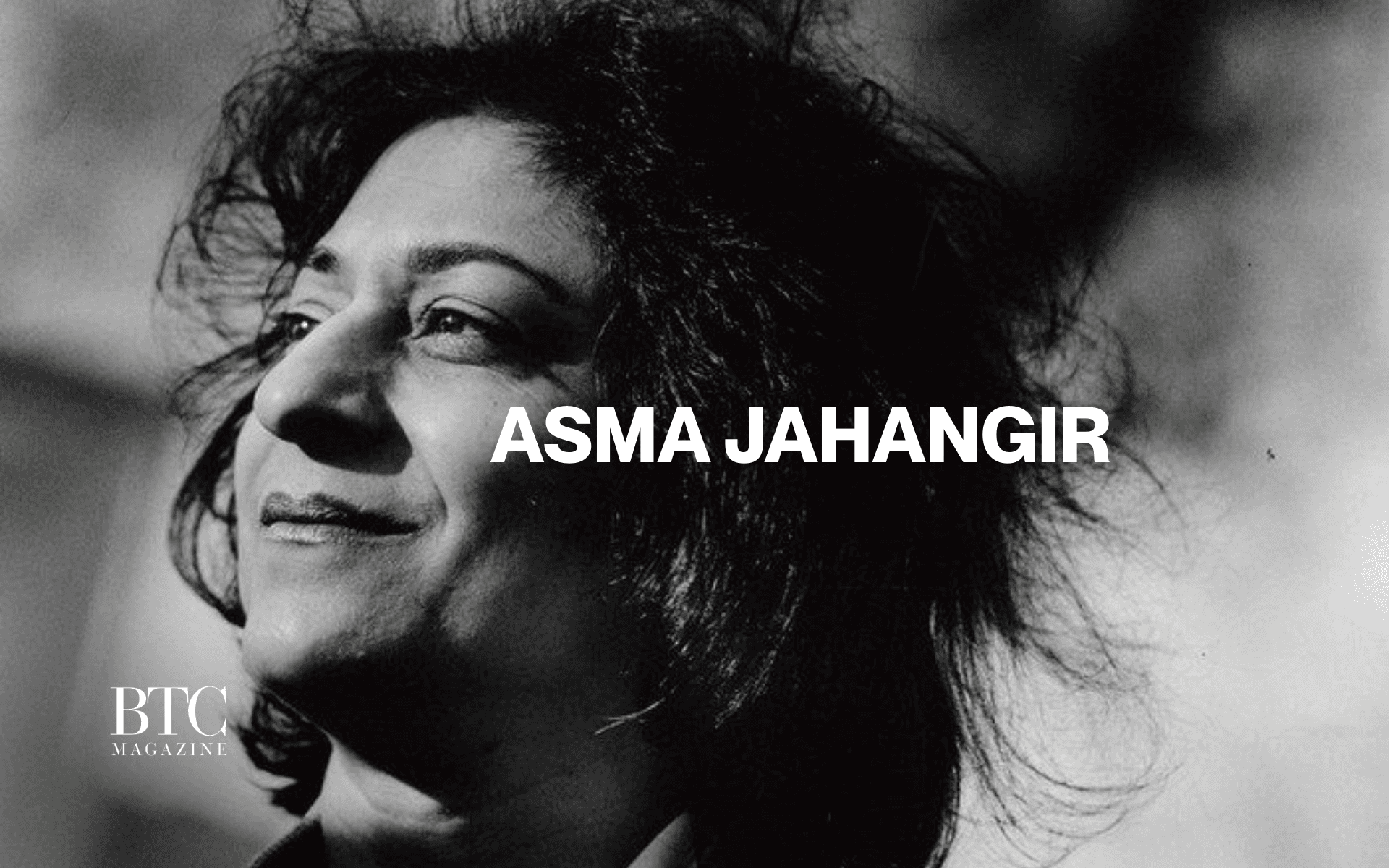
ASMA JAHANGIR: The Woman Who Said No First
Every rebellion needs an origin story. Asma Jahangir is Pakistan’s.At 18, she marched to the Supreme Court to demand her father’s release from military detention. He had been imprisoned for speaking against the government’s actions in East Pakistan—what the world would later recognize as genocide in Bangladesh. Most teenagers wouldn’t know where to begin. Asma filed a petition.She won.That victory—Asma Jilani v. Government of Punjab—became a landmark constitutional case. It established that even military governments could not detain citizens without legal justification. She was barely an adult, and she had already handed the Pakistani state its first lesson in accountability.She never stopped teaching.What She BuiltIn 1980, Asma and her sister Hina Jilani founded AGHS Legal Aid Cell—Pakistan’s first law firm run entirely by women. Their clients were the people everyone else refused: Christians facing death sentences under blasphemy laws. Women accused of adultery for being raped. Bonded laborers. Teenagers on death row. The voiceless, the erased, the inconvenient.She co-founded the Human Rights Commission of Pakistan. She co-founded the Women’s Action Forum. She became the first woman elected President of the Supreme Court Bar Association in 2010—after decades of men telling her she didn’t belong in courtrooms at all.The United Nations appointed her Special Rapporteur on Extrajudicial Executions, then Special Rapporteur on Freedom of Religion. She investigated human rights abuses in Sri Lanka, Israeli settlements, and Iran. She stood on international stages and said what needed saying, even when governments wanted her silent.Especially then.The CostIn 1983, police beat, tear-gassed, and arrested Asma during protests against laws that reduced a woman’s legal testimony to half a man’s. She was imprisoned. Then placed under house arrest. Then imprisoned again.In 1995, she defended two Christian teenagers accused of blasphemy. Mobs surrounded the courthouse. They smashed her car. They threatened her children. She sent her children abroad to keep them safe—and kept showing up to court.In 1999, a gunman walked into her office and shot a client dead. The bullet missed Hina by inches. The client, Samia Imran, had come seeking help to escape an abusive marriage. Her own family had ordered the killing.Asma didn’t stop taking cases.In 2007, Pervez Musharraf declared emergency rule and had her detained. She spent months under house arrest. In 2012, U.S. intelligence uncovered a plot by Pakistani security officials to have her assassinated.She kept going.Why She MattersAsma Jahangir didn’t just challenge laws. She challenged the assumption that laws were unchallengeable.She defended people accused of blasphemy in a country where that accusation is a death sentence—social if not legal. She fought honor killings when the culture called them tradition. She represented women accused of adultery for the crime of being raped, then watched courts overturn unjust verdicts because she refused to let them stand.She made rebellion look possible.Every woman in Pakistan who starts a business, builds a platform, or speaks without permission is walking a path Asma cleared. She didn’t do it politely. She didn’t do it quietly. She did it while governments tried to silence her, mobs tried to kill her, and critics called her a traitor.“I cannot bear to live where there is so much injustice and I cannot do something about it,” she once said. “What kind of a torturous life is that?”The InheritanceAsma Jahangir died of a heart attack on February 11, 2018. She was 66. The day before, she had spoken at a protest demanding justice for a young Pashtun man killed by police. She called the detained children of Swat “her own kids.” She was still fighting.Her name means world conqueror. Her legacy is simpler—and fiercer: she proved that one woman’s refusal to accept injustice can reshape what an entire nation believes is possible.Aleena Mohsin Mughal builds ethical fashion empires.Shameelah Ismail restructures who gets to earn.Myra Qureshi dismantles toxic beauty standards through market power.They stand on ground Asma Jahangir broke open with her bare hands.She said no first. She said no loudest. And she never, ever stopped.

The Thirty-Two: When TV Chose Kites Over Bodies
At 1:38 PM on February 6, 2026, CCTV captured the exact moment a suicide bomber detonated explosives at the Khadija Tul Kubra Mosque in Islamabad. Security guards had stopped him at the entrance. He opened fire. Then he walked into a hall packed with Shia worshippers mid-Friday prayer and blew himself up.Thirty-two people died. One hundred and seventy were injured. Glass and debris scattered across bloodied floors. Victims visible in the mosque's garden. Families running. Ambulances screaming toward hospitals already placing surgical teams on standby.And on Pakistani television? Kites.For hours after the bombing—the deadliest attack in Islamabad in seventeen years—major TV channels continued airing Basant festival programming. Celebrity interviews about kite-flying. Entertainment segments. Cheerful coverage of Lahore's spring celebration. Geo TV had actor Naeema Butt discussing Basant just as news of the blast broke.The contrast wasn't subtle. It raised a question that applies far beyond Pakistan: What does it mean when a country's major news channels continue entertainment programming while the capital buries its dead?I have a team in Islamabad. They texted me within minutes of the blast. My first instinct was to turn on the television—the way you do when something catastrophic happens, when you need to see it to believe it.Basant coverage was still running.I've seen this before. I lived in Bahrain during their internal conflict. I know what it looks like when certain communities' deaths become routine enough that regular programming continues. I know the math that gets done—consciously or not—when news organizations decide which bodies merit interrupting the schedule.My best friend is Shia. So I know what it costs to be the community that gets calculated away.This isn't theoretical for me. This is what I watched happen, again, on February 6.The Metrics That Should Have MatteredBy every traditional news standard, the Islamabad bombing should have dominated coverage:Deadliest attack in the capital since the 2008 Marriott Hotel bombingSecond major attack in three months (November courthouse bombing killed twelve)Happened during Friday prayers—maximum casualties, maximum horrorCCTV footage of the exact explosion momentISIS claimed responsibility within hoursInternational condemnation from the UN, EU, USA cousin of Islamabad's own Inspector General among the deadPakistani print media covered it extensively. Dawn ran comprehensive reporting. Express Tribune documented the aftermath. International outlets from Al Jazeera to CNN to the Washington Post covered it immediately.But in Pakistan, television is how most people consume news. And for hours, television showed kites.Were editors waiting for verified information? Avoiding broadcasting graphic scenes? Operating under regulatory constraints? Worried about inflaming sectarian tensions?Perhaps. But Journalism Pakistan, a media watchdog, noted that "critics linked extended entertainment coverage to commercial interests and advertising." The Islamabad Bar Association called for a day of mourning.Whatever the internal reasoning, the result was the same: viewers who turned on their TVs while the injured were still being pulled from the mosque saw spring festival coverage instead of the deadliest attack their capital had seen in nearly two decades.The Pattern That Precedes the SilencePakistan's Shia community represents about twenty percent of the population—roughly fifty million people. They've been systematically targeted for decades. ISIS explicitly stated after this attack that it views Pakistani Shias as "legitimate targets." This bombing wasn't anomalous: the 2017 shrine attack killed ninety-plus, regular attacks plague Kurram district, sectarian violence that analysts warned would "inflame tensions" continues.There's a calculation that happens—conscious or not—when news organizations decide what merits urgent coverage. Commercial considerations. Political pressure. Audience fatigue with certain types of violence. The normalization that happens when specific communities are targeted so regularly that each new massacre becomes, somehow, less newsworthy than the last.You can call this systemic bias. You can call it market forces. You can call it editorial caution. But you can't call it coverage.The Narrative That Moved FasterWithin hours, Defence Minister Khawaja Asif blamed Afghanistan and India for the attack—claims made without immediate evidence, rejected by both countries. Interior Minister Mohsin Naqvi announced four arrests including an "Afghan ISIS mastermind." The narrative took shape quickly: foreign enemies, cross-border terrorism, external threats.What got less attention: This was the second major Islamabad attack in three months. The bomber operated freely in a heavily guarded capital. When asked about security lapses, Naqvi responded that "if one blast happens, 99 others are being foiled."Al Jazeera's correspondent in Islamabad interviewed people after the bombing. "They say this is a lapse of security," he reported, "that authorities knew very well there was an imminent threat, given the fact that intelligence-based operations are going on in Balochistan and in Khyber Pakhtunkhwa province."Whether through coordination or coincidence, the extended entertainment coverage meant fewer hours of uncomfortable questions about how thirty-two people died in Friday prayers while intelligence agencies were supposedly conducting operations against known threats.It's easier to watch kites.The Mechanics of DisappearanceThis is how marginalized communities disappear in real-time. Not through dramatic censorship or obvious propaganda, but through the accumulated weight of editorial decisions that—individually—might seem defensible. Waiting for confirmation. Avoiding graphic content. Balancing competing priorities. Considering audience appetite.But when those decisions consistently result in certain communities' deaths receiving delayed or diminished coverage, the pattern reveals something darker than any single choice.The victims' families buried their dead on Saturday. Thousands gathered for funeral prayers. Coffins lined up. Mourners screaming. All of it well-documented by photographers whose images ran in international media.But for hours on February 6, while bodies were still being identified, Pakistani viewers who turned on their TVs saw entertainment programming.You could argue this was editorial judgment. Caution. Market-driven programming decisions. Fear of inflaming tensions.You could also ask: How many times does this have to happen before the pattern becomes the point?What Gets CountedThere's a reason print media covered this and television delayed. Print doesn't rely as heavily on advertising from festivals and consumer brands. Print doesn't face the same regulatory pressures. Print can afford to publish uncomfortable truths and wait for subscribers to find them.But television's reach dwarfs print's. Television shapes what most people understand as urgent, important, newsworthy. And on February 6, television made a choice about what mattered most.This matters beyond Pakistan. Every marginalized community worldwide knows this calculation. Knows their grief only becomes news when it's profitable or politically convenient. Knows that some deaths will lead broadcasts while others won't interrupt regularly scheduled programming.The mechanics aren't subtle. They're mathematical. The question is whether we're willing to name what the math reveals about whose humanity gets counted and whose gets calculated away.The Names You Don't KnowThirty-two people died on February 6. Their names were printed in Dawn, Express Tribune, international outlets. Their families held funerals while TV aired festival coverage.Analysts warned after the bombing that it could be part of a broader attempt to inflame sectarian tensions. They urged the government to take action against urban militant networks. They noted the danger of normalization.But something was already normalized: that certain deaths aren't urgent news. That commercial and political pressures can delay coverage of mass casualties. That you can have bodies in a mosque and kites on screen, and the kites win.This isn't speculation. It's what happened. The interpretation is yours.But if this pattern continues—if the next attack on a marginalized community receives the same delayed coverage while entertainment programming runs—we'll know it wasn't an aberration.It was a choice.And systems don't build themselves—but they do sustain themselves.Joseph Tito is the Editor-in-Chief of Between the Covers. He operates businesses in both Canada and Pakistan and has teams in Lahore and Islamabad.
.jpeg&w=3840&q=75)
Winning Her Way: How Melissa Grelo Redefines Success
THE NOTE WAITING IN HER HOTEL ROOMMelissa Grelo was on the brink of one of the boldest moves of her career - a wellness retreat built on her Aging Powerfully platform, the passion project she’s nurtured alongside running a podcast, parenting an 11-year-old, and hosting The Social, Canada’s most-watched daytime talk show. Her daughter, Marquesa, had tucked a note into her bag with strict instructions: Don’t open until you get there.Alone in her hotel room, minutes before leading a room full of women who’d come to learn from her and the group of experts she had curated, Melissa finally opened it. On the first page, in her daughter’s unmistakably confident handwriting:I am so proud of you.“It was a very long letter,” Melissa laughs now. “She’s a very prolific writer. Her vocabulary is fabulous.”But the message was simple: Go. Do this. I’m good. I’m cheering for you.This is what it looks like when a woman builds a life that supports her joy - and raises a daughter who sees and celebrates it.THE GAME IS RIGGED. SHE PLAYS IT ANYWAY.Let’s get something straight: Melissa Grelo hasn’t come undone. She’s building a life, a career, and a rhythm that reflect her strengths, not society’s expectations. What she has done is thrive in an industry where women, especially those on camera, still face extra layers of scrutiny: age, appearance, composure, perfection. Viewers often expect media personalities to be flawless, polished, and ever-present, even when their lives are evolving behind the scenes.And still, Melissa moves forward with clarity and confidence.When The Social finally premiered, it wasn’t just another show for her. It was something she had dreamed up, pitched, and championed for years. So even though she was only 11 weeks postpartum, she chose to be there - excited, grateful, and fully aware of the significance of stepping into a project she had helped bring to life.“I went back to work really fast after I had her,” she says calmly. Not apologizing. Not justifying. Simply acknowledging that the moment mattered to her. She wanted to show up for something she had helped build.Men call this dedication. Women are often told it’s “balance.” But the truth is simpler: Melissa followed her ambition and trusted herself.WHEN HER BODY HIT PAUSE, SHE HIT RESETA year and a half after Marquesa was born, Melissa was hosting Your Morning and The Social. Early mornings, long days, big interviews, and two live shows that demanded focus and energy. Her career was expanding quickly, and she was embracing every opportunity that came with it. Mid-flight to Calgary, her body signaled it was time to calibrate - dizziness, racing heart, the kind of symptoms that demand attention. Doctors checked her vitals: all perfect.The lesson wasn’t “slow down,” it was “support yourself.”She did exactly that. Therapy. A later call time. And a more intentional approach to her already full life.“I’m very bad at resting,” she admits with a smile. “I’ve always been foot-to-the-floor.”But instead of pushing harder, she adjusted smarter. She didn’t crumble; she evolved.THE MATH OF MODERN PARENTHOODMelissa had Marquesa at 36, and like many parents who have children later in life, she occasionally does the quiet calculations – how old she’ll be at major milestones, how life stages might line up. “Always, always,” she says. “Everybody does the math.”But here's what the math doesn't consider: wisdom. Experience. A fully formed self."What we feel like we might be behind in or losing in age, we've gained in wisdom," she says. "We're bringing a whole different self to parenting."Her daughter gets the version of Melissa who knows who she is. Who lived a full life first. Who built a career and collected stories and mistakes and victories before motherhood.This Melissa doesn't crumble when the culture whispers that she's "aging out." She launches a podcast called Aging Powerfully and fills a retreat with women who want what she's modeling: strength without shame."I'm going to be the youngest version of my age at every step of the way."CHOOSING A FAMILY PLAN THAT FITS THEIR LIFEAfter four years of fertility treatment and two clinics, Melissa conceived naturally the very summer The Social was greenlit.Later, when she and her husband Ryan discussed having a second child, they communicated honestly and without pressure.“I’m not slowing down,” she told him. “If we have another, lead caregiving will fall on you.”They talked it through. They both had ambitions. They chose one child. A thoughtful, mutual decision.No guilt. No external expectations. Just a family designing a life that makes sense for them.“I’m very proud of how I’ve navigated the challenges,” she says, recognizing her own growth and the strength in choosing intentionally.RAISING A DAUGHTER WHO KNOWS SHE BELONGSPeople often ask ambitious mothers how they teach their daughters that they can “have it all,” but Melissa reframes the question. For her, the focus is helping her daughter understand that when challenges arise, the issue isn’t her, it’s the world she’s moving through.The approach in their household is simple and open. “There are no secrets in our family,” she says. “Just living life.”Marquesa knows the real stories behind Melissa’s journey - the fertility challenges, the anxiety attack, and the truth of what ambition can cost and give. She also sees something her mother developed later in life: strong boundaries.“She has boundaries very clear in a way I didn’t figure out until my mid or late 30s,” Melissa says. “When my daughter sees me pushing myself too hard because I don’t have good boundaries, she already does.”Their connection is built in everyday moments. At bedtime, Melissa asks: “What makes you feel loved?” and “What moments matter most?” And the answers are always the same - braiding her hair, cuddling on the couch, the rituals that make her feel safe and seen.It’s presence over perfection. Consistency over performance. Love woven into the ordinary parts of life.THE COSTUME AND THE TRUTHEvery morning, Melissa puts on the polished on-air version of herself. Every night, she settles into sweatpants on the couch.“This is who I am,” she tells her daughter. “Work-Mommy is a costume.”Marquesa prefers the no-makeup version.Melissa even built a clothing line - MARQ, named after her daughter, because she wanted kids to feel free before the world labels them.“I’m not throwing gender expectations on a child who still has placenta on her,” she jokes.Their house uses RuPaul’s Drag Race and Love Island as jumping-off points for conversations about character and confidence.“What’s more important than being pretty?” Melissa asks.Marquesa never hesitates: Being smart. Being kind.CHOOSING A FAMILY PLAN THAT FITS THEIR LIFEAfter four years of fertility treatment and two clinics, Melissa conceived naturally the very summer The Social was greenlit.Later, when she and her husband Ryan discussed having a second child, they communicated honestly and without pressure.“I’m not slowing down,” she told him. “If we have another, lead caregiving will fall on you.”They talked it through. They both had ambitions. They chose one child. A thoughtful, mutual decision.No guilt. No external expectations. Just a family designing a life that makes sense for them.“I’m very proud of how I’ve navigated the challenges,” she says, recognizing her own growth and the strength in choosing intentionally.RAISING A DAUGHTER WHO KNOWS SHE BELONGSPeople often ask ambitious mothers how they teach their daughters that they can “have it all,” but Melissa reframes the question. For her, the focus is helping her daughter understand that when challenges arise, the issue isn’t her, it’s the world she’s moving through.The approach in their household is simple and open. “There are no secrets in our family,” she says. “Just living life.”Marquesa knows the real stories behind Melissa’s journey - the fertility challenges, the anxiety attack, and the truth of what ambition can cost and give. She also sees something her mother developed later in life: strong boundaries.“She has boundaries very clear in a way I didn’t figure out until my mid or late 30s,” Melissa says. “When my daughter sees me pushing myself too hard because I don’t have good boundaries, she already does.”Their connection is built in everyday moments. At bedtime, Melissa asks: “What makes you feel loved?” and “What moments matter most?” And the answers are always the same - braiding her hair, cuddling on the couch, the rituals that make her feel safe and seen.It’s presence over perfection. Consistency over performance. Love woven into the ordinary parts of life.THE COSTUME AND THE TRUTHEvery morning, Melissa puts on the polished on-air version of herself. Every night, she settles into sweatpants on the couch.“This is who I am,” she tells her daughter. “Work-Mommy is a costume.”Marquesa prefers the no-makeup version.Melissa even built a clothing line - MARQ, named after her daughter, because she wanted kids to feel free before the world labels them.“I’m not throwing gender expectations on a child who still has placenta on her,” she jokes.Their house uses RuPaul’s Drag Race and Love Island as jumping-off points for conversations about character and confidence.“What’s more important than being pretty?” Melissa asks.Marquesa never hesitates: Being smart. Being kind.WINNING LOOKS DIFFERENT THAN THEY TOLD USOur interview took place on Melissa’s train ride home, a quiet moment in her busy day. As the train pulls into the station, Melissa gathers her things. Ryan is on pickup duty. Tomorrow she’ll do it all again, the work she loves, the routines she cherishes, a life she’s built intentionally.Tonight, she’ll braid Marquesa’s hair. She’ll ask the questions that matter. She’ll settle into the couch as her real self.The version that is fully present.The version that embraces every part of her life with intention.The version showing her daughter what’s possible when you follow your own path.And someday, when another letter comes, it won’t say I miss you.It will say:I see you. And I’m proud.
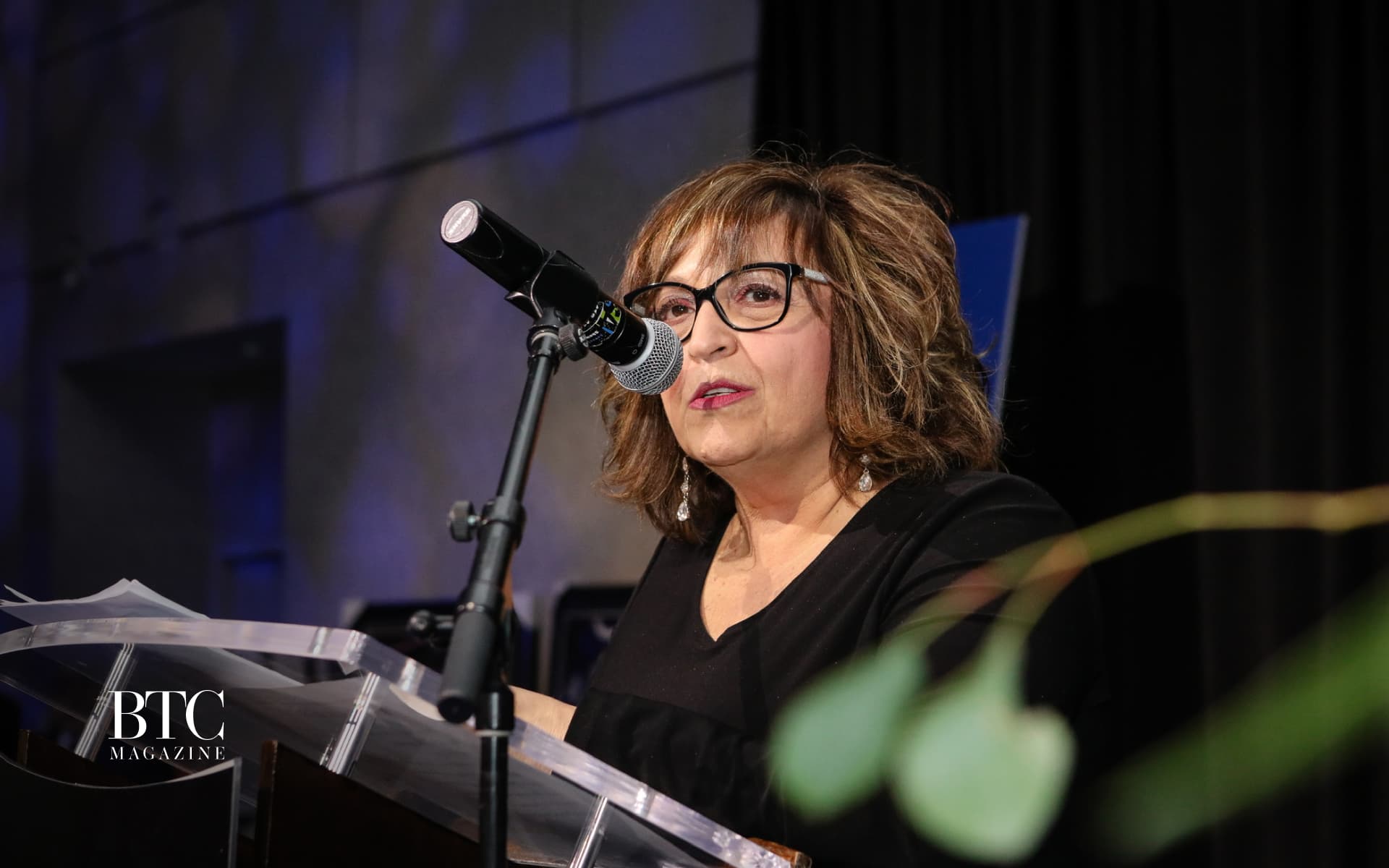
The Woman Who Wouldn't Giggle: Elvira Caria's Four Decades of Refusing to Play Nice
After 40 years of fighting for her voice in broadcasting, Elvira Caria lost the only title that ever mattered to her: Matthew's momThere's a street named after Elvira Caria in Vaughan. She didn't pay for it, she'll tell you right away. Awards line her walls—forty years' worth of recognition for lifting up her community, for being the voice that shows up at every damn event with her phone and her genuine give-a-shit attitude.But when I meet her at The Roost Café on a grey autumn morning, she says the work that matters most is the stuff nobody sees."My real satisfactory work?" She pauses, weighing whether to trust me with this. "I help young girls escape human trafficking. You can't put that on social media."This is Elvira Caria: the woman who refused to be radio's giggling fool, who chose late-night shifts over morning show glory so she could be home when her son's school bus arrived, who now sits across from me one year after burying that same son at 25."I wouldn't be here if it wasn't for the community," she says. And she means it literally.The Day She Found Her Voice by Refusing to Use ItPicture this: a young Elvira in a radio control room, told by a well-known male broadcaster that her job was to giggle. To be the pretty voice that makes him sound better."I don't do giggling fool," she says now, decades later, the Southern Italian fire still in her voice.She stopped showing up to giggle on cue. Got fired on a Friday. Instead of folding, she handed her termination papers back: "If you can find a better reason to fire me on Monday, I'll accept it. If not, I'm coming back."Monday passed. So did Tuesday. By Friday she expected another dismissal—everyone fires on Fridays. But a month later the man who told her to giggle was gone. Elvira stayed for six more years."I found my value voice," she says. "I wasn't going to bend for someone else's value."The Choice That Looked Like SacrificeAt the height of her career, being groomed for a morning show at one of Canada's top stations, Elvira walked away."Nobody quits Rock Radio," her boss said."Well, I just did."She took the shifts nobody wanted—weekends, evenings, 3 a.m. hits at Yonge and Dundas. People called it sacrifice. She calls it choice."While others were sleeping, I was talking to the people we now call homeless. Nobody wakes up saying, I want to be on the streets when I grow up. Nobody."The choice meant she was home when Matthew got off the school bus. It meant knowing his friends, his teachers, his world. For 25 years, it meant being Matthew's mom first, Elvira Caria second.The Irony That Breaks YouHere's the part that will gut you: she spent decades insisting she was more than just Matthew's mom. She was a broadcaster, a journalist, a voice for the voiceless. She built a career on authenticity when authenticity could get you fired.And then, in 2024, Matthew was gone— twenty-five years old and on the edge of everything. Suddenly all Elvira wanted was the one title that had been stripped away."Matthew never saw me as a radio announcer," she says, voice steady, eyes somewhere else. "He saw me as his mom. And that's all he cared about."The Part Where She Stops Pretending Everything's FineLet's talk about not getting out of bed. About hygiene being optional when grief is bone-deep.Her sister-in-law was the one who finally broke through: "They need you. My boys need you! You're more than their Zia." So Elvira took small steps. A shower became a victory. Coloring her hair, an achievement. Looking in the mirror and trying to recognize whoever stared back."I'm mad at God," she admits. "People say everything happens for a reason. What's the fucking reason? Why take away a kid who never did anything wrong, who was just starting his life?"The Community That Saved Her When Awards Couldn'tTen people can tell Elvira she's wonderful. One critic cuts deeper at 3 a.m. That's human.She'll admit some awards now feel hollow—accolades in a season of loss. The recognition doesn't heal the absence.But the community? They showed up in ways that mattered. The woman from her coffee shop who just sat with her, no words needed. The neighbor who mowed her lawn without asking, week after week, because grief means grass keeps growing when you can't. The radio colleague who took her shifts without question when she couldn't form words, let alone broadcast them. The mothers from Matthew's old baseball team who still text her his jersey number on game days. Or the Baseball league who named an umpire award after him."Someone left groceries at my door every Tuesday for three months," she tells me. "Never found out who. Just bags of real food—not casseroles, not sympathy lasagna—but the exact brands I buy. Someone paid attention to what was in my cart before. That's community."The vigils, the legacy fund in Matthew's name, the quiet notes slipped under her door—that's what kept her standing."The real work happens in shadows," she says. "Helping a girl escape trafficking. Watching her graduate two years later. That's when I think—okay, maybe I've done enough to meet my maker."The Wisdom of Not Giving a FuckAfter decades of answering every critic, she's learned the most radical act: indifference."You don't have to react to everything," she says. "Not everything requires an explanation."She still hates small talk, still loves a stage. The influencer economy baffles her. "People think having a phone makes them reporters. Broadcasting is an accreditation—you're trained how to interview, how to fact-check, how to smell bullshit."Who She Is NowA year later, she's still figuring it out. Still showing up at community events with her phone and her give-a-shit intact. Still ironing her underwear (yes, really) because some control is better than none.The street sign with her name stands in Vaughan, but she lives in the in-between—between public recognition and private purpose, between the veteran broadcaster and the grieving mother."The evil grows faster than good," she says. "We're always catching up."So she keeps going. Not because grief eases—it doesn't. Not because she's found a new purpose—she hasn't. But because stopping isn't her style.She refused to giggle back then. She refuses to perform now. And maybe that's the lesson: sometimes the most powerful thing you can do is keep showing up, even when you don't know why you're still here. Especially then.Elvira Caria continues to support multiple charities across the GTA while maintaining her broadcasting career. She's still mad at God, still helping girls escape trafficking, still learning who she is now. She does not need your sympathy. She might need you to know that grief has no timeline, authenticity isn't content, and sometimes the bravest thing you can do is refuse to play along.
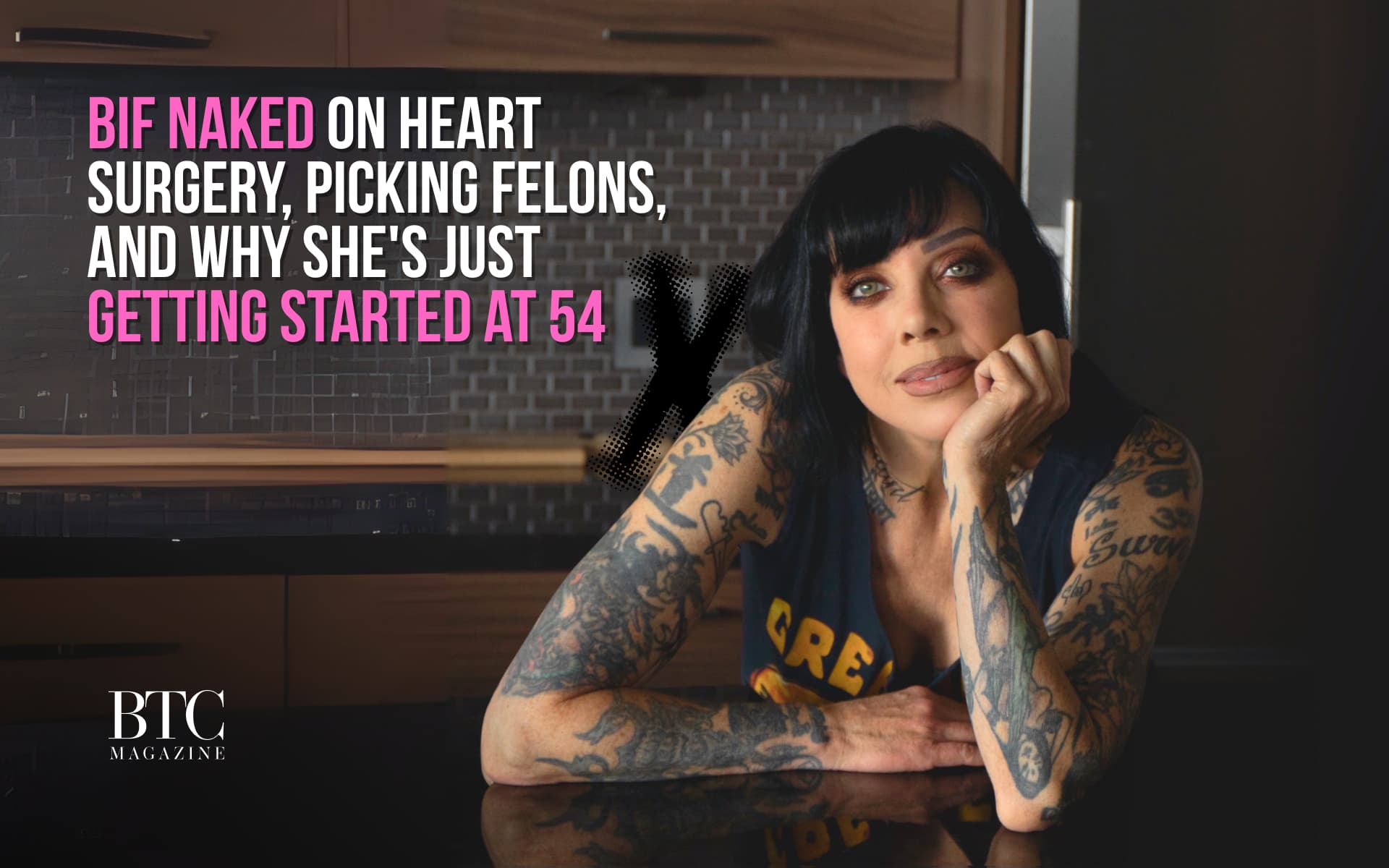
The Dentist Is Between My Legs: Bif Naked on Heart Surgery, Picking Felons, and Why She's Just Getting Started at 54
The punk icon who found euphoria on an operating table talks death doulas, divorce gratitude, and why her failing marriage hurt more than cancerBy Joseph Tito | Between the Covers | November 2025Bif Naked is cutting up her dog's food with her hands when I ask how it feels to be a legend.She looks at me like I've asked her to explain quantum physics in Swahili. "I'm a dog mom," she says, and goes back to mincing. Her fingers work methodically, tearing dog food into smaller and smaller pieces. The woman who once spit on audiences from punk stages now performs this daily ritual of care with the focus of a surgeon.This is going to be that kind of conversation—where every expectation gets shredded like dog food.The Operating Table High"So I was wide awake," Bif says, settling into her Toronto condo couch, miniskirt riding up as she crosses her legs. She's talking about her heart surgery like most people describe a spa day. "They thread a little camera through your leg all the way to your heart, and they can see what they're doing on the screen."She leans forward, eyes bright with the memory. "The surgeon is wearing a pineapple hat—like, the surgical hat had cartoon pineapples on it. And they're listening to William Shatner singing. Have you ever heard him sing? Who knew this album existed?"This is a woman describing having a hole in her heart closed with what she calls "a little umbrella device," conscious the entire time, finding it all hilarious and profound in equal measure. Her voice gets almost reverent: "I thought, this is the coolest shit ever. How is it possible that in this lifetime, I can listen to these people talking about their day jobs, which is fixing my stupid heart?"Then comes the moment that gives this article its title. They need to inject Novocaine into her leg to make the incision. You know that heavy, aching feeling from the dentist?"I said, 'Oh! It feels like the dentist is between my legs.'"She covers her face, laughing and mortified simultaneously. "The nurses started howling. This patient is on the table, making what they think is dirty talk. But I just meant—" she gestures helplessly "—the Novocaine!"Her whole body shakes with laughter now. "Of course that's what I said. How fucking funny is that?"God's Rejection and Other Love Stories"God is not going to choose me for whatever reason," she says, the laughter suddenly gone. "I'm going to stay here on earth and have to deal with it. Because I'm not learning my lessons yet."The shift in energy is palpable. She's talking about her pattern now—the violent men, the criminal boyfriends, the marriages to liars. "If there's a wrong guy, send him my way. If he is a criminal, if he's a violent felon, send him my way. I'm going to fall in love with that idiot every time."She delivers this like a weather report, no self-pity, just fact. When I ask why she got divorced, she doesn't hesitate: "Because I married liars." Then, catching herself: "But I have to look at what my fault was."She discovered what healthy relationships actually look like at 54. Fifty-four. After two failed marriages, cancer, and enough medical trauma to kill most people twice. "I had no idea relationships were supposed to be healthy," she says, and the wonderment in her voice is genuine. "I think that I've always been chasing true love. I'll never give up on love, ever."The contradiction sits there between us: the woman who picks monsters still believes in fairy tales."My emotional crisis of my failing marriage trumped my cancer experience."She says this so matter-of-factly that I almost miss it. The dissolution of her marriage during treatment hurt more than the actual cancer. Her hands, which had been still, start moving again—straightening pillows, adjusting her jewelry."Which was good," she adds quickly, "because it forced me to throw myself into volunteering."The man who married a rock star got a cancer patient instead, couldn't handle the plot twist. Now she trains as a death doula, works in palliative care. "If I was told tomorrow that I could not be a performer anymore," she says, her voice steady, "I think I would go into hospital administration."The Stage She Was Always SeekingBefore Bif Naked existed, there was a theatre kid at the University of Winnipeg who'd taken ballet for 13 years. She demonstrates a position, her leg extending with muscle memory from decades ago. "I wanted to be an actress and a ballet star."Then a drummer named Brett needed a singer. Suddenly she had a vehicle for all her poetry, all her rage about El Salvador and Indigenous treatment and misogyny. Whether it was ballet slippers or combat boots, she was always searching for a stage—just took her a while to find the right one."I got to stand up there. I got to spit on the audience. I got to say, fuck you, you can't objectify me." Her voice rises with the memory, that old fire flickering. "I didn't even have to sing very well. And believe me, I could not. I sounded like a dying cat."She pauses, grins. "And I don't mean the band Garbage."They opened for DOA. NoMeansNo. Bad Religion. She dropped out of university, and here's the kicker—"I'm still waiting to go back to school," she laughs, thirty-something years later, like she might actually do it.The same rage that fueled her screaming about El Salvador now targets Doug Ford's Ontario. "I couldn't figure out why I moved here," she says. "Then Ford got elected and I thought, 'Oh. I'm here to use my big mouth.'"The Children She'll Never Have (Or Will She?)When she cuts up that dog food with such maternal precision, I have to ask about kids. Her whole body language shifts—shoulders dropping, a softness creeping in."My ovaries were taken out at 36. So breast cancer didn't just cut up my tit." She says this with the same directness she uses for everything else, but her hand unconsciously moves to her stomach. "I've been in menopause since I was 36 years of age."People ask about adoption—she is, after all, adopted herself. The sarcasm returns, protective: "Oh yeah, let me get right on that. Let me turn around as a divorcee who's working nonstop as a self-employed artist in Canada and get right on the adoption train."But then, unexpectedly: "Now in my mid-50s? Yeah, I suppose I am ready."The possibility hangs there. Not this year. But the door isn't closed.Tina Turner's Miniskirt Ministry"I look to women like Tina Turner," she says, smoothing her miniskirt with deliberate intention. "Tina Turner didn't start playing stadiums till she was in her 50s."At 54, she genuinely believes she's just getting started. The documentary premiering across Canada this month (November 12 in Toronto, November 4 in Vancouver). The album finally released after she shelved it during the George Floyd protests because "the world didn't need a fucking Bif Naked record" during that summer of unrest."The sky is the limit," she says, and means it.When I ask who she's fighting for now, what her voice stands for at 54, she barely breathes before answering."When I was singing 'Tell On You' on my first record, I wasn't the only girl who was sexually assaulted," she says, her voice dropping to something harder, older. "I was the only girl with a microphone."The room goes quiet. Even the dog stops moving.She calls herself "a square" now—no cocaine, no partying. "I can be thoughtful and intelligent. I can try very hard to be a voice for the voiceless."But square doesn't mean silent. She's angrier about politics than ever, advocating for animals, healthcare inequality, LGBTQ+ rights rollbacks."Unfortunately," she says with a grin that's pure punk rock, "I'm still the one holding the mic."What's Next Is What She WantsThey're making a feature film about her life. The documentary's touring. When I ask what's next, she almost defaults to "that's a Peter question"—her manager's domain—then catches herself, takes ownership."We're working on the feature film based on the book."But really, what's next is whatever the fuck she wants. She's earned that.I ask what she'd tell a young girl starting out in music today. She thinks, really thinks, her face cycling through decades of memory."Never take it personally. Never take anything personally, no matter what."Then she says something that makes me stop writing: "There's room for everybody."This from a woman who had to claw for every inch of space. Who quit drinking partly to avoid being "misinterpreted" by men who'd use any excuse to discredit her. Who's been assaulted, dismissed, divorced, nearly killed."Anybody can make music on their computer, anybody can learn piano on YouTube, anybody can upload a song and send it to their nona," she continues, and she means it. "That's actually a gift."As I'm leaving, she's back to cutting up dog food, this ritualistic care that anchors her. I think about what she said about God not choosing her yet, about having to stay here and deal with it.But watching her hands work—the same hands that punched stage divers, that held microphones during cancer treatment, that reached for violent men who couldn't love her back—I realize something.She keeps saying she hasn't learned her lessons. But maybe she has. Maybe the lesson is you can marry liars and still believe in love. You can lose your ovaries at 36 and mother the whole world anyway. You can tell your surgical team the dentist is between your legs and still become a legend.She looks up from the dog bowl, catches me staring."I wasn't the only girl who was sexually assaulted," she says again, quieter this time but somehow louder. "I was the only girl with a microphone."Bif Naked's documentary tours Canada this month. Her album "Champion" is available now. She still wears miniskirts and heels. She's just getting started.
Explore Topics
Dive deeper into specific topics within Spotlight

All Articles in Spotlight
Winning Her Way: How Melissa Grelo Redefines Success
THE NOTE WAITING IN HER HOTEL ROOMMelissa Grelo was on the brink of one of the boldest moves of her career - a wellness retreat built on her Aging Powerfully platform, the passion project she’s nurtured alongside running a podcast, parenting an 11-year-old, and hosting The Social, Canada’s most-watched daytime talk show. Her daughter, Marquesa, had tucked a note into her bag with strict instructions: Don’t open until you get there.Alone in her hotel room, minutes before leading a room full of women who’d come to learn from her and the group of experts she had curated, Melissa finally opened it. On the first page, in her daughter’s unmistakably confident handwriting:I am so proud of you.“It was a very long letter,” Melissa laughs now. “She’s a very prolific writer. Her vocabulary is fabulous.”But the message was simple: Go. Do this. I’m good. I’m cheering for you.This is what it looks like when a woman builds a life that supports her joy - and raises a daughter who sees and celebrates it.THE GAME IS RIGGED. SHE PLAYS IT ANYWAY.Let’s get something straight: Melissa Grelo hasn’t come undone. She’s building a life, a career, and a rhythm that reflect her strengths, not society’s expectations. What she has done is thrive in an industry where women, especially those on camera, still face extra layers of scrutiny: age, appearance, composure, perfection. Viewers often expect media personalities to be flawless, polished, and ever-present, even when their lives are evolving behind the scenes.And still, Melissa moves forward with clarity and confidence.When The Social finally premiered, it wasn’t just another show for her. It was something she had dreamed up, pitched, and championed for years. So even though she was only 11 weeks postpartum, she chose to be there - excited, grateful, and fully aware of the significance of stepping into a project she had helped bring to life.“I went back to work really fast after I had her,” she says calmly. Not apologizing. Not justifying. Simply acknowledging that the moment mattered to her. She wanted to show up for something she had helped build.Men call this dedication. Women are often told it’s “balance.” But the truth is simpler: Melissa followed her ambition and trusted herself.WHEN HER BODY HIT PAUSE, SHE HIT RESETA year and a half after Marquesa was born, Melissa was hosting Your Morning and The Social. Early mornings, long days, big interviews, and two live shows that demanded focus and energy. Her career was expanding quickly, and she was embracing every opportunity that came with it. Mid-flight to Calgary, her body signaled it was time to calibrate - dizziness, racing heart, the kind of symptoms that demand attention. Doctors checked her vitals: all perfect.The lesson wasn’t “slow down,” it was “support yourself.”She did exactly that. Therapy. A later call time. And a more intentional approach to her already full life.“I’m very bad at resting,” she admits with a smile. “I’ve always been foot-to-the-floor.”But instead of pushing harder, she adjusted smarter. She didn’t crumble; she evolved.THE MATH OF MODERN PARENTHOODMelissa had Marquesa at 36, and like many parents who have children later in life, she occasionally does the quiet calculations – how old she’ll be at major milestones, how life stages might line up. “Always, always,” she says. “Everybody does the math.”But here's what the math doesn't consider: wisdom. Experience. A fully formed self."What we feel like we might be behind in or losing in age, we've gained in wisdom," she says. "We're bringing a whole different self to parenting."Her daughter gets the version of Melissa who knows who she is. Who lived a full life first. Who built a career and collected stories and mistakes and victories before motherhood.This Melissa doesn't crumble when the culture whispers that she's "aging out." She launches a podcast called Aging Powerfully and fills a retreat with women who want what she's modeling: strength without shame."I'm going to be the youngest version of my age at every step of the way."CHOOSING A FAMILY PLAN THAT FITS THEIR LIFEAfter four years of fertility treatment and two clinics, Melissa conceived naturally the very summer The Social was greenlit.Later, when she and her husband Ryan discussed having a second child, they communicated honestly and without pressure.“I’m not slowing down,” she told him. “If we have another, lead caregiving will fall on you.”They talked it through. They both had ambitions. They chose one child. A thoughtful, mutual decision.No guilt. No external expectations. Just a family designing a life that makes sense for them.“I’m very proud of how I’ve navigated the challenges,” she says, recognizing her own growth and the strength in choosing intentionally.RAISING A DAUGHTER WHO KNOWS SHE BELONGSPeople often ask ambitious mothers how they teach their daughters that they can “have it all,” but Melissa reframes the question. For her, the focus is helping her daughter understand that when challenges arise, the issue isn’t her, it’s the world she’s moving through.The approach in their household is simple and open. “There are no secrets in our family,” she says. “Just living life.”Marquesa knows the real stories behind Melissa’s journey - the fertility challenges, the anxiety attack, and the truth of what ambition can cost and give. She also sees something her mother developed later in life: strong boundaries.“She has boundaries very clear in a way I didn’t figure out until my mid or late 30s,” Melissa says. “When my daughter sees me pushing myself too hard because I don’t have good boundaries, she already does.”Their connection is built in everyday moments. At bedtime, Melissa asks: “What makes you feel loved?” and “What moments matter most?” And the answers are always the same - braiding her hair, cuddling on the couch, the rituals that make her feel safe and seen.It’s presence over perfection. Consistency over performance. Love woven into the ordinary parts of life.THE COSTUME AND THE TRUTHEvery morning, Melissa puts on the polished on-air version of herself. Every night, she settles into sweatpants on the couch.“This is who I am,” she tells her daughter. “Work-Mommy is a costume.”Marquesa prefers the no-makeup version.Melissa even built a clothing line - MARQ, named after her daughter, because she wanted kids to feel free before the world labels them.“I’m not throwing gender expectations on a child who still has placenta on her,” she jokes.Their house uses RuPaul’s Drag Race and Love Island as jumping-off points for conversations about character and confidence.“What’s more important than being pretty?” Melissa asks.Marquesa never hesitates: Being smart. Being kind.CHOOSING A FAMILY PLAN THAT FITS THEIR LIFEAfter four years of fertility treatment and two clinics, Melissa conceived naturally the very summer The Social was greenlit.Later, when she and her husband Ryan discussed having a second child, they communicated honestly and without pressure.“I’m not slowing down,” she told him. “If we have another, lead caregiving will fall on you.”They talked it through. They both had ambitions. They chose one child. A thoughtful, mutual decision.No guilt. No external expectations. Just a family designing a life that makes sense for them.“I’m very proud of how I’ve navigated the challenges,” she says, recognizing her own growth and the strength in choosing intentionally.RAISING A DAUGHTER WHO KNOWS SHE BELONGSPeople often ask ambitious mothers how they teach their daughters that they can “have it all,” but Melissa reframes the question. For her, the focus is helping her daughter understand that when challenges arise, the issue isn’t her, it’s the world she’s moving through.The approach in their household is simple and open. “There are no secrets in our family,” she says. “Just living life.”Marquesa knows the real stories behind Melissa’s journey - the fertility challenges, the anxiety attack, and the truth of what ambition can cost and give. She also sees something her mother developed later in life: strong boundaries.“She has boundaries very clear in a way I didn’t figure out until my mid or late 30s,” Melissa says. “When my daughter sees me pushing myself too hard because I don’t have good boundaries, she already does.”Their connection is built in everyday moments. At bedtime, Melissa asks: “What makes you feel loved?” and “What moments matter most?” And the answers are always the same - braiding her hair, cuddling on the couch, the rituals that make her feel safe and seen.It’s presence over perfection. Consistency over performance. Love woven into the ordinary parts of life.THE COSTUME AND THE TRUTHEvery morning, Melissa puts on the polished on-air version of herself. Every night, she settles into sweatpants on the couch.“This is who I am,” she tells her daughter. “Work-Mommy is a costume.”Marquesa prefers the no-makeup version.Melissa even built a clothing line - MARQ, named after her daughter, because she wanted kids to feel free before the world labels them.“I’m not throwing gender expectations on a child who still has placenta on her,” she jokes.Their house uses RuPaul’s Drag Race and Love Island as jumping-off points for conversations about character and confidence.“What’s more important than being pretty?” Melissa asks.Marquesa never hesitates: Being smart. Being kind.WINNING LOOKS DIFFERENT THAN THEY TOLD USOur interview took place on Melissa’s train ride home, a quiet moment in her busy day. As the train pulls into the station, Melissa gathers her things. Ryan is on pickup duty. Tomorrow she’ll do it all again, the work she loves, the routines she cherishes, a life she’s built intentionally.Tonight, she’ll braid Marquesa’s hair. She’ll ask the questions that matter. She’ll settle into the couch as her real self.The version that is fully present.The version that embraces every part of her life with intention.The version showing her daughter what’s possible when you follow your own path.And someday, when another letter comes, it won’t say I miss you.It will say:I see you. And I’m proud.
.png&w=3840&q=75)
THE LAST PAGE YOU'LL READ (BEFORE THE WORLD GETS BIGGER)
I didn't plan this.Between the Covers was supposed to stay in Canada. That was the vision. That was safe. Build something here, serve the women who need it, keep it honest, keep it real, keep it manageable.And then my best friend called.Lesley. The same Lesley I opened the first-ever performing arts school in the Middle East with, back when we were young and stupid and thought we could change the world with tap shoes and determination. She moved to Marbella a few years ago, and now she's opening a culture hall there — because of course she is. Lesley doesn't do small.She saw what we were building with BTC. The raw storytelling. The refusal to sanitize women's lives. The whole "let's talk about the shit no one else wants to talk about" energy.And she said: "This needs to be in Marbella."I laughed. I think I said something like, "That's insane."And then I thought about it.And I couldn't stop thinking about it.Here's the thing: I spent ten years of my life in the Middle East. I know what it's like to live between cultures, to code-switch, to exist in spaces where people make assumptions about you before you even open your mouth. I know what it's like to be misunderstood. To be exoticized. To be reduced to someone else's limited imagination of what your life must be like.And I've watched the same thing happen to women — everywhere.In Canada, we assume women in the Middle East are oppressed and silent. In the Middle East, they assume Western women are lost and morally bankrupt. In Europe, everyone's got an opinion about everyone else. And meanwhile, the actual women — the ones living these lives — are navigating the same shit: identity, reinvention, motherhood, ambition, heartbreak, aging, starting over, trying to find themselves in the mess.Different languages. Different streets. Different coffee orders.Same story.And I thought: What if we could create a space where those women could actually see each other?Not as stereotypes. Not as ideas. But as real, complicated, brilliant, messy humans.What if Between the Covers could be the bridge?So Marbella happened.And it wasn't some polished, strategic "expansion plan." It was me and Lesley on a video call, probably drinking wine, saying, "Let's just do it and see what happens."And what happened was… magic.Women showed up. Entrepreneurs, mothers, women reinventing themselves in their 40s, 50s, 60s. Women who needed to hear that their story mattered now — not when life calms down, not when the kids grow up, not when they finally have their shit together.The energy was different. The sun was different. The stories were different. But the core? The heartbeat? Exactly the same.And I realized: this works. This travels.So we're going to Dubai next.Because if Marbella taught me that women everywhere are hungry for the same honesty, Dubai is going to prove that culture, religion, and geography don't change what we need from each other: truth, connection, and a reminder that we're not alone in this.Dubai will bring its own flavor — women leading companies, building legacies, navigating impossible expectations, rewriting the rules while everyone watches. But underneath all that glamour and ambition? The same questions. The same fears. The same fire.Here's what I'm trying to build — and I need you to understand, this terrifies me as much as it excites me:One app. Every edition. Every city. One global community.You subscribe to Between the Covers, and you don't just get Canada. You get Marbella. You get Dubai. You get every city we land in next — because once we start, I don't think we'll be able to stop.You get the stories no one else is telling. The topics no one else wants to touch. Menopause, rage, reinvention, sex, identity, burnout, boundaries, joy, heartbreak — all of it, everywhere.And yeah, you get perks. Real ones. Not the bullshit "10% off a thing you don't need" kind. I'm talking: exclusive events in every city we touch. Curated experiences. Hidden gems and vetted spots recommended by women who actually live there, not influencers who got paid to post about them. A global passport to connection — people, places, culture, community.Whether you're traveling or dreaming about traveling, the app becomes your way in. To real life. To real women. To the parts of the world you thought you understood but probably don't.This isn't about building an empire.It's about building a table. A big one. With chairs for everyone.Because I've been around the world. I've lived in the Middle East, modeled in Europe, survived more airports than I can count. And the one thing I know for sure is this:We are not as different as they want us to believe.The borders, the stereotypes, the assumptions — they're all designed to keep us separate. To keep us small. To make us think our struggles are ours alone.But they're not.And Between the Covers is becoming the space where we stop pretending they are.I'm not going to beg you to subscribe. I'm not going to promise you'll "join a movement" or "find your tribe" or whatever corporate buzzwords make people feel warm and fuzzy.What I will say is this:If you've ever felt unseen, unheard, or misunderstood — in your city, your culture, your life — this is for you.If you've ever wondered what it's really like to live in Marbella, Dubai, Toronto, or anywhere else without the Instagram filter — this is for you.If you've ever wanted to connect with women who get it, who live it, who don't need you to have your shit together to deserve a seat at the table — this is for you.Between the Covers isn't just a magazine anymore.It's becoming a world.And I have no idea where this goes next. But I know it's going to be honest. It's going to be messy. It's going to be real.And I really hope you come with me.Because the world is big. But the stories? The stories make it feel like home.
.jpeg&w=3840&q=75)
Patrizia Del Zotto: The Woman Who Closed a Deal in Lahore While Eating Breakfast in Istanbul
And other lessons from traveling with a 63-year-old beauty mogul who refuses to act her agePicture this: 8 a.m. in Istanbul. I'm barely conscious, nursing my first coffee of the day in our three-bedroom Airbnb overlooking the Bosphorus (which I found, thank you very much), when Patrizia Del Zotto—sitting across from me with perfect posture and somehow already fully operational—closes a deal in Lahore, Pakistan while simultaneously negotiating with a Turkish clinic owner about their scalp treatment protocols.Two continents. Two deals. One breakfast.I watched her switch from Italian to English to Spanish and back again, phone tucked under her chin, gesturing with her free hand like she was conducting an orchestra, all while her eggs got cold and I sat there wondering how the hell she had this much bandwidth before 9 a.m."Are you seeing this?" I wanted to ask someone. Anyone. Because this wasn't normal. This was some next-level shit that I wasn't sure I was equipped to witness on four hours of sleep.But for Patrizia? This was just Tuesday.Who She Is (Because You Need Context)Patrizia Del Zotto is 63 years old. She's the national distributor of Biancamore—a luxury Italian skincare line made with buffalo milk from Paestum (yes, buffalo milk, and yes, it's as decadent as it sounds). She's also a part-owner of Scalp Science Professional, a company that's redefining scalp care for beauty and wellness professionals.She travels constantly. She works relentlessly. She builds businesses, cultivates relationships, and negotiates deals in multiple languages across multiple continents before most people have finished their morning scroll.And the kicker? She's not doing any of this to prove a point about aging. She's doing it because she genuinely loves the work, the hustle, the chaos, the connections. She's not performing vitality—she is vital.Istanbul, Or: How I Learned to Stop Worrying and Embrace the ChaosI just spent several days with Patrizia in Turkey. Clinics. Meetings. Shopping. Late-night conversations that started as business strategy and somehow ended in philosophy and gossip and laughter that echoed through our Bosphorus-view apartment at midnight.The woman does. not. stop.I'm talking out-walking, out-talking, out-hustling people half her age. I swear she has more energy than the entire Turkish electrical grid. She packed like she was going on tour with Beyoncé—multiple outfit changes, backup shoes, a pharmacy's worth of skincare—and still managed to operate at a level of efficiency that would make a Fortune 500 CEO weep.At one point, she threatened to fight someone at baggage claim. I'm not kidding. Over a luggage cart situation that escalated faster than I could process. And somehow—somehow—she still ended up charming the guy by the time we left.That's Patrizia. Chaos with a heart of gold. Fire wrapped in Italian elegance.What the Beauty Industry Gets Wrong About Women Like HerHere's the thing the beauty industry refuses to acknowledge: Women like Patrizia aren't the exception. They're what happens when you stop telling women to shrink, slow down, and "act their age."The industry loves to talk about aging. Serums for this. Treatments for that. Products promising to turn back time, freeze your face, erase the evidence of having lived a full goddamn life.But they never showcase women who are living—actually living, not performing some sanitized version of graceful aging for the Instagram algorithm.Patrizia isn't chasing youth. She's chasing life. And that hits different.She's not the "forever 30" influencer or the "quiet luxury" mannequin. She's not pretending aging doesn't exist. She's just refusing to let it define her, limit her, or slow her down.She knows the beauty industry inside out—the chemicals, the treatments, the trends, the bullshit, the brilliance. She's built businesses in this space not by following the rules, but by understanding what actually works and being honest about it.And honestly? If the beauty industry were smart, they'd stop selling fear and start celebrating women like her—women who redefine aging by refusing to perform it politely.The Scene I Can't Stop Thinking AboutBack to that breakfast overlooking the Bosphorus.She hung up one call—something about shipment logistics in Pakistan. Took a bite of her now-lukewarm eggs. Immediately answered another—a Turkish clinic, this time in Spanish because apparently the owner was from South America. Laughed at something the person on the other end said. Made a decision that probably involved thousands of dollars. Hung up.Looked at me. "What were we talking about?"I just stared at her. "I honestly have no idea anymore."She laughed—this full-throated, unguarded laugh that I'd heard multiple times over our days together—and said something about needing more coffee.That moment crystallized something for me: This woman isn't special because she's superhuman. She's special because she's fully human. She feels everything, engages with everything, shows up for everything. She doesn't edit herself. She doesn't apologize for taking up space. She doesn't dim her intensity to make other people comfortable.For someone so larger-than-life, she sees people deeply. She listens. She gives. She remembers. She lifts others up without even realizing she's doing it.Why This MattersGetting to know Patrizia wasn't just entertaining—though it absolutely was. It was a reminder that a woman's story doesn't plateau at 40, or 50, or 60.It sharpens. It gets funnier. Wilder. Richer. More unfiltered. More true.She's not slowing down. Not now. Not ever.And honestly? Thank God for that. Because the world needs more women who refuse to shrink. Who build empires while eating breakfast. Who negotiate across three continents in three languages before 9 a.m. Who threaten to fight strangers at baggage claim and still somehow make you feel like the most important person in the room.Patrizia Del Zotto is that woman.And if you ever get the chance to travel with her, say yes. Pack light. And for the love of God, get some sleep beforehand—because you're going to need it.
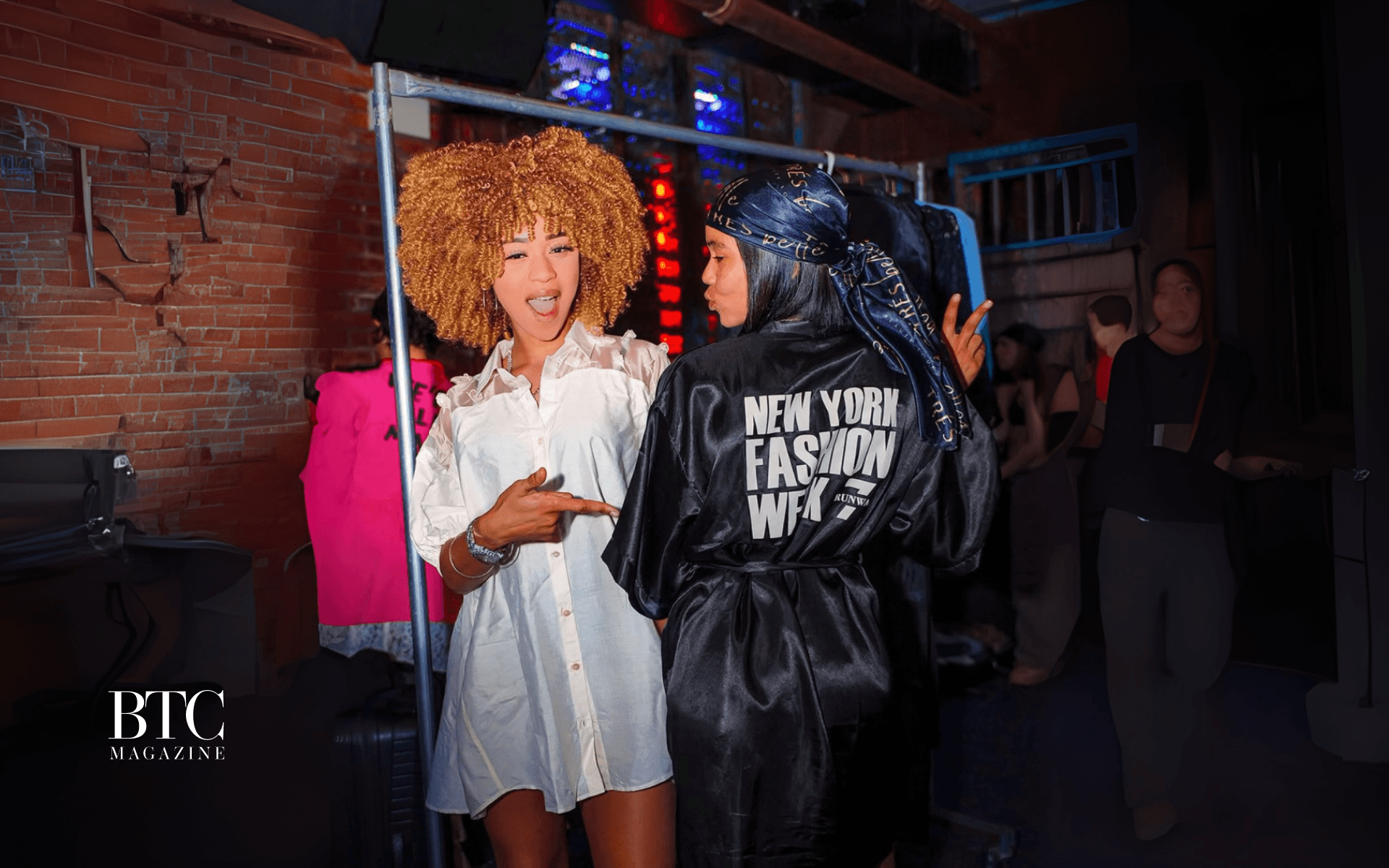
New York Fashion Week: The Good, The Meh, and The What-The-Actual-Fuck
When the Fashion Capital Serves You Dreams, Disappointments, and One Designer Who Needs a Reality CheckBy: Joseph TitoThere's something about New York that makes you feel alive even when it smells like hot garbage and betrayal. Maybe it's the way the concrete seems to pulse with ambition, or how even the pigeons strut like they're on a runway. I went to Fashion Week expecting to see the future of fashion. What I got was a masterclass in both how to do it right—and a stomach-turning lesson in how catastrophically wrong it can go.Let me start with the good, because Runway 7 deserves their flowers before I burn down someone else's garden.The Organization That Actually Gives a DamnIn a world where fashion events often feel like you're crashing a party where nobody wants you there, Runway 7 was different. Three women in particular made magic happen: Diane Vara—the PR & Marketing Director who, despite handling all PR and managing a team of marketers, still took a second to make you feel welcomed with a simple, genuine smile; Christina Kovacs, Director of Brand & Sponsorships who refreshingly didn't know how she could help but still tried; and one more angel whose name I'm tracking down because my notes app crashed—fashion week, am I right?This matters more than you think. When you're surrounded by people who look like they subsist on green juice and contempt, having someone treat you like an actual human being feels revolutionary.The Designers Who Understood the AssignmentLet's talk about Melissa Crisostomo from Unique Custom Threads. This woman gets it. Every piece that walked down that runway was a one-of-a-kind statement that made you stop mid-scroll and actually look. She's been at this for three and a half years, self-taught, originally a fine artist—and it shows. There's something about designers who come to fashion from other art forms. They're not trying to recreate what's already been done. They're creating what doesn't exist yet."Every time I approach a fashion collection, I try and create something new," Melissa told me backstage, and honey, she wasn't lying. That back-open number? Even the straight guys were taking notes.The models themselves were a revelation. Karan Fernandes, 29 but looking like she could play a high schooler on Netflix, flew in from Boston just for visibility—no hotel, no payment, just pure hustle and hope. Levana, a women's-only personal trainer who teaches self-defense on the side, strutted that runway like she was teaching it a lesson about power. These weren't just pretty faces; they were stories on legs.When New York Felt Like New YorkThere were moments when Fashion Week lived up to its promise. The energy backstage—"boobs, makeup, lashes, everything flying everywhere," as Levana perfectly put it. The grandmother from Alabama watching her 10-year-old granddaughter work the runway with equal parts pride and protective terror. The writer and her plus-one BFF who dressed like she was the main character (because honestly, she was).Even the city itself played its part. That particular New York magic where just walking the streets makes you feel like you're part of something bigger, even when you're dodging mysterious puddles and men who think "hey beautiful" is a conversation starter.But Then Came Rhinestone Sugar CoutureAnd this is where I need you to put down your coffee and pay attention.I had to walk out of a fashion show. Me. The person who sat through an entire experimental theater piece about sentient tampons. But this? This broke me.Picture this: Seven, eight, nine-year-old girls. High heels. Makeup that would make a Vegas showgirl blush. Outfits that—and I'm going to be very careful with my words here—made them look like miniature versions of something no child should ever be asked to embody.I'm a dad of six-year-old twin girls. Progressive as hell. No filter. Judge-free zone, usually. But when I looked over at two bodyguards watching that runway and saw something in their eyes that made my skin crawl? When a 62-year-old photographer from Brooklyn—a woman who's probably seen everything—put down her camera and whispered, "This feels like child trafficking"?That's not fashion. That's not art. That's exploitation wrapped in sequins and sold as empowerment.The Uncomfortable Truth About Dreams and DangerHere's what kills me: I don't blame the kids. They're kids. I don't even fully blame the moms, sitting there with stars in their eyes, dreaming of their daughters' names in lights. We all want our children to shine. But there's a difference between letting your child shine and putting them on display like that.The designer—whose name I won't give the dignity of printing—chose to put those children on that runway in that way. In an industry already riddled with predators and problems, she chose to serve up vulnerability on a silver platter and call it fashion.One grandmother I interviewed put it perfectly: "I'm happy and I'm a little scared... I think about the times we're in and what could happen." She was talking about her granddaughter doing regular pageants, fully clothed, age-appropriate. Imagine how the parents of those Rhinestone Sugar girls should feel.What Fashion Week Should BeFashion Week should be about innovation, not exploitation. It should be about Brianna from Bri Romi, marketing her brand through social media and refusing to believe she needs traditional runways to be successful. It should be about models like Anya Patel, whose mom is in the front row being her "biggest fan," fixing her hair and taking pictures. It should be about designers who understand that making people feel something doesn't mean making them feel sick.The truth is, for all its pretension and $25 cocktails, Fashion Week at its best is about dreams taking shape. It's about self-taught designers getting their shot. It's about models from Brazil and Boston and Alabama converging on Sony Hall to walk for visibility, not pay, because they believe in something bigger.The VerdictRunway 7 did something beautiful. They created a space where emerging designers could show their work, where models could build their portfolios, where fashion felt accessible and exciting. They treated people like humans. They made magic happen on a budget and determination.But they also hosted Rhinestone Sugar Couture. And that's a stain that no amount of sequins can cover.Fashion Week is supposed to be the dream factory, the place where art meets commerce meets culture. When it works, it's transcendent. When it fails, it fails spectacularly. And when it crosses the line from fashion into exploitation?That's when we need to stop clapping and start calling it out.Because those little girls deserved better. We all did.
The Woman Who Wouldn't Giggle: Elvira Caria's Four Decades of Refusing to Play Nice
After 40 years of fighting for her voice in broadcasting, Elvira Caria lost the only title that ever mattered to her: Matthew's momThere's a street named after Elvira Caria in Vaughan. She didn't pay for it, she'll tell you right away. Awards line her walls—forty years' worth of recognition for lifting up her community, for being the voice that shows up at every damn event with her phone and her genuine give-a-shit attitude.But when I meet her at The Roost Café on a grey autumn morning, she says the work that matters most is the stuff nobody sees."My real satisfactory work?" She pauses, weighing whether to trust me with this. "I help young girls escape human trafficking. You can't put that on social media."This is Elvira Caria: the woman who refused to be radio's giggling fool, who chose late-night shifts over morning show glory so she could be home when her son's school bus arrived, who now sits across from me one year after burying that same son at 25."I wouldn't be here if it wasn't for the community," she says. And she means it literally.The Day She Found Her Voice by Refusing to Use ItPicture this: a young Elvira in a radio control room, told by a well-known male broadcaster that her job was to giggle. To be the pretty voice that makes him sound better."I don't do giggling fool," she says now, decades later, the Southern Italian fire still in her voice.She stopped showing up to giggle on cue. Got fired on a Friday. Instead of folding, she handed her termination papers back: "If you can find a better reason to fire me on Monday, I'll accept it. If not, I'm coming back."Monday passed. So did Tuesday. By Friday she expected another dismissal—everyone fires on Fridays. But a month later the man who told her to giggle was gone. Elvira stayed for six more years."I found my value voice," she says. "I wasn't going to bend for someone else's value."The Choice That Looked Like SacrificeAt the height of her career, being groomed for a morning show at one of Canada's top stations, Elvira walked away."Nobody quits Rock Radio," her boss said."Well, I just did."She took the shifts nobody wanted—weekends, evenings, 3 a.m. hits at Yonge and Dundas. People called it sacrifice. She calls it choice."While others were sleeping, I was talking to the people we now call homeless. Nobody wakes up saying, I want to be on the streets when I grow up. Nobody."The choice meant she was home when Matthew got off the school bus. It meant knowing his friends, his teachers, his world. For 25 years, it meant being Matthew's mom first, Elvira Caria second.The Irony That Breaks YouHere's the part that will gut you: she spent decades insisting she was more than just Matthew's mom. She was a broadcaster, a journalist, a voice for the voiceless. She built a career on authenticity when authenticity could get you fired.And then, in 2024, Matthew was gone— twenty-five years old and on the edge of everything. Suddenly all Elvira wanted was the one title that had been stripped away."Matthew never saw me as a radio announcer," she says, voice steady, eyes somewhere else. "He saw me as his mom. And that's all he cared about."The Part Where She Stops Pretending Everything's FineLet's talk about not getting out of bed. About hygiene being optional when grief is bone-deep.Her sister-in-law was the one who finally broke through: "They need you. My boys need you! You're more than their Zia." So Elvira took small steps. A shower became a victory. Coloring her hair, an achievement. Looking in the mirror and trying to recognize whoever stared back."I'm mad at God," she admits. "People say everything happens for a reason. What's the fucking reason? Why take away a kid who never did anything wrong, who was just starting his life?"The Community That Saved Her When Awards Couldn'tTen people can tell Elvira she's wonderful. One critic cuts deeper at 3 a.m. That's human.She'll admit some awards now feel hollow—accolades in a season of loss. The recognition doesn't heal the absence.But the community? They showed up in ways that mattered. The woman from her coffee shop who just sat with her, no words needed. The neighbor who mowed her lawn without asking, week after week, because grief means grass keeps growing when you can't. The radio colleague who took her shifts without question when she couldn't form words, let alone broadcast them. The mothers from Matthew's old baseball team who still text her his jersey number on game days. Or the Baseball league who named an umpire award after him."Someone left groceries at my door every Tuesday for three months," she tells me. "Never found out who. Just bags of real food—not casseroles, not sympathy lasagna—but the exact brands I buy. Someone paid attention to what was in my cart before. That's community."The vigils, the legacy fund in Matthew's name, the quiet notes slipped under her door—that's what kept her standing."The real work happens in shadows," she says. "Helping a girl escape trafficking. Watching her graduate two years later. That's when I think—okay, maybe I've done enough to meet my maker."The Wisdom of Not Giving a FuckAfter decades of answering every critic, she's learned the most radical act: indifference."You don't have to react to everything," she says. "Not everything requires an explanation."She still hates small talk, still loves a stage. The influencer economy baffles her. "People think having a phone makes them reporters. Broadcasting is an accreditation—you're trained how to interview, how to fact-check, how to smell bullshit."Who She Is NowA year later, she's still figuring it out. Still showing up at community events with her phone and her give-a-shit intact. Still ironing her underwear (yes, really) because some control is better than none.The street sign with her name stands in Vaughan, but she lives in the in-between—between public recognition and private purpose, between the veteran broadcaster and the grieving mother."The evil grows faster than good," she says. "We're always catching up."So she keeps going. Not because grief eases—it doesn't. Not because she's found a new purpose—she hasn't. But because stopping isn't her style.She refused to giggle back then. She refuses to perform now. And maybe that's the lesson: sometimes the most powerful thing you can do is keep showing up, even when you don't know why you're still here. Especially then.Elvira Caria continues to support multiple charities across the GTA while maintaining her broadcasting career. She's still mad at God, still helping girls escape trafficking, still learning who she is now. She does not need your sympathy. She might need you to know that grief has no timeline, authenticity isn't content, and sometimes the bravest thing you can do is refuse to play along.

Crypto for Grown-Ups Who Still Can't Figure Out E-Transfers
Or: How I Stopped Worrying and Learned to Love Digital Monopoly MoneyListen, I get it. When someone mentions "cryptocurrency," your brain probably does that thing where it short-circuits like a Windows 95 computer trying to run TikTok. Same energy as when your teenager explains why they need $200 sneakers or when anyone under 25 tries to teach you a new app.But here's the thing: I'm about as tech-savvy as a potato with anxiety, and even I figured this shit out. Sort of. Mostly. Look, nobody has it completely figured out, including the people who invented it, so we're all just winging it together.What Even IS Crypto? (Besides Confusing)Imagine if your money lived in the internet instead of your wallet, but instead of being controlled by banks who charge you $35 for buying a coffee when you're broke, it's controlled by... well, nobody and everybody at the same time. It's like a group project where everyone's both the slacker and the overachiever.Cryptocurrency is digital money that exists on something called a "blockchain"—which sounds fancy but is basically just a really, really long receipt that everyone can see but nobody can fake. Think of it as the world's most transparent and complicated e-transfer, except instead of splitting dinner, you're potentially making (or losing) actual money.Bitcoin is the granddaddy of crypto—the one everyone's heard of, like the Jennifer Aniston of digital currency. Then there's Ethereum, which is like the Reese Witherspoon—versatile, smart, and probably going to age better than you think.My Crypto Journey: A Study in Controlled ChaosBack in January, I was that person rolling my eyes at crypto bros on Twitter (sorry, "X"—I'm still not over that rebrand). You know the type: profile pics of laser-eyed monkeys, constantly tweeting about "diamond hands" and "going to the moon." I thought they were all either trust fund kids or people who peaked in high school math.Then my friend Sarah—the same Sarah who convinced me to try hot yoga and eat kale chips—casually mentioned she'd made enough in crypto to pay for her kid's summer camp. Sarah, who still uses Internet Explorer and thinks "the cloud" is just weather, was out here making money in the digital wild west.So I did what any rational adult does when faced with FOMO: I panic-researched for three days straight, fell down seventeen different Reddit rabbit holes, and then impulse-downloaded Coinbase at 2 AM while drinking wine and watching Love Island.The Results Will Shock You (JK, But They're Pretty Good)Here's the tea: since January, my little crypto experiment has actually grown. Not "quit your day job and buy a yacht" grown, but more like "hey, I can afford the good coffee this month" grown. And honestly? That's perfect for me.I started small—like, embarrassingly small. We're talking the financial equivalent of dipping your toe in a kiddie pool while wearing water wings and a life vest. But that's exactly what you should do, because crypto can be as unpredictable as your period and twice as emotionally exhausting.Some days my portfolio looks like it's thriving. Other days it looks like it needs therapy and a juice cleanse. The key is not checking it every five minutes like you're stalking an ex on Instagram (though let's be real, we all do both).Why You Should Consider Getting In (But Not Going All In)Look, I'm not saying crypto is going to solve all your problems. It's not going to fix your relationship with your mother or make your commute less soul-crushing. But it might help diversify your financial portfolio, which is adult-speak for "don't put all your eggs in one basket, especially if that basket is controlled by people who think charging you to access your own money is totally reasonable."The thing about crypto is that it's still relatively new, which means we're all basically early adopters. Remember when having a cell phone made you look like a drug dealer? Or when only weirdos had email addresses? Yeah, we might be living through that moment again, except with money.Plus, and hear me out on this: it's actually kind of fun. In a terrifying, "I have no idea what I'm doing but at least I'm doing something" way. It's like being on a roller coaster, but instead of screaming, you're just refreshing your phone and trying to understand what a "whale" is (spoiler: it's not the mammal).Getting Started: A Guide for Normal HumansIf you're thinking about dipping your toes into this digital insanity, here's my completely unqualified but experientially based advice:Start with Coinbase. I know, I know—everyone has opinions about which platform is "best," but Coinbase is like the Target of crypto exchanges. It's user-friendly, relatively trustworthy, and you won't feel like you need a computer science degree just to buy $20 worth of Bitcoin.The interface actually makes sense, which is saying something in the crypto world where most things look like they were designed by aliens who learned about human behavior from watching infomercials. Plus, they have educational content that doesn't make you feel like you're failing a test you didn't know you were taking.Start stupidly small. I'm talking like, money you would spend on overpriced coffee or impulse buys at Target. If losing it would stress you out, don't invest it. This isn't Vegas, but it's not a savings account either.Don't try to time the market. You know how you can never predict when you're going to get your period, even with apps and careful tracking? Yeah, crypto is like that but with money. Just buy a little bit regularly and call it a day.Ignore the noise. The crypto community can be... a lot. It's like CrossFit, veganism, and pyramid schemes had a baby and raised it on energy drinks and motivational posters. Take what's useful, ignore the rest, and definitely don't let anyone pressure you into buying something called "SafeMoonDogeCoin" or whatever.The Real TalkHere's what nobody tells you about crypto: it's equal parts boring and terrifying. Most of the time, nothing happens. Your Bitcoin just sits there, being Bitcoin, occasionally going up or down like your motivation on a Monday morning. Then suddenly, something dramatic happens and everyone loses their minds for a week before things go back to being boring again.It's also weirdly empowering to have money that exists outside the traditional banking system. Every time I get charged a "convenience fee" for paying my bills online (the audacity!), I think about my little crypto portfolio just existing peacefully in the digital ether, growing slowly but surely.Will crypto make you rich? Probably not quickly, and definitely not without some stress-induced gray hairs. But might it be a smart addition to your financial strategy? Maybe. Could it be fun in a "I'm adulting in the 21st century" kind of way? Absolutely.Your Move, GorgeousSo here's my completely biased, mildly unhinged recommendation: download Coinbase, verify your identity (yes, it's annoying, but so is every other adult responsibility), and buy like $25 worth of Bitcoin or Ethereum. Then forget about it for a month.Don't check it every day. Don't join seventeen different Discord servers. Don't start calling yourself a "crypto investor" on LinkedIn. Just let it sit there and do its thing while you go about your regularly scheduled chaos.The worst thing that happens? You lose the price of a nice dinner and have a story to tell at parties. The best thing that happens? You get to smugly tell people you were into crypto before it was cool, assuming it ever becomes universally cool and not just financially beneficial.Either way, you'll be ahead of everyone who's still scared of anything more complicated than their savings account.Welcome to the future, babes. It's weird here, but at least we're all confused together.Ready to start your own controlled financial chaos? Download Coinbase (https://coinbase.com/join/R67WJ9L?src=referral-link) and join the ranks of people who understand just enough about crypto to be dangerous. Your future self (and your portfolio) will thank you. Or curse you. Either way, it'll be an adventure.Disclaimer: This is not financial advice, just one person's messy journey shared for entertainment purposes. Between the Covers and its contributors are not responsible for your financial decisions, crypto gains, losses, or the inevitable stress-eating that may result from checking your portfolio too often. Invest responsibly, start small, and maybe talk to an actual financial advisor if you're planning to bet the farm on digital coins. We're just here for the stories and the solidarity.
The Dentist Is Between My Legs: Bif Naked on Heart Surgery, Picking Felons, and Why She's Just Getting Started at 54
The punk icon who found euphoria on an operating table talks death doulas, divorce gratitude, and why her failing marriage hurt more than cancerBy Joseph Tito | Between the Covers | November 2025Bif Naked is cutting up her dog's food with her hands when I ask how it feels to be a legend.She looks at me like I've asked her to explain quantum physics in Swahili. "I'm a dog mom," she says, and goes back to mincing. Her fingers work methodically, tearing dog food into smaller and smaller pieces. The woman who once spit on audiences from punk stages now performs this daily ritual of care with the focus of a surgeon.This is going to be that kind of conversation—where every expectation gets shredded like dog food.The Operating Table High"So I was wide awake," Bif says, settling into her Toronto condo couch, miniskirt riding up as she crosses her legs. She's talking about her heart surgery like most people describe a spa day. "They thread a little camera through your leg all the way to your heart, and they can see what they're doing on the screen."She leans forward, eyes bright with the memory. "The surgeon is wearing a pineapple hat—like, the surgical hat had cartoon pineapples on it. And they're listening to William Shatner singing. Have you ever heard him sing? Who knew this album existed?"This is a woman describing having a hole in her heart closed with what she calls "a little umbrella device," conscious the entire time, finding it all hilarious and profound in equal measure. Her voice gets almost reverent: "I thought, this is the coolest shit ever. How is it possible that in this lifetime, I can listen to these people talking about their day jobs, which is fixing my stupid heart?"Then comes the moment that gives this article its title. They need to inject Novocaine into her leg to make the incision. You know that heavy, aching feeling from the dentist?"I said, 'Oh! It feels like the dentist is between my legs.'"She covers her face, laughing and mortified simultaneously. "The nurses started howling. This patient is on the table, making what they think is dirty talk. But I just meant—" she gestures helplessly "—the Novocaine!"Her whole body shakes with laughter now. "Of course that's what I said. How fucking funny is that?"God's Rejection and Other Love Stories"God is not going to choose me for whatever reason," she says, the laughter suddenly gone. "I'm going to stay here on earth and have to deal with it. Because I'm not learning my lessons yet."The shift in energy is palpable. She's talking about her pattern now—the violent men, the criminal boyfriends, the marriages to liars. "If there's a wrong guy, send him my way. If he is a criminal, if he's a violent felon, send him my way. I'm going to fall in love with that idiot every time."She delivers this like a weather report, no self-pity, just fact. When I ask why she got divorced, she doesn't hesitate: "Because I married liars." Then, catching herself: "But I have to look at what my fault was."She discovered what healthy relationships actually look like at 54. Fifty-four. After two failed marriages, cancer, and enough medical trauma to kill most people twice. "I had no idea relationships were supposed to be healthy," she says, and the wonderment in her voice is genuine. "I think that I've always been chasing true love. I'll never give up on love, ever."The contradiction sits there between us: the woman who picks monsters still believes in fairy tales."My emotional crisis of my failing marriage trumped my cancer experience."She says this so matter-of-factly that I almost miss it. The dissolution of her marriage during treatment hurt more than the actual cancer. Her hands, which had been still, start moving again—straightening pillows, adjusting her jewelry."Which was good," she adds quickly, "because it forced me to throw myself into volunteering."The man who married a rock star got a cancer patient instead, couldn't handle the plot twist. Now she trains as a death doula, works in palliative care. "If I was told tomorrow that I could not be a performer anymore," she says, her voice steady, "I think I would go into hospital administration."The Stage She Was Always SeekingBefore Bif Naked existed, there was a theatre kid at the University of Winnipeg who'd taken ballet for 13 years. She demonstrates a position, her leg extending with muscle memory from decades ago. "I wanted to be an actress and a ballet star."Then a drummer named Brett needed a singer. Suddenly she had a vehicle for all her poetry, all her rage about El Salvador and Indigenous treatment and misogyny. Whether it was ballet slippers or combat boots, she was always searching for a stage—just took her a while to find the right one."I got to stand up there. I got to spit on the audience. I got to say, fuck you, you can't objectify me." Her voice rises with the memory, that old fire flickering. "I didn't even have to sing very well. And believe me, I could not. I sounded like a dying cat."She pauses, grins. "And I don't mean the band Garbage."They opened for DOA. NoMeansNo. Bad Religion. She dropped out of university, and here's the kicker—"I'm still waiting to go back to school," she laughs, thirty-something years later, like she might actually do it.The same rage that fueled her screaming about El Salvador now targets Doug Ford's Ontario. "I couldn't figure out why I moved here," she says. "Then Ford got elected and I thought, 'Oh. I'm here to use my big mouth.'"The Children She'll Never Have (Or Will She?)When she cuts up that dog food with such maternal precision, I have to ask about kids. Her whole body language shifts—shoulders dropping, a softness creeping in."My ovaries were taken out at 36. So breast cancer didn't just cut up my tit." She says this with the same directness she uses for everything else, but her hand unconsciously moves to her stomach. "I've been in menopause since I was 36 years of age."People ask about adoption—she is, after all, adopted herself. The sarcasm returns, protective: "Oh yeah, let me get right on that. Let me turn around as a divorcee who's working nonstop as a self-employed artist in Canada and get right on the adoption train."But then, unexpectedly: "Now in my mid-50s? Yeah, I suppose I am ready."The possibility hangs there. Not this year. But the door isn't closed.Tina Turner's Miniskirt Ministry"I look to women like Tina Turner," she says, smoothing her miniskirt with deliberate intention. "Tina Turner didn't start playing stadiums till she was in her 50s."At 54, she genuinely believes she's just getting started. The documentary premiering across Canada this month (November 12 in Toronto, November 4 in Vancouver). The album finally released after she shelved it during the George Floyd protests because "the world didn't need a fucking Bif Naked record" during that summer of unrest."The sky is the limit," she says, and means it.When I ask who she's fighting for now, what her voice stands for at 54, she barely breathes before answering."When I was singing 'Tell On You' on my first record, I wasn't the only girl who was sexually assaulted," she says, her voice dropping to something harder, older. "I was the only girl with a microphone."The room goes quiet. Even the dog stops moving.She calls herself "a square" now—no cocaine, no partying. "I can be thoughtful and intelligent. I can try very hard to be a voice for the voiceless."But square doesn't mean silent. She's angrier about politics than ever, advocating for animals, healthcare inequality, LGBTQ+ rights rollbacks."Unfortunately," she says with a grin that's pure punk rock, "I'm still the one holding the mic."What's Next Is What She WantsThey're making a feature film about her life. The documentary's touring. When I ask what's next, she almost defaults to "that's a Peter question"—her manager's domain—then catches herself, takes ownership."We're working on the feature film based on the book."But really, what's next is whatever the fuck she wants. She's earned that.I ask what she'd tell a young girl starting out in music today. She thinks, really thinks, her face cycling through decades of memory."Never take it personally. Never take anything personally, no matter what."Then she says something that makes me stop writing: "There's room for everybody."This from a woman who had to claw for every inch of space. Who quit drinking partly to avoid being "misinterpreted" by men who'd use any excuse to discredit her. Who's been assaulted, dismissed, divorced, nearly killed."Anybody can make music on their computer, anybody can learn piano on YouTube, anybody can upload a song and send it to their nona," she continues, and she means it. "That's actually a gift."As I'm leaving, she's back to cutting up dog food, this ritualistic care that anchors her. I think about what she said about God not choosing her yet, about having to stay here and deal with it.But watching her hands work—the same hands that punched stage divers, that held microphones during cancer treatment, that reached for violent men who couldn't love her back—I realize something.She keeps saying she hasn't learned her lessons. But maybe she has. Maybe the lesson is you can marry liars and still believe in love. You can lose your ovaries at 36 and mother the whole world anyway. You can tell your surgical team the dentist is between your legs and still become a legend.She looks up from the dog bowl, catches me staring."I wasn't the only girl who was sexually assaulted," she says again, quieter this time but somehow louder. "I was the only girl with a microphone."Bif Naked's documentary tours Canada this month. Her album "Champion" is available now. She still wears miniskirts and heels. She's just getting started.
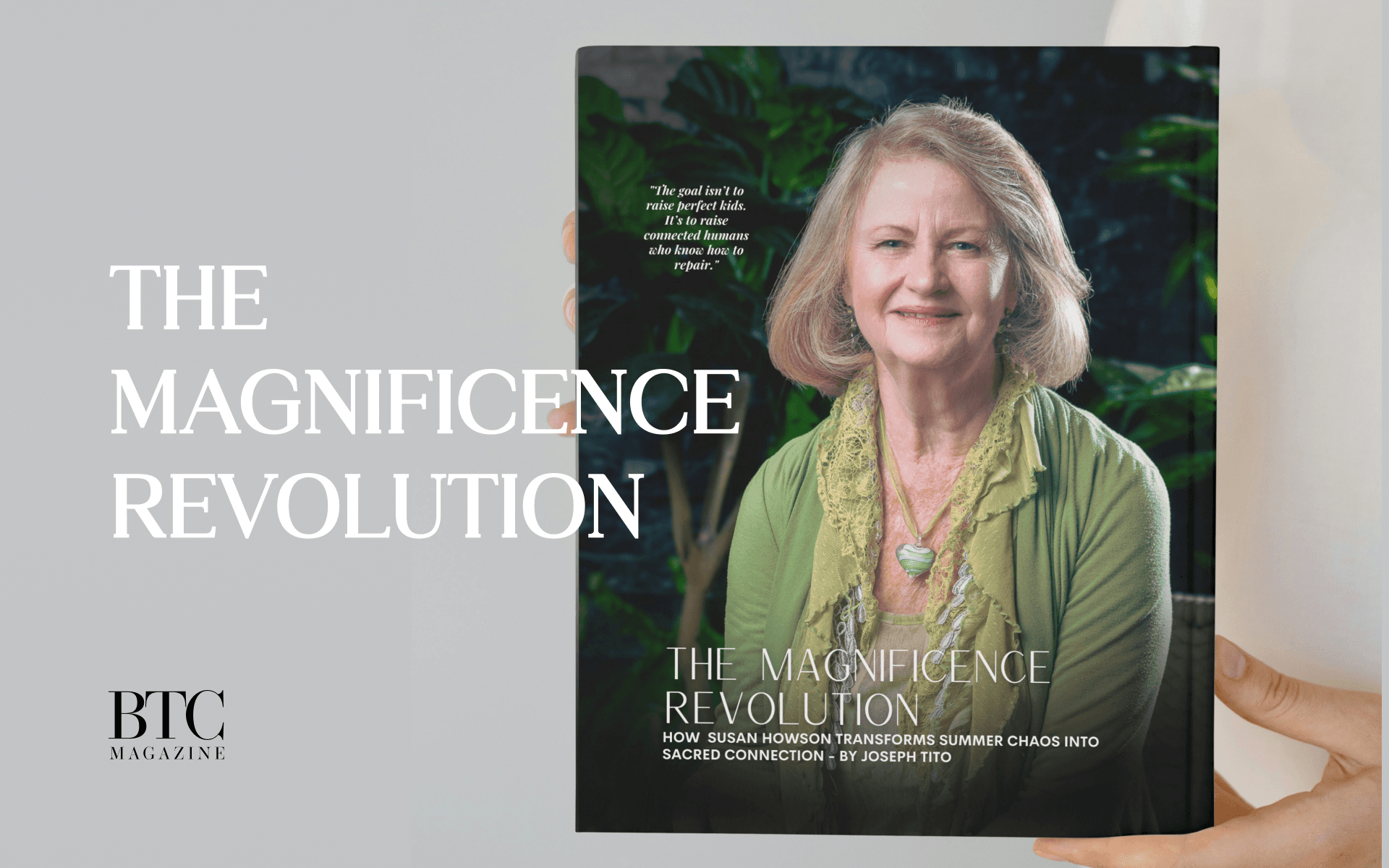
The Magnificence Revolution How Susan Howson Transforms Summer Chaos Into Sacred Connection
When Summer Dreams Meet RealityWe've all been there. Pinterest boards filled with perfect family activities, camp registration forms promising "magical experiences," and that nagging feeling that somehow, we're failing at summer before July even arrives. The gap between our summer expectations and reality feels wider than ever — and Rev. Susan Howson knows exactly why."People think vacation means everything gets easier," Susan tells me during our conversation, her voice carrying the warmth of someone who's seen thousands of families navigate this exact struggle. "But what happens is everybody gets in each other's face 24/7, and all the stuff you haven't dealt with gets amplified."As the founder of Kids Coaching Connection and creator of the internationally acclaimed "Manifest Your Magnificence" affirmation cards, Susan has spent over two decades pioneering what she calls "magnificence coaching" — a revolutionary approach that transforms how families, camp counselors, and educators show up for the beautiful chaos of being human.And she's about to change everything you think you know about surviving summer.“I used to think my job was to fix the mess. Now I know my power is in how I sit with it.”The Teacher Who Changed EverythingSusan's journey to becoming what colleagues call "the magnificence whisperer" began with profound loss and an unexpected gift. When grief threatened to consume her after losing her grandmother, a teacher appeared who understood something most adults miss: authentic presence matters more than perfect solutions."That teacher didn't try to fix me or push me toward false positivity," Susan reflects. "He just created space for all of me — the grief, the anger, the confusion — and somehow that made room for my resilience to grow too."This early experience of someone truly showing up became the blueprint for her life's work. Today, Susan holds multiple coaching certifications (MA, PCC, CPCC, CHBC), and has earned the prestigious ICF PRISM award for her groundbreaking program development.But her real credential? Twenty years of helping people discover what she learned in that classroom: you don't have to be perfect to be magnificent."You don’t need a script to parent. You need the courage to return—again and again."The Camp Counselor's Secret WeaponEvery summer, something interesting happens in camps across North America. Counselors start with enthusiasm, kids arrive with expectations, and by week three, everyone's wondering why this "fun" thing feels so hard.Enter Susan's Kids Coaching Connection Camp Training (KCCCT), a program that's revolutionizing how camps handle the inevitable challenges of putting humans together intensively."We design every relationship," Susan explains, "and that includes how we want to be with each other when we forget, when it doesn't work, when our emotions go up — because they will."Her approach trains counselors not to avoid conflict, but to navigate it authentically. Instead of maintaining constant cheerfulness (which research shows actually undermines resilience), counselors learn to model emotional agility — showing kids how to work through disappointment, negotiate differences, and return to connection.The results speak for themselves: camps report decreased staff burnout, improved camper behavior, and something harder to measure but impossible to miss — genuine joy replacing performed happiness.The Affirmation Revolution That Started It AllTwenty years ago, when Susan created her first set of affirmation cards, the positive psychology movement was barely a whisper. Today, affirmation cards flood the market — but Susan's remain different, and the reason reveals everything about her approach."I get kids in Brazil and Mexico," she tells me, pulling out a card that reads "I am a Shining Star." "I give a kid this card and they go, 'Is that really me?' They're crying, holding it, asking 'Can I believe this?'"The difference lies in what's on the back: "I maka a positive difference in the world.""It's not about ego," Susan explains. "It's not about standing up and saying 'I'm a shining star and you're a f***ing idiot.' It's 'I'm a shining star and so are you. How are you going to take being a shining star and put that into the world?'TThis distinction — between healthy self-regard and narcissistic inflation — guides everything Susan teaches. Her cards don't create entitled kids; they create empowered ones who understand their magnificence comes with responsibility.The Words That Wound (And How to Heal Them)During our conversation, I confess to Susan about the casual cruelty that slips out during parenting stress: "What are you wearing? You look ridiculous." Simple words that stick longer than we ever intended.Susan's response is both gentle and revolutionary: "Buckminster Fuller stopped talking for three years after his words failed his son. Then he started writing about the power of our words, our intentions, our expressions. It's about the awareness of impact that most people aren't aware of."She shares the story of the brilliant inventor who, drunk on victory after a soccer match, forgot to bring his dying son the promised pennant. When the child died, Fuller's guilt drove him to three years of silence, followed by decades of writing about the power of intentional communication."We want to be the best version of ourselves," Susan says, "and that's different than the belief that we need to be perfect."This philosophy permeates her Kids Coaching Connection program, which teaches adults to catch themselves mid-mistake, course-correct with grace, and model the kind of authentic repair that builds trust rather than shame.The Next Generation ChallengeTwenty years into her work, Susan has identified something that would sound like science fiction if it weren't so demonstrably true: the children being born now are different."They're more intuitive, more in tune. They'll answer your question before you ask it, and it freaks parents out," she laughs. "It's because they're quantumly connected. You're communicating without language."Her observation extends beyond metaphysics into practical parenting reality. Today's children are "more sensitive to what's happening in the world, more sensitive to what's happening with themselves and with others. Because they're kids, they just don't know how to navigate that."This heightened sensitivity requires what Susan calls "a deeper awareness of who our kids are as well as who we are as parents." Her programs now address not just traditional behavioral challenges, but the unique needs of children whose emotional and intuitive intelligence often exceeds their developmental capacity to manage it.The 50 Million Kids MissionSusan's goal sounds audacious: "Increasing the self-esteem of 50 million kids in 5 years." But when you consider her track record — international programs, bestselling books, award-winning training systems — it starts feeling inevitable rather than impossible."I think we need to increase that number now," she admits during our interview. "People are understanding the importance of self-esteem, self-awareness, and self-efficacy. Not ego—honoring the gifts and talents you have."The distinction matters crucially. Susan's work doesn't create participation-trophy culture; it builds genuine confidence based on authentic self-knowledge and contribution to others."When are we more successful — when we feel really shitty about ourselves or when we feel really good about ourselves?" she asks. "But it's not about giving every kid a gold medal just for showing up. We have to work toward what is true."The Summer Survival StrategySo how do we actually implement Susan's wisdom during the intensity of summer family time? Her approach is both practical and profound:Design Your Relationships ConsciouslyBefore the chaos hits, have the conversation: How do we want to be with each other when someone gets overwhelmed? What do we do when expectations clash with reality? How do we return to connection after conflict?Embrace the Mess"Show up authentically in the human-ness and the human mess," Susan advises. "Honor who you are, honor whoever you're working with. Don't judge the judgments — learn from them."Focus on Internal ReinforcementInstead of constant external praise ("That's the most brilliant picture ever!"), ask questions that build internal awareness: "Tell me about the colors. What was your thought process? How do you feel about it?"Practice Repair, Not Perfection"We're going to make mistakes," Susan acknowledges. "It's about going back and saying, 'Let's talk about this.' That unconditional love — regardless of anything — that's what research shows matters most.""You are the lesson they’re learning—every single day."The Transformation She's Really AfterWhen I ask Susan about her ultimate vision, her answer transcends summer camps and family dynamics:"For every single person on earth to understand their magnificence. The person sweeping the street, the person going into space, everyone in between. When we understand our magnificence and why we were put here, and we support each other to do that, we are happier and healthier and make the world a better place — it's not about competition, it's about collaboration.”This vision drives her remarkable generosity. When other coaches want to create affirmation cards, Susan shares her process freely. "There's how many billion people in the world? If mine doesn't reach them, theirs might. Good — we need more positivity."Your Summer InvitationAs our conversation winds down, I'm struck by how Susan's approach offers something our performance-driven culture desperately needs: permission to be human while pursuing excellence.For parents facing the summer stretch ahead, her message is both simple and revolutionary: You don't have to be perfect to be magnificent. Your struggles don't disqualify you from greatness — they're where greatness gets forged. "What I see, " Susan tells me when I ask about stressed-out parents trying to do it all, “is someone wanting to do the best they can for themselves and the people in their lives. It’s not about trying to do it all. It’s about honouring yourself too. Take time to just be and celebrate each other. We don't celebrate each other enough just for the sake of celebrating. There’s nothing that needs to be done to celebrate. We're already doing it. We're together.”This summer, instead of chasing the Instagram-perfect family experience, what if we practiced Susan's invitation to show up authentically for whatever emerges?What if we designed our relationships consciously, embraced our beautiful mess, and trusted that our magnificence — and our children's — doesn't depend on getting everything right?In Susan Howson's world, that's not just enough. That's everything.
THE BEAT OF TRANSFORMATION How One Italian-Canadian DJ Is Teaching Women to Reclaim Their Power Through Music
From Toronto housewife expectations to Miami healerThere's something magnetic about Carmelinda Di Manno that transcends the typical DJ persona. Maybe it's the way she rubs her gold cross when talking about finding clarity through meditation and prayer. Maybe it's how she lights up describing a 50-year-old mother from King City who flew to Miami just to learn how to DJ. Or maybe it's the simple truth that radiates from every word: sometimes the most beautiful transformations happen when life completely falls apart."Those moments of what felt like complete devastation," she tells me from her Miami home, her voice carrying the weight of lived experience, "were pivotal in the development of my character. My life just got better after every kind of crisis. Honestly, it did."This isn't your typical success story. This is something rawer, more honest—a testament to what happens when an Italian-Canadian woman refuses to shrink into the life everyone else planned for her.THE UNRAVELING THAT LED TO EVERYTHINGBorn and raised in North York's Wilson Heights, Carmelinda grew up in that perfect 50-50 balance of Italian and Jewish culture that shaped so many Toronto kids. Her parents, immigrants from Italian families, had done what immigrants do: they built safety through traditional structures. Marriage. Stability. The kind of life that looks good on paper.For seventeen years, Carmelinda played that part. Then divorce. Then another long-term relationship that felt like building toward forever—until it ended "in a very surprising way.""I was invited to come to the United States again," she recalls, referring to the third time life offered her a different path. From what started with a“go with the -flow and give it a chance scenario” she came to realize quite quickly that “there is a use for me here” and tremendous opportunity and a feeling of unity with the community and culture.That was almost three years ago. What started as temporary became permanent when she realized something profound: "There's a use for me here."FROM CRISIS TO CALLINGThe path from event planner to yoga teacher to DJ wasn't linear—it was survival. Ten years ago, feeling her marriage dissolve and needing "another outlet, someplace to put my energy," Carmelinda posted on Facebook asking for a DJ teacher."I thought DJing was just going to be another outlet. Another creative, expressive place for me," she explains. But something deeper was happening. In the mixing, the beat-matching, the alchemy of sound, she found more than expression—she found purpose, "I developed a passion, did it as consistently as possible to get better and better at it." Because she'd worked in Toronto's nightclub industry before, opportunities flowed. But this wasn't about parties. This was about transformation.THE PHONE CALLS THAT CHANGED EVERYTHINGHere's where Carmelinda's story becomes something bigger than personal reinvention. Women started calling. Not twenty-somethings looking for weekend fun. Mothers. Wives. Women who'd spent decades caring for everyone else."I have had a number of women that have been housewives and moms for 30 years or 20 some odd years that call me and say, 'Please, can you help me learn how to DJ? Because I haven't done anything for myself.'"One woman traveled from King City to Miami. King City to Miami. Let that sink in."Now their kids are a little bit older, they're feeling more liberated," Carmelinda continues. "The world is a bit more gentle on the subject, and they're feeling like it's time for them to finally explore something for themselves."She's not just teaching women to DJ. She's teaching them She's not just teaching women to DJ. She's teaching them to reclaim parts of themselves they'd buried under years of everyone else's needs.SOUL REVIVAL IN ACTIONThis is where the healing happens. Carmelinda's "Soul Revival Prana Parties" aren't your typical raves. They're community gatherings built around movement, music, and what she calls "activating energy.""Prana is a Sanskrit word for energy," she explains, "and I'm a huge believer that we are energy. So the title soul revival to me means like coming back to life through doing things that activate your energy."Picture this: large groups moving together to live DJs, whether poolside in Miami sun or in art galleries where culture meets beats. "There's some component of movement, music, community, and culture."It's church for the unchurched. Therapy for the skeptical. Permission to be fully alive in your body, regardless of age or how long it's been since you danced.THE AUTHENTICITY THAT HEALSWhen I ask about her latest single "On My Own," Carmelinda's guard drops completely. "It's a story about a person who recognizes finally that their ability to live well, to live happy, to be in their truth is possible without whatever they thought they were attached to."She's talking about a universal truth wrapped in a personal confession: "Sometimes it takes sticky times, but I do believe, especially for women, that they always come to the awareness of what is true for them. When a woman knows her boundaries are set, she's done."The song isn't just music—it's a declaration. A love letter to every woman who's ever had to choose herself over everyone else's expectations.BREAKING THE BEAUTIFUL MESS MYTHIn a world obsessed with Instagram perfection—and Miami's notorious image culture—Carmelinda offers something radical: permission to be beautifully imperfect."A person who's holding space for themselves when they're navigating a challenging time with authenticity, doing their best to still show up for life—that's a beautiful mess to me," she says. "You don't have to be perfectly refined all the time."She produced most of her records "processing something." Pain became art. Crisis became calling. Devastation became transformation."Beautiful things come out of pain. You can use that energy and do something good with it."THE ITALIAN PARENTS WHO LEARNED TO LOVE DIFFERENTLYPerhaps the most moving part of Carmelinda's story is how her traditional Italian parents navigated their daughter's unconventional choices. The divorce was hard. The move to America was harder. But watching their daughter thrive taught them something profound."I think them seeing me healthy and happy has taught them to expand their perspective on what individuals need, and what is truly a person's purpose and destiny," she reflects. "It's not always the mainstream."She learned to see them not as parents who weren't supporting her "the way I wanted them to," but as humans. Immigrants who'd navigated impossible circumstances to build stability in a country where they didn't speak the language."They must have been in so much fear and anxiety and stress for so much of their life that of course they projected it onto me. They didn't have the resources we have."Compassion became the bridge between generations, between expectations and acceptance.WHAT SHE WANTS TO BE REMEMBERED FORWhen I ask about legacy, Carmelinda's answer is immediate and heartfelt: "That people felt like they could really be themselves around me, and that they feel seen and heard."It's not about the music, the parties, or even the transformation. It's about presence. About creating space for people to exist fully, messily, authentically."You don't need a stage to leave a mark," she adds. "Everyone has the opportunity to influence the way other people feel, and the way other people feel about themselves."THE MUSIC THAT MOVES SOULSCarmelinda's sound is impossible to box into one genre—and that's exactly the point. Her latest tracks blend Afro rhythms with soulful vocals, house beats with spiritual undertones. It's music that doesn't just make you dance; it makes you remember who you are when nobody's watching."I love all of it," she says about her influences, rattling off everyone from Bob Marley to Fleetwood Mac to Pearl Jam. "Some of my favorite sets are when DJs are playing a kick-ass tech house song, and then all of a sudden they'll bring in some freestyle. I genuinely go off to that."You can hear this eclectic foundation in her work—tracks that take you on journeys through different emotional landscapes, never predictable, always authentic. Whether she's playing poolside in Miami or in an intimate art gallery setting, Carmelinda creates sonic experiences that activate what she calls "prana"—pure energy.Her music isn't background noise for your Instagram story. It's foreground feeling for your actual life.“You don’t need a stage to leave a mark.”THE INVITATIONAs our conversation winds down, I'm struck by how Carmelinda embodies everything Between the Covers stands for: the messy beauty of being human, the power of authentic transformation, the radical act of showing up imperfectly but wholeheartedly.She's teaching women to DJ, yes. But really, she's teaching them something more fundamental: that it's never too late to reclaim your voice, your power, your right to take up space in the world.Whether you're 25 or 75, whether you're in Toronto or Miami, whether you know the difference between house and techno or couldn't care less—Carmelinda's message is universal:Your authentic self is not a beautiful mess. Your authentic self is just beautiful. Full stop. Find Carmelinda Di Manno on Instagram, Spotify, SoundCloud, and YouTube. Her latest single "On My Own" is available wherever you stream music.Joseph Tito is the Editor-in-Chief of Between the Covers and author of "Random Thoughts: The Sh*t We Don't Talk About," available wherever books are sold.

SUMMER HOSTING with Entertaining Expert Sheila Centner
Alongside her husband and business partner, Sebastien Centner, she’s made a name for herself as someone who not only knows how to throw a great party, but also how to make it look (and feel) effortless.“Hosting should never be about perfection; it should be about making your guests feel at home”says Sheila. And with her warm, polished approach to entertaining, it’s no surprise that she’s considered the ultimate source for entertaining inspiration.MEET YOUR HOSTEffortlessly stylish, endlessly creative, and always the perfect host, Sheila Centner has become one of Toronto’s most trusted voices in modern entertaining. As the co-founder of Eatertainment Events & Catering, co-founder of the lifestyle brand Seb & Sheila, and co-author of Eatertainment: Recipes & Ideas for Effortless Entertaining, Sheila has spent over two decades turning everyday gatherings into unforgettable experiences.SUMMER HOSTING HOW-TOSo, how does Sheila pull off flawless summer hosting with what seems like zero fuss? Here, she shares her favourite warm-weather entertaining tips.Set the Mood“Summer is all about colour, texture, and fun,” says Sheila. Instead of traditional linens, start with a vibrant tablecloth to anchor the look. Accent with fresh greenery or wildflowers to add a natural, unstructured feel.Serve Seasonal, No-Fuss DishesSheila’s summer menus focus on food that’s light, fresh, and mostly make-ahead. “I want to be outside with my guests, not stuck in the kitchen.” Her go-to? A cold seafood platter served with crusty bread and a chilled white wine. For dessert, grilled peaches with mascarpone and honey.Batch Your Cocktails“Individual drinks are a time-killer,” says Sheila. Her advice: pick one signature cocktail and batch it in a carafe or dispenser. Her summer favourite? A rosé sangria with citrus, mint, and a splash of elderflower liqueur. Set it out with glasses, ice, and garnishes so guests can help themselvesEmbrace ImperfectionHer biggest hosting philosophy? Don’t sweat the small stuff. “People won’t remember if the napkins were folded perfectly, they’ll remember how they felt at your table. Make it warm, welcoming, and don’t forget to pour yourself a drink too.”@sebandsheila | @sheilacentner | @eatertainment www.eatertainment.com
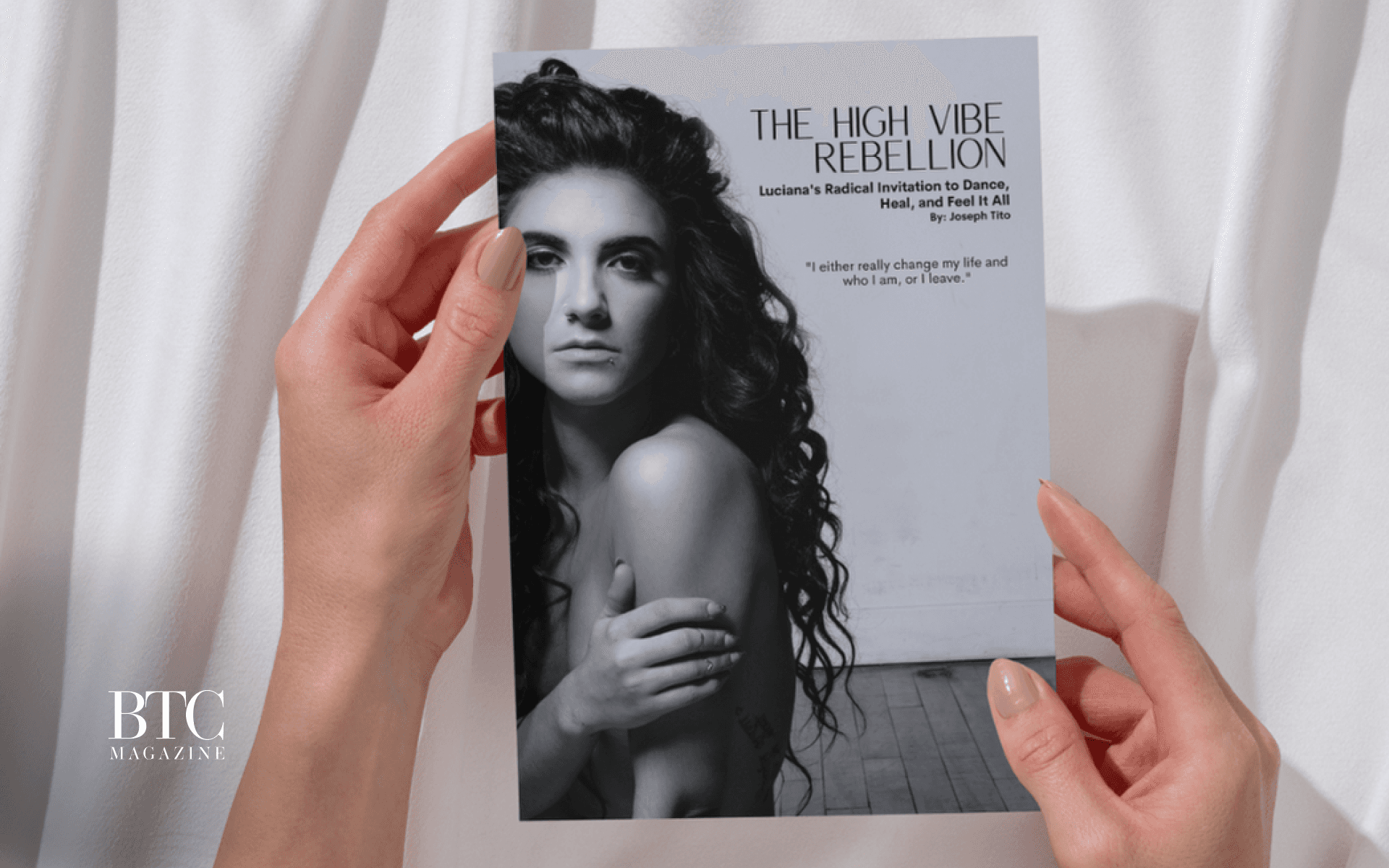
The High Vibe Rebellion Luciana's Radical Invitation to Dance, Heal, and Feel It All
"I either really change my life and who I am, or I leave."How one woman's journey from suicidal depression to spiritual rebellion is creating Toronto's first alcohol-free music festival—and teaching us all to party with our soulsLuciana Santaguida was 18, sitting in her university dorm room, facing the kind of decision that splits your life into before and after. Depression, bulimia, suicidal thoughts—the darkness had compound interest, and she was drowning in it."I can't stay here like this anymore," she told herself. So she reached out to her mom and said the words that would save her life: "I need help."Today, at 32, Luciana is standing in a field of 700,000 sunflowers in Caledon, Ontario, preparing to host what she calls "a revolution of compassion"—Toronto's first alcohol-free music festival. The Sunflower Garden Festival isn't just an event; it's a spiritual intervention for a generation that's been taught to numb instead of feel.The Wound That Started It All"There's the identity part which describes the things I do and share," Luciana explains, her voice carrying the kind of presence that makes you want to lean in. "And then there's the energy part. That is just the essence that I carry."The essence she carries now—expanded, luminous, unafraid—was forged in the fire of adolescent hell. As a child, she was the one questioning everything: organized religion, corporate structures, even the news at age nine. "I was feeling misunderstood as a teen, being hyper-aware as a child, questioning the world aroundme from a very young age," she reflects. "I just didn't really have community at that age that resonated."The isolation compounded. By 15, she was getting blackout drunk every weekend, using alcohol as a "forget my pain" mechanism while watching her father struggle with his own demons. "It was such a demon activator for me," she says. "It just pulled all my darkness right up, and I wasn't more of who I am. I was actually more of whatever demon was living in me."But even in the darkness, light was breaking through. Creative energy—poetry, music, art—became her lifeline. "Having poetry, having music, having art to paint... that was what saved me."Music as Medicine, Not Background NoiseFast-forward to her early twenties, when Luciana dropped out of university to pursue music professionally. She'd found her purpose, but she quickly discovered a problem: the places where music lives—bars, clubs, venues—were filled with people too drunk to actually receive what she was offering."I'm sitting there literally pouring my life into these songs, and I would see my friends and family come to support me, but be really wasted before I even went on," she remembers. "There was a part of me that was like, 'Oh, but they're not even really remembering my performance, or hearing me, or receiving the medicine that was medicine for me.'"So she did something radical: she started creating sober spaces. This was 2015, long before "sober curious" became a wellness trend. Her NÜLOVE events fused music and wellness—house parties in venues thatstarted with yoga, entered with sound healing, and featured cacao instead of cocktails."I wanted to create a place where people could dance and enjoy the music, go out and feel great," she explains. "A place where people could presently connect, be together and have fun."The Revolutionary Act of Feeling EverythingThe Sunflower Garden Festival, happening August 23rd, is the evolution of everything Luciana has been building for a decade. It's not just alcohol-free—it's a 12-hour journey designed to rewire how we experience music, community, and our own capacity for joy."We start with an opening ceremony," she explains, "a land blessing and directions blessing by an indigenous elder, meditation, and then we're singing a song. And then we go into the first live artist."From there, it's a carefully orchestrated dance between stimulation and integration. The main stage, cut into the sunflower field itself, features predominantly female artists—a conscious correction to an industry where women are often afterthoughts. "I've been either the token woman or one of two women on a 30-40 artist lineup," Luciana says. "I got a call yesterday—literally, 'We kind of want you because there's no women on the lineup.' It's like the afterthought."But this isn't rage-fueled activism—it's something more nuanced. "The initial force forward was frustration, and there needed to be a fire. I needed to have the fire in me to move something forward with purpose," she admits. "But certainly this is rooted with purpose and not rage."The Sacred Fire and the Sacred PauseWhat makes Sunflower Garden different isn't just what it includes—it's what it intentionally creates space for. Throughout the property, integration spaces offer refuge from stimulation. A sacred fire, tended by men following indigenous tradition, provides a place for prayers, tobacco offerings, and the kind of deep rest that's impossible to find at traditional festivals."We can't know what's going on internally with ourselves if we don't pause," Luciana explains. "So the integration spaces, the wellness practices, the programming that's happening alongside the music—they're designed to help create that moment of pause, that moment of connection."In place of alcohol, she's created six proprietary botanical drinks, each designed to address different social needs. "One's going to help you find calm if you're that socially anxious person. If you sometimes drink to just get loose in your body, we'll have herbs that help you relax and get loose in the body. I've tailored them to assist with key points of why I've seen myself drink, or why I've noticed people around me drink socially."The Business of Being HumanWhen asked about charging money for wellness—$89 for early bird tickets, $249 for VIP—Luciana doesn't flinch. "I'm in two industries where people don't value art unless you're famous, and you have the entire narrative that society constructed that says 'starving artists.' It's the same in wellness."She's created subsidized tickets and volunteer opportunities, but she's also clear about the bigger picture: "There has to be a balance. For me to produce an event, I have expenses. I can't do it for free. You won't have the experience you're going to have because I won't be able to produce it for free."Her response cuts through the spiritual materialism debate with razor precision: "We deserve to be prosperous too. It's when we're living in scarcity that we have an issue paying for things, and we perpetuate the cycle... There are programs around money that are very specific to healers and very specific to artists. And it's to keep us small, because when those people have money, they change the world."What Wellness Gets WrongDespite building her career in wellness, Luciana isn't blind to its shadows. "There's a lot of lack of integrity," she says when asked what makes her want to burn the industry down. "Just like taking of people's ideas without conversation, without acknowledgment, without honoring."Coming from a lineage-based Reiki training, she values the reverence and proper transmission of knowledge. "There's just a lot of none of that here. The itch for me in the wellness space is just like there's a lot of integrity missing from some of the leaders."Dancing Through the FearFor women who feel too heavy, too self-conscious, too broken to dance—Luciana's core audience and her former self—she offers something that sounds simple but feels revolutionary: permission."You can judge yourself all you want, right? You can do that at home, in a crowd, in the yoga class. But it's just the mind stopping you from connecting," she explains. "As children, we're free of that most of us, and at some point we tell ourselves, or someone tells us something that we listen to, we take on as our truth, and it stops us from enjoying."Her advice for women feeling stuck is practical magic: gratitude lists, morning and night, for two weeks. Not surface-level gratitude, but "grateful to the level of, if you didn't have these in your life, life would not be worth living.""If you can change your energy, you can change your reality," she says. "It's step by step, though."The Legacy of LightIf Sunflower Garden was Luciana's last act on Earth, what would she want people to remember? The question stops her for a moment."The vision I keep seeing is just people so expanded, like the heart just so open. There's this bliss, there's smiles," she finally says. "I want them to take away... remembering that love and happiness and freedom they're feeling inside themselves is always there."t's about remembering what we've forgotten: "You can create that at home by throwing on your favorite song and having a dance party with yourself in the morning. You just forgot. You just forgot that you can feel like this really anytime you want."Looking back at her 16-year-old self—depressed, suicidal, blackout drunk every weekend—she sees not surprise but awe.“That I survived, and that I became the person I wanted… It’s like, ‘Whoa. We did it. We wanted to be in music—we went for it. We wanted to do yoga training—we did it. We wanted to help people heal—and now look. We’re doing it.’”Her voice softens, but the pride is unmistakable. “I’m the person I needed back then. That’s the part that gets me.”The Sunflower Garden Festival takes place August 23rd at Campbell's Cross Farms in Caledon, Ontario. Tickets and information available at sunflowergardenfestival.com. Follow Luciana at @lucianawithlove or visit lucianawithlove.com for music, wellness offerings, and proof that the most radical thing you can do is remember how to feel fully alive.In a world that profits from our numbness, dancing sober in a field of sunflowers isn't just a party—it's a revolution.

The Thousandaire's Guide to Not Being Basic: Why George Hahn Gets It
When style influencers peddle $2,000 handbags to pay rent, one man said "fuck that" and built something real.Here's what I love about George Hahn: he sold his Rolex to feed his dog.Not to fund some bullshit passion project or because minimalism was trending on Pinterest, but because the 2011 recession came for him like it came for all of us—swift, merciless, and completely indifferent to whether you had good taste or not. So he pawned his watch and decided to become what he calls a "self-made thousandaire" instead of pretending he was still swimming in champagne money.Fast-forward thirteen years, and George has quietly built one of the most honest voices in men's style without ever once telling you to "invest in yourself" or "manifest abundance." His blog, podcast "Hahn Solo," and social media read like your smartest, slightly cynical friend explaining why you don't need a $500 white t-shirt to look put-together.“I don’t wake up every day feeling great about myself. I’m not always confident. But I do know who I am. And I’ve learned that clarity of self is far more powerful than chasing someone else’s approval.”The Anti-Influencer InfluencerGeorge's origin story reads like a fever dream of every creative who moved to New York in the '90s. Theater kid from Cleveland? Check. Boston College drama major with a patchouli phase? Double check. Waiting tables at trendy spots while booking tiny roles on "Sex and the City"? Triple check—with a side of existential dread.But here's where his story diverges from the standard "I-came-I-saw-I-conquered" influencer narrative: he admits to the mess. The eighteen months as a hair salon receptionist booking appointments for "the most pulled faces in the Northern Hemisphere." The years of restaurant work. The moment when everything fell apart and he had to choose between keeping up appearances and keeping his priorities straight.That vulnerability? That's the secret sauce. In a world where every style blogger seems to live in a perfectly curated apartment they definitely can't afford, George says the quiet part out loud: most of us are just trying to look decent while not going broke.Sartorial Stealth ModeGeorge coined the term "sartorial stealth"—looking polished without screaming about it. It's the opposite of logo-heavy, status-symbol dressing that dominates men's style content. Instead, he advocates for classic pieces that work across contexts: the perfect white dress shirt with unfused collars, one good stainless steel watch that transitions from work to dinner, well-tailored basics that don't announce their price tag."Anyone with money can acquire. What's more interesting to me is when someone does something fantastic with limited resources," George writes, cutting straight to the heart of what makes his perspective so refreshing.This isn't about being cheap—it's about being smart. When The New York Times launched their Men's Style section featuring $990 jackets and $560 pants, George called it out: "The new Men's Style section of The New York Times joins the bloated legion of magazines, blogs and online influencers that equate style and refinement with spending power."His alternative? Proving that style is about proportion, fit, and understanding what works for your life—not about how much you can drop on a single item.The Realness We're All CravingWhat makes George's voice so refreshing is that he writes about style the way we actually live: imperfectly, pragmatically, with limited budgets and real priorities. His recent piece on watches is a perfect example. While every other men's blog is pushing luxury timepieces as "investment pieces," George argues you only need one good watch—and explains why a well-chosen tool watch works for everything from boardrooms to dive bars.He's also refreshingly honest about his own limitations and changes. When he moved back to Cleveland for three years, he didn't pretend it was some strategic lifestyle choice. When he returned to New York and rebuilt his following (387.8k TikTok followers and counting), he didn't frame it as some comeback story. It's just life happening, with all its messiness and course corrections.Why This Matters to UsIn a digital landscape saturated with lifestyle content that feels performative and unattainable, George represents something different: authenticity without the therapy-speak, style advice without the classism, and honesty without the martyrdom.His readers—many of whom are women—aren't just there for the menswear tips. They're there for the voice. The way he writes about New York City life, the humor he brings to everyday observations, the reminder that looking good doesn't require selling your soul to fast fashion or luxury brands.Plus, let's be real: if you're in a relationship with a man who gives a shit about how he looks, George's approach is going to make your life easier. No more explaining why he doesn't need seventeen different watches or why a well-fitted $40 shirt beats an expensive, poorly cut one every time.The Thousandaire PhilosophyGeorge's "thousandaire" identity isn't about having exactly $1,000 in the bank—it's about rejecting the millionaire mindset that dominates lifestyle content. It's about finding satisfaction in getting things right within your means, about quality over quantity, about looking intentional without looking try-hard.In an economy where we're all basically thousandaires whether we admit it or not, George's perspective feels less like lifestyle porn and more like a survival guide. How to dress well when you're not rich. How to live in a city that wants to bleed you dry. How to maintain standards without losing your mind—or your rent money.
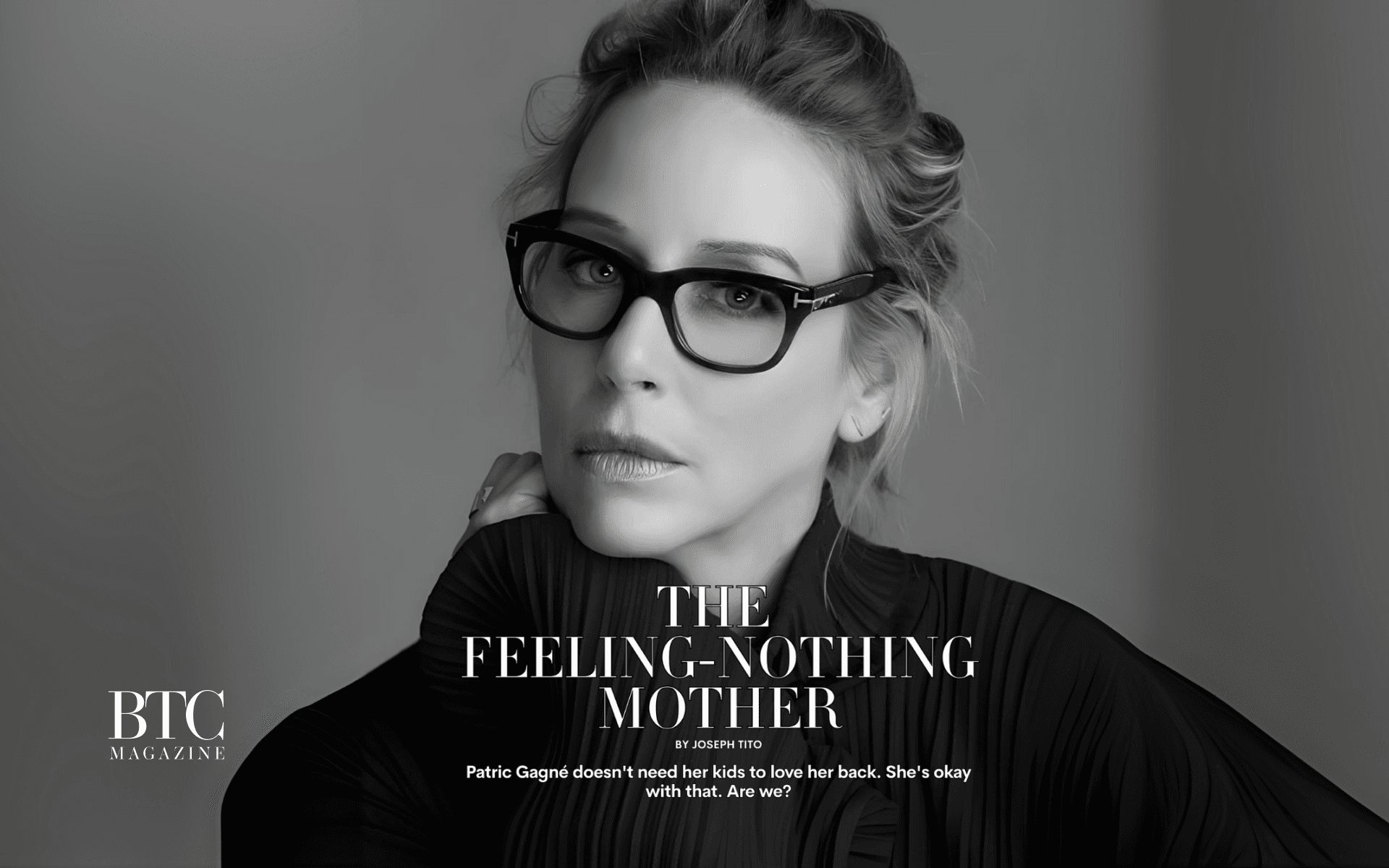
The Feeling-Nothing Mother
Patric Gagné doesn't need her kids to love her back. She's okay with that. Are we?Patric Gagné cuts her kids' peanut butter sandwiches into stars and whales. She makes Christmas magical even though she hates it. She shows up for bedtime stories, tantrums, and bullies. But here's the kicker—she does it without the emotional fuel most of us run on. She's a diagnosed sociopath. And she's one of the most fascinating, disarming, and deeply human mothers I've ever interviewed.This isn't a hot take on TikTok psychopathy or a glorified redemption arc. This is someone telling the truth about what it's like to parent without the typical emotional wiring—and still doing the damn thing. I first reached out to Patric because her memoir Sociopath hit me in the gut. Not because I saw a monster. But because I saw a parent navigating the same chaos I was—just using a different map. What followed was one of the most honest, unfiltered conversations I've ever had with anyone."I told my kids they don't have to love me." That line stopped me cold. I asked her if she meant it literally—like, had she actually said those words to her children? "Yes," she said without hesitation. "We've had long conversations about love, and I've told them it should always be additive. You should never feel obligated to love anyone. Even me."It's not rejection. It's radical self-honesty. And it challenges every sappy Mother's Day card, every feel-good sitcom, and every sugarcoated idea we've been sold about what love between parent and child is supposed to look like. But that's the point. Gagné's entire existence challenges the mythology of motherhood—and not in a self-congratulatory way. She's not trying to shock. She's trying to survive. And raise decent humans in the process.The Baby Stage: "I wanted to leave."We talked about those early months of parenting—the dark, sleepless tunnel so many of us have barely crawled out of. I told her I was crying daily, unsure if I'd make it out in one piece. She didn't flinch. "I wanted to kill myself," she admitted. "Not because of them—but because I thought something was wrong with me for not bonding."She had hoped, deep down, that motherhood would unlock something in her. Some primal instinct. Some feral maternal love. But it didn't. And that realization broke her heart in a way she couldn't quite describe. She wasn't angry at her children. She was angry at herself for believing she could be like everyone else. "I was a fool to have thought I could have bonded that way," she said. "I should have been more realistic with myself and said, 'Hey, it's not going to be what it's like for everybody else, just like nothing in your life has been. It's going to be different. But you'll get there.'"The difference between her experience and mine? She had a partner she could tap out to. "Unlike you, I had the benefit of a partner that I could say, 'Here you go. I got to tap out.'"Parenting Without the ScriptWe don't talk enough about what happens when your kids trigger parts of you that have never fully healed. Or never existed. Patric doesn't fake maternal warmth to keep up appearances with other parents. She fakes it when her kids need it from her. "Not so much anymore—they're older," she said. "But when they were younger and needed comfort I couldn't access authentically, I gave them what they needed anyway."When I asked what it feels like to watch her kids sleep, she answered without hesitation: "Relief." Not joy. Not aching love. Relief. Because they're okay. Because she can finally rest. That answer gutted me. Not because it was cold—but because it was honest. And how many of us have felt that exact thing, but felt too guilty to say it out loud?But then she surprises you. When her older child witnessed a classmate being bullied for their sexual orientation and stood up for them, Patric had one of her proudest moments. "I told him, 'You have no idea how much that means to that kid. It really means the world to a kid who feels all alone to have another kid say, stop doing that. That's not kind. And you're being a dick.' I was really proud of him that he did that."Pride without ego. Protection without possession. It's parenting stripped of performance."I can't care about this."One of my favorite moments came when I asked her how she handles the petty day-to-day dramas that set most parents off. "I just say, 'I can't care about this,'" she said, laughing. "It started as a joke with my friends, and now my kids even say it. Like, 'Mommy, you can't care about this.' And I'm like, 'I really can't. I love you. I do not have the bandwidth for a Fortnight play-by-play. I'm a huge gamer and I actually love Fortnite, but I'm also not interested in a 30 minute rundown."It sounds harsh. But how many of us pretend to care about every scraped knee, every Pokémon card betrayal, every tantrum about the wrong color cup? Patric doesn't pretend. She just shows up with what she's got.For nightmares, she takes what she calls "the easy way out." Instead of processing the dream at 3 AM, she'll say, "That's so scary! Let's talk about it more in the morning," or "The best thing for a nightmare is to replace it with a fresh dream," and bring them into bed with her. "The middle of the night is no time to process a nightmare," she said. "If they still want to talk about it in the morning I'll tell them they have 90 seconds to identify every emotion they felt in the dream. The emotions hold the information and, let's be honest, no one is trying to hear 90 minutes of unconscious recall."Boundaries without guilt. Efficiency without cruelty. It's revolutionary, actually.The Santa Claus RebellionIf you want to understand how Patric's mind works, ask her about Santa Claus. From the time her children were conscious enough to have the conversation, she's been methodically dismantling the myth. "I think Santa Claus is crazy. This whole thing about Santa Claus is insane to me," she told them. When they protested that Santa was real, she'd respond with pure logic: "What's the truth? That a man who wears the same clothes 365 days a year comes down a chimney and leaves presents for you because you're good? So he's breaking and entering?"Her children would push back, insisting Santa arrives by sleigh. "I'm sorry, he comes on what? A sleigh?" She'd continue: "Don't talk to strangers unless it's a man in a red suit promising gifts, in which case get into his lap and whisper your secrets? We're teaching kids about stranger danger, but over here it's okay?"But here's the thing—she still makes Christmas magical. "I really work hard to make Christmas magical for them, because it's not their fault that I have a really hard time at Christmas. It's so hard every year. But I definitely do it for them."Her solution was brilliant: let her children convince her while maintaining her stance. "They would come to me with the stories, and I would say, 'That's bonkers,' and then it's on them to convince me. All along I would say, 'This is insane,' but I will tell you there is something about Christmas that is magical. I don't know what it is, but I know it's not some random guy.""I never wanted to tell them I believed in something I didn't believe in," she explains. "I'd rather my kids know they can always count on me to deal with them honestly, even if it's not as magical as they would like it to be."Radical honesty wrapped in love. It shouldn't work. But it does.When Marriage Meets LogicLiving with someone who processes emotions so differently presents unique challenges. When her Italian husband gets angry and starts raising his voice, Patric's response is clinically precise. "I say, 'You're increasing the volume of your voice, not the clarity of your communication.'" she tells me. "I don't respond to yelling. I don't allow anyone to speak to me this way, and I wouldn't allow anyone to speak to you this way, so you need to take a walk because all I see is someone who is so wrapped up in an emotion tornado I can't reach the person on the inside."It should sound cold. Instead, it sounds like the sanest relationship advice I've ever heard. Her husband, she says, thrived in the baby stage. But Patric prefers the teenage years. "People like us tend to have a much easier time with the teenage years," she explains. "So many people who thrived in the baby stage are ready to pull their hair out in the teenage years. I feel that I'm more equipped to be a teen parent because I can have those conversations—about sex, about violence in schools. I'm very direct. I don't shy away from anything."When it comes to discipline, Patric strips away the emotional drama that usually accompanies consequences. "Actions have consequences. Period," she says. "It's like being an adult—if you want to test the boundaries and get caught, you're not going to be able to have access to the things you want. It's not 'How can you do this to me?' It's more just meeting them where they are."She often lets her children choose their own consequences. "You did something, so what is the consequence? You tell me, because I can choose, but I think it's more effective if you choose your own consequence. They're usually pretty spot on." With her older child, she'll reframe situations by asking what advice he'd give his younger sibling in the same situation. "Is this what I should tell your younger sibling? Is this how you would handle this?" The answer, she says, is always the same: "No."It's accountability without shame. Consequences without manipulation. And it's working.The Boxes of MemoryIn her memoir, Patric writes about a box of stolen childhood trinkets—glasses, small objects that gave her some sense of feeling when everything else felt like nothing. I asked if she still keeps that box. "I do, but it's gotten bigger. So now I have many boxes full of things, and they're not necessarily things that have been stolen so much as they're things that I have from places that I've been where I shouldn't have been."The impulse has evolved but never disappeared. When she travels alone, she notices the old urges. "She's still there, you know. She's like, 'Hey, you wanna go? Do you want to get into it?' It's like, no, I do not want to get into it. It's a conversation that's more playful now."At a recent party, she watched a woman being "such an asshole to the people working the event" and felt the familiar pull toward chaos. "I remember thinking, I'm just gonna grab her purse and throw it in the garbage. She's gonna lose her mind. She's gonna think somebody stole it. All of her stuff's gonna be gone." Her husband intervened quickly. "He definitely interceded very quickly, like 'You're not doing that.' And I was like, 'Well, we aren't doing anything. Just go get the car, Buddy. You don't have to be a part of this.'"Instead, she kicked the woman's purse under a table three tables over. "She did lose her mind and started accusing the staff of stealing it, which just basically outed her for being an even bigger piece of shit than she was."It's vigilante justice without violence. Chaos with a moral compass. And I'm not going to lie—I kind of love it.Love, RedefinedPatric's definition of love doesn't come with fireworks. It's not desperate or possessive. It's mutualism. "Organic. Additive. Mutual homeostasis," she said. "Not transactional. Not ego-driven. Just two people benefiting from each other's presence."When her children accomplish something—good grades, first steps, small victories—she celebrates differently than most parents. "I'm happy for them. I'm proud of them. But pride is something that's egocentric, isn't it? So many people who have a lot of pride also take it as a reflection of them, like 'Look at what a good parent I am because my kid got an A.' I'm proud for them, proud of them, but it has nothing to do with me."She adds, "You can be diagnosed with secondary psychopathy and still love. You can love differently—and still make it count."Honestly? It sounds like a better kind of love than most people ever get.Of course, the part of her story that makes people recoil—the pencil-stabbing, the animal cruelty—can't be sanitized away. When I asked what those moments felt like, she said, "Relief. It was like I could finally stop masking. It was my way of saying, 'This is who I am.'" She doesn't excuse the behavior. She doesn't romanticize it. She just doesn't connect to it emotionally the way neurotypical people do. And that's what terrifies people.But that's also why this story matters. Because when we treat sociopathy like a horror movie diagnosis—something you either are or aren't, something inherently evil—we lose the nuance. We lose the opportunity for understanding. For intervention. For treatment.She's Not Asking for ForgivenessPatric doesn't want you to like her. She's not asking for redemption. She's not looking to be fixed. She's just telling the truth. "I don't need an excuse to be an asshole," she told me. "If I'm in a dark place and I act out, I act out. There should be consequences. But I don't feel guilt about it."Her diagnosis doesn't excuse harm. But it does explain how she moves through the world. And she's spent years unlearning harmful behaviors—not because she "feels bad," but because she understands what's right. There's something both terrifying and refreshing about someone who takes responsibility without the emotional theater that usually accompanies it.The Privilege to HealShe's the first to acknowledge that if she weren't white, articulate, and conventionally attractive, this story might have ended very differently. "There are thousands of kids with the same traits I had—oppositional defiant disorder, conduct disorder—but they don't get access to treatment. They get kicked out of school. Thrown into the system. Labeled as bad kids. But these are treatable conditions. We just don't fund the solutions."She cites staggering statistics: "Conduct disorder affects roughly 10% of girls and 16% of boys. Its symptoms, such as stealing and deliberate acts of violence, are among the most common reasons for treatment. And yet there's no testing for them or markers for them like there are for autism."This isn't abstract for her. This is the knowledge that hundreds of thousands of children are cycling through systems designed to punish rather than heal. Children who could be helped. Children who could become functional adults, partners, parents. Children who could become her.The Origin MysteryPerhaps the most significant revelation comes when Patric drops a bombshell about her condition's origins: "I was not born this way." She's discovered something about the environmental factors that shaped her—specifically, "having been exposed to psychopathic practices at a very young age." Her response to this discovery? "Relief, fury, and clinical curiosity."But she's not ready to elaborate. "I need to do more research," she says. If her research proves what she suspects, it could revolutionize how we understand and treat sociopathy. It could shift the conversation from "monster or not monster" to "how do we prevent this from happening to other children?" For now, she's keeping that discovery close to her chest. But the implications are staggering.So What Do Her Kids Think?"They've never asked why I'm different," she said. "Because I've always been honest. I've told them, 'Mommy doesn't experience emotions like that. So sometimes I won't understand what you're feeling. But that's okay. You can talk to Daddy.'"When her children heard some of the backlash against her book, their response was pure confusion. "They're like, 'I don't understand. Why are people angry? Why are they saying things like that?' They can't wrap their head around it."Her children aren't confused about their mother. The rest of us are confused about what motherhood is supposed to look like.The Uncomfortable TruthThis is not a "look how far she's come" piece. This is a "look how she lives anyway" piece. Patric Gagné isn't trying to be your role model. She's not trying to win you over. But she is asking you to consider that parenting doesn't always have to be soaked in guilt, martyrdom, and emotional exhaustion. Maybe it can also be about logic. Consistency. Showing up. Giving your kids the truth, even when it's not pretty.We love to say that "there's no one way to be a good parent." But we rarely mean it. We say it, then judge every choice that doesn't look like our own. Patric Gagné is here to remind us that the love we think is universal—that overwhelming, consuming, sometimes destructive devotion—might not be the only way to raise whole human beings.You can love differently and still make it count. And maybe that's what makes her the most honest mother of all.If you or someone you know is struggling with thoughts of self-harm, please reach out to a mental health professional or crisis helpline. If you suspect a child may be showing signs of conduct disorder or other behavioral concerns, early intervention can make a significant difference."I am a criminal without a record. I am a master of disguise. I have never been caught. I have rarely been sorry. I am friendly. I am responsible. I am invisible. I blend right in. I am a twenty‑first‑century sociopath."Patric Gagne’s Sociopath is one of those books that leaves you sitting in silence long after the last page—equal parts disturbed, cracked open, and weirdly comforted. She doesn’t sugar-coat a thing. From childhood violence to emotional emptiness, Gagne holds nothing back, and somehow in that void, you feel everything. It’s not a plea for pity. It’s a dissection of what it means to perform humanity when you don’t feel it—and the loneliness that comes with that mask. And while the motherhood stuff is only touched on in the epilogue, what lands is the deep, unspoken ache for connection. This book made me question what we call empathy, what we judge as broken, and who gets to heal. It’s haunting in the best way. Get your copy here.
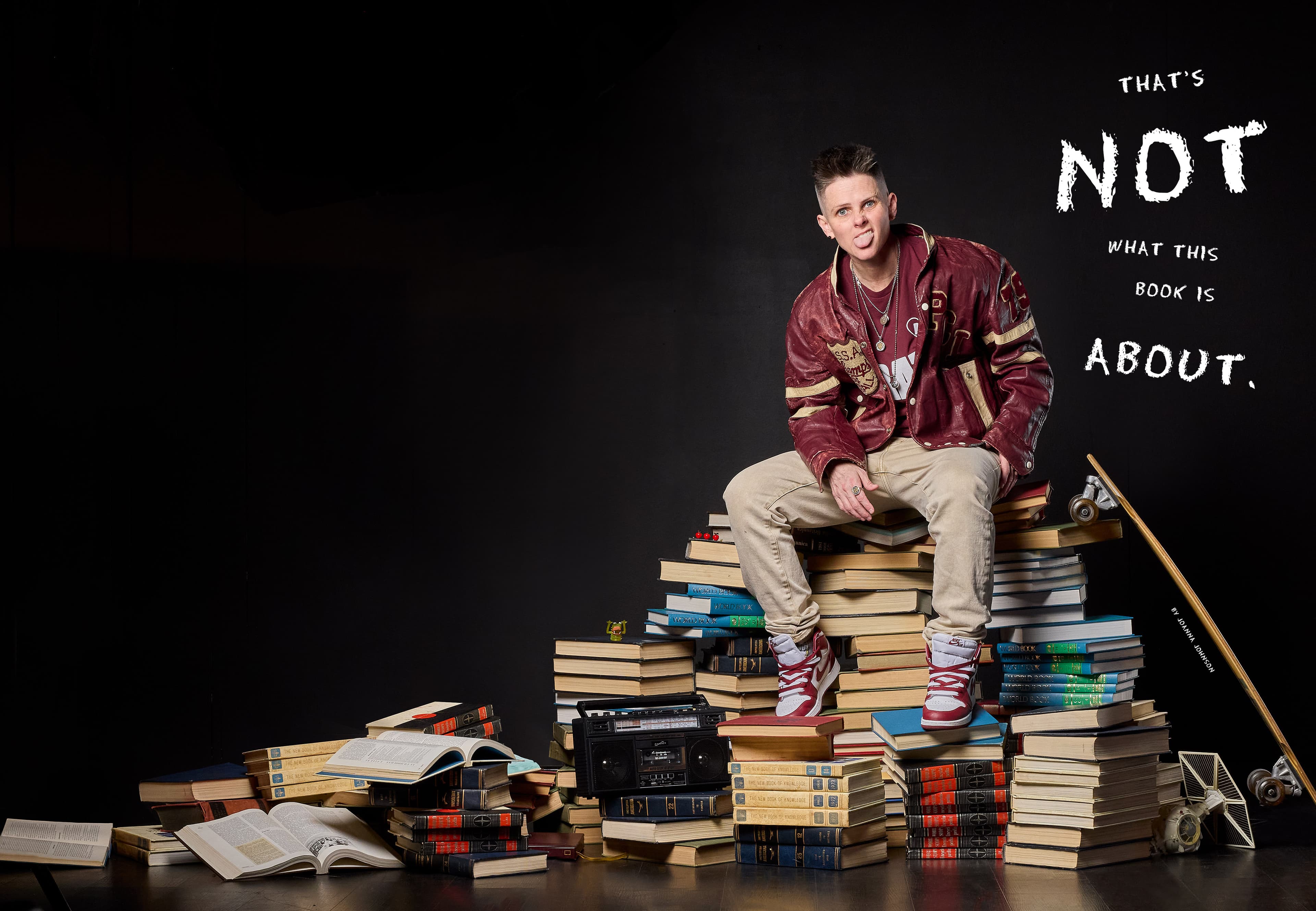
That's Not What This Life Is About
How Joanna Johnson built a revolution from the wreckage of everything she thought she knewThe revolution wasn't supposed to start with TikTok dances.Joanna Johnson was lip-syncing to "Jesse's Got a Gun" in her empty house, buying guitars she couldn't play, performing for strangers on an app she didn't understand. Her friends were calling to check if she was having a breakdown. She was 44, recently divorced, trapped in lockdown, and according to every metric that had previously defined her life, completely lost."My friends were calling me, making sure I wasn't having a physical, emotional breakdown," she laughs, remembering those early pandemic days. "They kept asking, 'What is going on, Joanna?' What they were seeing—and I didn't know it then—was very much a level of authenticity."Three years later, that "breakdown" has become a movement. The Ajax, Ontario educator now has over 3 million followers who look to @unlearn16 for wisdom about identity, authenticity, and the courage to rebuild your life from scratch. Her memoir, "That's Not What This Book Is About," is a number one bestseller. She's a keynote speaker, a school vice principal, and—most surprisingly to her—someone millions of people turn to when they need permission to become who they really are.But here's what makes Joanna different from every other inspiration-peddling influencer: she's brutally honest about the fact that she's still figuring it out.The Perfect StormThe path to viral educator began with what Joanna calls "three things occurring at the moment in time to create the perfect storm: Divorce, COVID lockdown, and Charlie, my best friend's kid, persuading me to download the app."The divorce came first. After years of what she now recognizes as dimming herself—"not being the center of the room, not being the person on stage, just carrying the stuff, being in the background"—her marriage ended. But the real end, the soul moment, came later."There was a moment that I stopped being her person," she says, her voice quieting. "She would call often, especially very late at night, very upset, questioning, needing support, and there was a moment that I had the awareness to say, 'I'm not your person anymore.'"It was 3 AM. A friend had told her she was still only "75% out" of the relationship. "That was the moment I knew that if I continue trying to save you—I'm never going to be the person that I need to be. And even worse, I'm never going to—even if you wanted me to save you—I can't. One person can't save another."What's remarkable is how little of herself she had to grieve. "I had been packing away myself for a good chunk of that relationship. I'd been just dimming it, right? As soon as you have to go somewhere and be less to make them feel better..." She trails off, then adds with characteristic directness: "I wasn't being myself at all. I was limiting who I was, and by limiting who I was, I was standing still."Standing still wasn't an option during lockdown. Alone in her house with nowhere to go and no one to dim herself for, Joanna had to face who she actually was. Social media became an unlikely laboratory for authenticity."I accidentally said something about Doug Ford," she recalls. "Literally, I just blurted it out, and then people were responding. They were laughing and saying, 'Oh my God, you're so bang on!' That's when I realized people want to talk about things authentically."The platform grew because Joanna brought something radical to social media: the willingness to admit she didn't have all the answers while still standing firmly in her truth. Her approach to bigotry and hate comments reveals this perfectly."You can't talk to hate, but I assure you, ignorance can be educated," she explains. When trolls comment about her appearance or sexuality, she responds with curiosity rather than defensiveness. "People ask, 'How do you keep your cool?' I say, 'I just don't care. Here’s a guy that spelled ‘their’ wrong wrong. What do I care about this guy?'"But it's not sociopathy—it's privilege, and she knows it. "I've had the luxury of living a privileged life in the sense that it's not that I've never experienced homophobia or roadblocks, but nothing horrific. I'm not carrying trauma. So when people authentically ask, 'Are you a boy or a girl?' I can authentically have that conversation without it triggering something significant."The Teaching ParadoxHere's where it gets complicated: How do you teach kids to be authentic when you're still figuring out who the hell you are?"You lead with that, don't you?" Joanna says without hesitation. "You lead with 'I don't know.'"After 23 years of teaching, she's learned that the education system has it backwards. "I try to tell kids—do things that scare you, do things you're not good at, because those are the things that are really going to highlight when you have to dig down. If I was good at math, just taking math course after math course teaches me nothing. Being afraid but doing it anyway—that's going to teach you something."She practices what she preaches. Five years ago, after decades of refusing, she finally agreed to be in a school play. "I've never been so scared in my entire life ever," she admits. "The best part was I had students that I was teaching strategies to study history, calming me down and helping me go through a completely different skill set."The LGBTQ+ advocacy that has become central to her platform works the same way. She's not trying to convert anyone or have dramatic coming-out conversations with students. Instead, she exists openly, loudly, authentically—"a visual example of somebody living very openly, very loudly, very 'call me whatever you want, just as long as you compliment my hair'—so that they can see that when they go down their authentic road, they can have a good, happy, healthy life."When millions of people look to you for guidance, what happens when you don't feel wise?"Every day," Joanna laughs. "What happens when I don't feel wise? Every day."But here's her secret: "As soon as you know that you know nothing, I think there's a comfort in it. I think the wisdom comes from understanding you have relatively nothing on lock, but you're willing to try everything."This Socratic approach extends to her online presence, where she navigates the impossible balance between authentic and performative. "I am performative. If I wasn't, I couldn't be a teacher," she acknowledges. "You don't get the message across unless you keep somebody's attention. If I don't keep a 16-year-old's attention, I don't care—it doesn't matter what knowledge I have in my head."The difference is intention. On TikTok, every gesture is amplified because she's trying to hold attention for four or five minutes. On live streams, she's more natural because there's back-and-forth conversation. But the core message remains the same: be willing to be scared and do it anyway.Love After SupermanThe hardest comment Joanna receives isn't about her appearance or politics—it's when the right wing successfully conflates LGBTQ+ advocacy with the term "groomer.""Everybody has a guttural reaction—you want to throw up when you think about people taking advantage of or manipulating kids. And they've done such a horrifically good job at binding the two together that it makes it very hard to operate in that space."She refuses to repost such comments, even to discredit them, because "then you're adding to it." Instead, she focuses on what she can control: being an example and having authentic conversations when possible.This approach extends to her personal life. After years of playing "Superman" in her marriage—swooping in to rescue and fix—she had to learn an entirely different way to love when she met Ana."I luckily met somebody who didn't need nor want me to save them," she explains. "Ana said, 'No, no, I don't need you to do that. That's me. I'll take care of me. You take care of you.' We've had to have more than one conversation like that where I realized, 'Oh, my value doesn't come from making sure you're okay because you're making sure you're okay.'"The realization was profound: "If I would have met the wrong person, I would be in the exact same loop."What terrifies someone who has rebuilt their entire life? "Failing," Joanna says simply. But not in the way you might think.As a vice principal, she carries the weight of wanting to help every student who walks through her door. "I tend to try to think, probably sometimes with a little bit of hubris, that I can help. And I always fear that one kid that I can't."Her office reflects this philosophy—movie posters, pop culture references, things that make people feel comfortable enough to be real. "The more we can connect through those kinds of stories, the more authentic the relationship is."But success? She already feels like she's made it. "I'm good now," she says with characteristic directness. Though she has one big goal left: filling Massey Hall with people who want to have the kinds of authentic, difficult, necessary conversations that social media has proven people are hungry for.The UnlearningFor readers who feel stuck, who look at their lives and think "this isn't working but I don't know how to burn it down," Joanna has surprising advice: Don't."I don't know if I'd start with burning it down. I'd start with one thing—one thing that you want to do that you're terrified to do. It could be an acting class, it could be scuba diving, it could be writing a book. You start engaging in it in an authentic way. You don't have to burn everything down because everything else will just fall away."The key is recognizing what you've been carrying that was never yours to carry. "We need to recognize that you have to stop carrying that. You have to figure out -what can I put down? My 14-year-old can get their own lunch. I can go do the art class. We don't have to do everything together."Because here's the truth she's learned: "You can't make other people happy. You can't fulfill other people. You can't make other people feel whole and powerful. You can only do that for you. And the more you do that for you, people around you will say, 'Oh shit, I want that. I'm going to do that.'"If all of it disappeared tomorrow—the followers, the speaking engagements, the platform—what would remain of who Joanna really is?"It would all remain," she says without hesitation. "The connections that I've made, the idea that I could go into any business, shake hands with any person at this point, never feel that I was out of place, never feel that I couldn't belong—that would remain. The idea that I'll be scared but I'll do it anyway. That, I hope, stays."This is what makes Joanna's story so powerful: it's not about finding yourself through external validation. It's about finally stopping the performance of being less than you are and discovering that who you've always been is enough.Her book isn't really about the stories from her childhood, though they're there. It's not about becoming a viral sensation, though that happened. It's about the moment when you stop being who you think you should be and start being who you actually are.And sometimes, just sometimes, the world is ready for exactly that person."That's not what this book is about," she says, grinning. "But maybe that's exactly what this life is about."
.png&w=3840&q=75)
Beautiful Chaos: Designing Spaces for Real Life
"A typical day? Oh honey, buckle up."Dr. Adele Estrela laughs as she describes her 5:30 AM reality: green juice in hand, forty-five minutes on the Peloton rower before the house wakes up—literally her only guaranteed me-time. Then the morning sprint begins: lunches packed, dogs fed, swim and Brazilian Jiu Jitsu bags ready, uniforms found in yesterday's laundry basket."My brain is like a never-ending Google Calendar with alerts I can't turn off. My Oura ring shows me the proof every morning."Balance, she's learned, isn't some impossible equation. "Now I understand it's like being part of a medical triage team with my husband—we're constantly assessing what needs immediate attention, what can wait, and who's better equipped to handle each crisis."Reset Button ArchitectureAfter a day of work calls and feeling like an Uber driver, home becomes Adele's reset button. "I put on some Bossa nova while I prep dinner, laugh and dance with Jason and the girls."Her sanctuary? One hundred percent the kitchen. "Canadian-born but Italian-raised, so it's in my DNA—everything revolves around cooking and eating here."When it came time to design their dream kitchen, Adele needed a space that could handle their intensity while still feeling warm. "The girls track in pool water and soccer cleats, but I also wanted it to feel like a place where we'd want to spend time together, not just survive together."Why We Chose LancasterWhen we first began dreaming about our new kitchen, we knew we wanted more than just a beautiful space—we wanted a kitchen that worked seamlessly for our family and stood the test of time. The research was thorough—comparing cabinet companies, quality, construction, pricing across the board.From the moment we stepped into Lancaster's warm and welcoming Vaughan, Ontario showroom, we felt at ease. "We met Santina, Lancaster's talented kitchen designer, and immediately sensed we were in capable hands," Adele recalls. "She didn't just listen—she heard us. Every detail we envisioned, every nuance of our lifestyle, was taken into account."What impressed them most was Lancaster's "white glove service"—a seamless, concierge-like experience that made the process not only stress-free, but truly enjoyable. "When I described our life—the dogs, sports gear, homework chaos—they designed something magazine-worthy that wouldn't stress us out to maintain.""I really wanted glass cabinets, and in the end they designed something just as beautiful but built for real life. The soft-close drawers are a lifesaver when everyone's rushing." The Lancaster team brought their dream kitchen to life with precision, passion, and a level of custom craftsmanship that exceeded expectations.
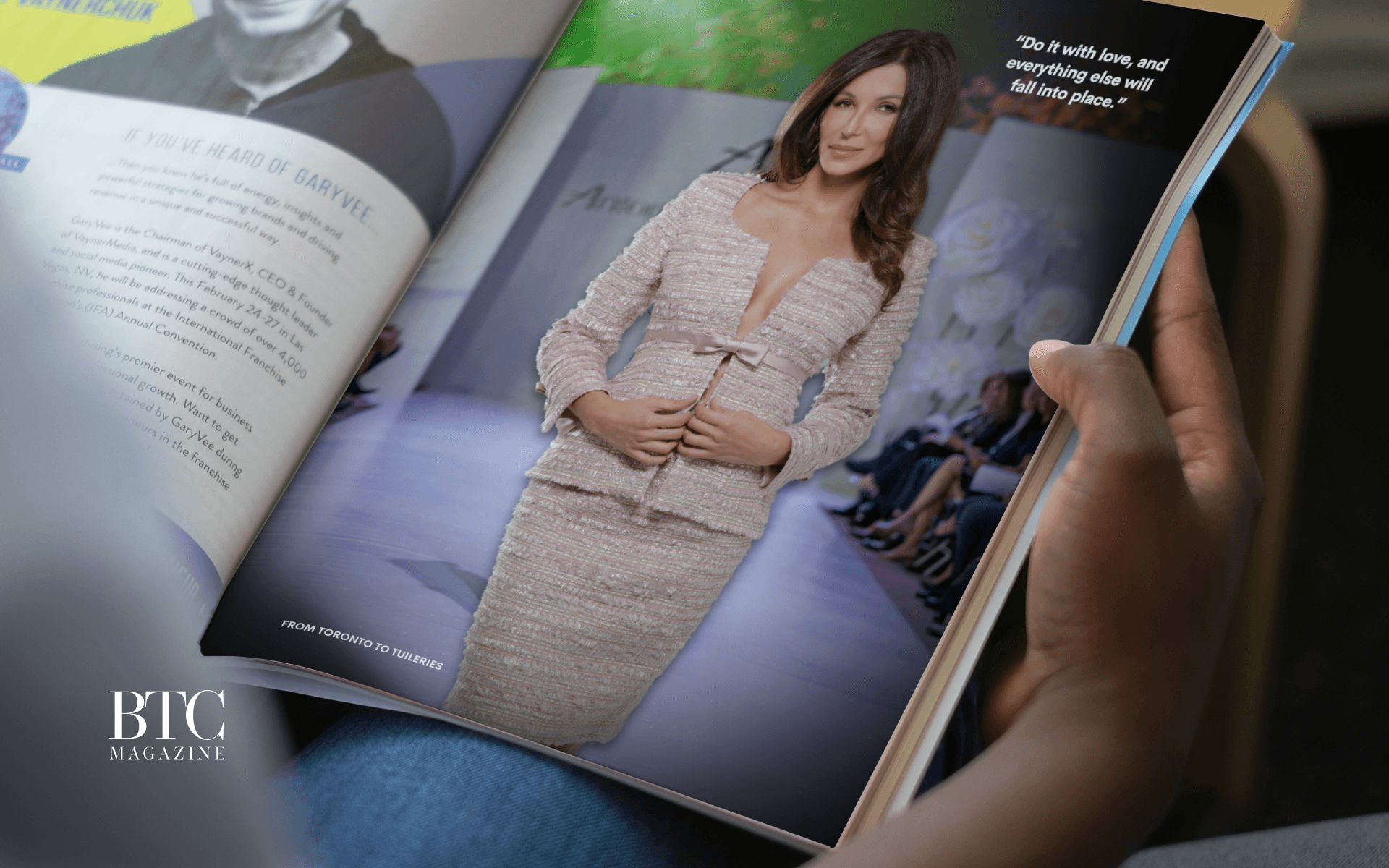
FROM TORONTO TO THE TUILERIES
Antoniette Catenacci's Haute Couture Journey to Paris Fashion Week“How you make something matters just as much as what you make.”The morning light streams through the windows of Antoniette Catenacci's Toronto atelier, catching on the intricate beadwork of a navy silk organza gown. It's Audrey Hepburn-inspired—strapless, tea-length, with a fitted off-the-shoulder bolero that manages to be both classically elegant and subtly provocative. The gown embodies everything that has made Catenacci a standout in Canadian fashion for over three decades: impeccable craftsmanship, an unwavering commitment to femininity, and that delicious tension between timeless and tempting.But this particular morning feels different. In a few months, this gown won't just be admired in her boutique—it will glide down one of the most prestigious runways in the world."When I got the news about Paris Fashion Week, a million ideas rushed to my mind," Catenacci tells me, her hands instinctively smoothing an invisible wrinkle from a length of fabric draped across her worktable. "I was actually planning to go international with my designs before I even got the call. It's like the universe was listening."There's no performative modesty when she speaks about this milestone—just genuine wonder tinged with a bittersweet longing. "I wish my parents were still around to see it. They saw me start from nothing, cutting and sewing on my mom's dining room table. They would be thrilled to see how far I've come since 1988."THE ROAD LESS MANUFACTUREDIn an era where "fast fashion" isn't just a business model but practically a religion, Catenacci remains gloriously, stubbornly devoted to the slow craft of couture. Every stitch is deliberate. Every seam tells a story. Her hands know the feel of luxury fabrics the way some people know their children's faces—intimately, instinctively, with fierce devotion.The evidence of this philosophy is everywhere in her studio—from the meticulously organized spools of thread to the precisely labeled fabric swatches. Nothing here is rushed. Nothing is compromised."I was actually asked after my last show if I would consider manufacturing in China to increase profits," she says with a laugh that has a razor-sharp edge. "My answer was 'Absolutely not.' Because it's not just about money—it's about integrity and quality. I want to support our Canadian economy, not the economy of another country."This unwavering commitment to craftsmanship has earned her a devoted clientele who come to her not just for beautiful clothes, but for an experience that feels increasingly rare: being truly seen, measured, and fitted by someone who cares about making them look their absolute best."I want my clients to feel special, to feel pampered. They're a representation of me when they walk out my door," she explains. "It's all about the client and their entire experience with me."THREADS OF INSPIRATIONCatenacci's Fall 2025 collection for Paris draws from multiple wellsprings of inspiration. "Knowing I'm heading to Paris has inspired the new collection," she says. "The vibe will definitely have a 50s and old Hollywood glamour influence, but also a touch of 17th century France. A little Marie Antoinette..."She trails off, clearly already picturing the runway in her mind—the music, the lighting, the gasp-inducing moment when her designs first appear.Her creative process isn't about sitting at a desk with a sketchpad. Ideas come at random moments, often while driving or listening to music. "If a certain song comes on, I think of a runway and then imagine styles that suit the vibe of the music," she explains.“There’s hardly anyone left who still uses traditional couture techniques. The world has become obsessed with mass production and profitability. I’m the complete opposite.”More often than not, the fabrics themselves are her muse. "I'm a bit spoiled with my fabrics," she admits with a smile. "I usually choose them before my designs. My new styles are mostly inspired by the fabric itself."This sensory, intuitive approach to design explains why her pieces feel so alive—they weren't born from marketing research or trend forecasts, but from genuine inspiration and emotional connection.MOMENTS THAT MATTERWhen I ask about career highlights, Catenacci doesn't mention celebrity clients or magazine features. Instead, she shares a story about Miss Universe Canada 2003."The most memorable and special gown was the very first one I made for Miss Universe Canada," Catenacci says, her voice softening. "Leanne Cecile wore my gown and made top 10. The night of the pageant, my father was in the hospital, so I ended up watching it just with my dad on those small old 15-inch hospital TVs. My dad was so proud that he had told all the nurses working that night."She pauses, visibly moved by the memory. "It was special because it was something I shared just with my dad. I wish he could see how far I've come since then. He was always my biggest supporter."This is the heart of Catenacci's work—not the glitz or the glamour, but the human connections forged through fabric and thread. The celebrations marked by her creations. The confidence bestowed by a perfectly fitted bodice. The way a mother's eyes fill with tears when she sees her daughter in a wedding gown that Catenacci has made by hand, stitch by careful stitch.FASHION WITH HEARTBeyond the atelier, Catenacci's commitment to community shows in her philanthropic efforts. She recently turned a collection unveiling into a fundraiser for medical research through the University Health Network (UHN).“It was special because it was something I shared just with my dad. He was always my biggest supporter.”"Raising money for UHN is something that makes me happy," she says. "I love being able to give back and support such a good cause. It's an incredible foundation that has come so far in developing advanced solutions in spinal care."This seamless integration of business and giving back feels natural for Catenacci, who views her success not as a platform for personal gain, but as an opportunity to create positive change.THE FUTURE UNFOLDSAs Paris Fashion Week approaches, Catenacci is already looking ahead. "I will definitely be sourcing retail partners to carry my collection," she says. "I plan to expand internationally, possibly into the US, Italy, and France... to start." She smiles mysteriously. "There's another big project in the works for 2026, but you'll just have to stay tuned for that."When I ask what advice she would give to young designers who dream of following in her footsteps, her answer is as straightforward as she is."Never give up," she says firmly. "Nothing good comes easy. If you want something, you have to work for it; nothing will be handed to you on a silver platter. You have to have passion—if you do, it doesn't feel like work, and you will put your heart and soul into it. That's what it takes to succeed. Don't do it just for the money; do it with love, and everything else will fall into place."“Do it with love, and everything else will fall into place.”As our interview concludes, Catenacci returns to the navy silk organza gown, adjusting a detail that only her expert eye can detect. In a few months, this dress will make its debut on a Parisian runway, but its journey began right here—in the hands of a woman who has spent over three decades believing that how you make something matters just as much as what you make.And as the fashion world increasingly prioritizes speed over substance, Catenacci's approach feels not just refreshing, but revolutionary. A testament to the power of doing things the hard way, the slow way, the right way.Paris awaits. And it has no idea what's coming.Antoniette Catenacci's collection will debut at Paris Fashion Week Fall 2025. For more information or to schedule a private appointment at her Toronto atelier, visit antoniettecatenacci.com
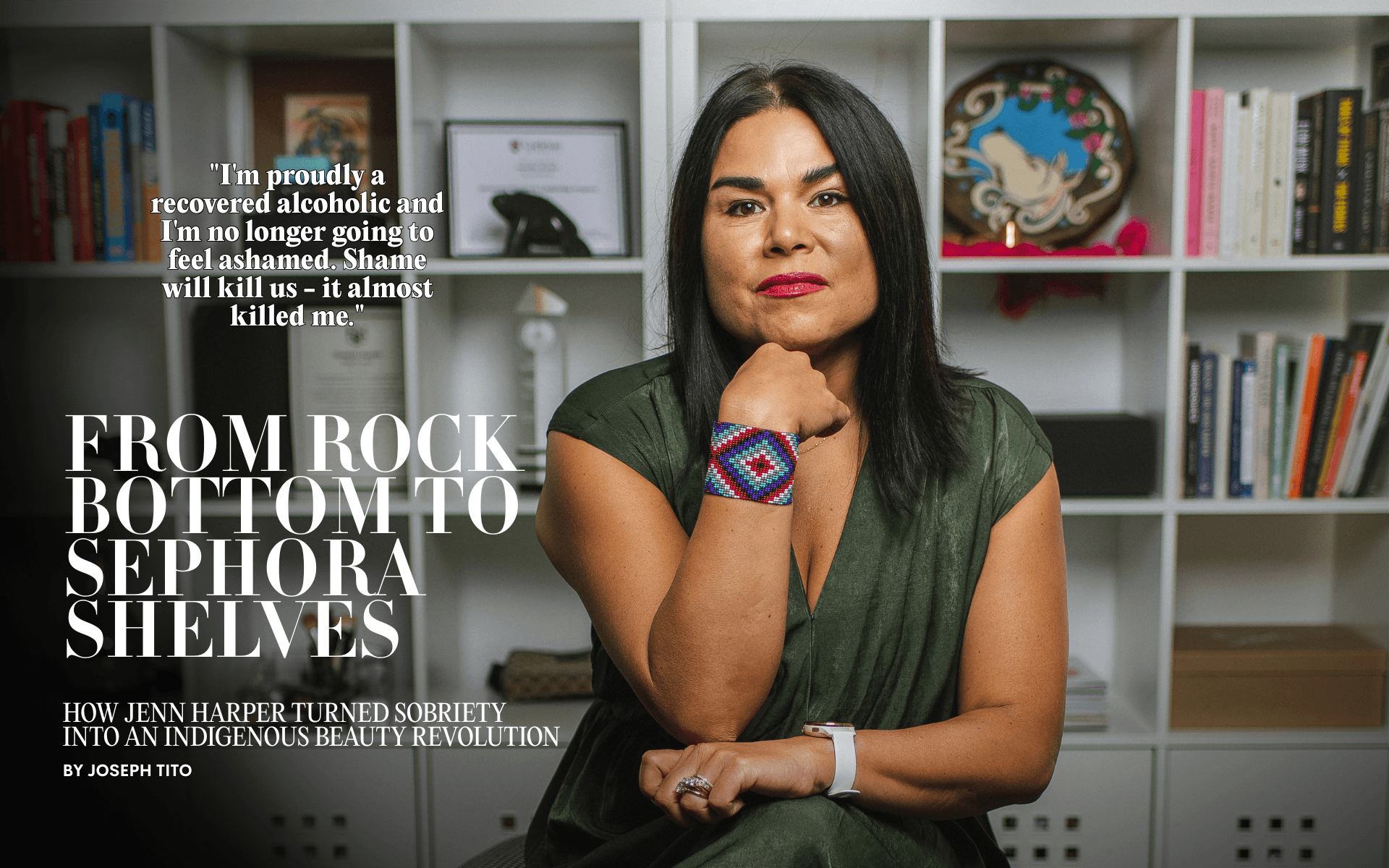
From Rock Bottom to Sephora Shelves: How Jenn Harper Turned Sobriety Into an Indigenous Beauty Revolution
"I'm proudly a recovered alcoholic and I'm no longer going to feel ashamed. Shame will kill us - it almost killed me."Jenn Harper had been selling seafood for over a decade when three little Indigenous girls covered in lip gloss changed everything. The dream came in January 2015, just two months into her sobriety—brown skin, rosy cheeks, giggling and laughing while covered in colorful gloss. When she woke up, she wrote down what would become the business plan for Cheekbone Beauty."It was so real to me that building a cosmetics company was the next thing on my path," Harper reflects. "It's crazy when I think about it now—I'm embarrassed about how much I didn't know about this industry."What she didn't know could fill a warehouse: product development, supply chains, ingredients, retail merchandising, the crushing competitiveness of beauty. What she did know was this: a brand representing Indigenous people deserved to exist in the world.Ten years later, that naive conviction has built something unprecedented—the first B Corp certified Indigenous beauty brand to hit Sephora shelves, a company that's donated over $250,000 to Indigenous communities, and a new category Harper calls "Indigenous Beauty" that puts sustainability and cultural values at its core.But the real revolution? How Harper transformed the same addictive patterns that nearly destroyed her life into the obsessive focus that built an empire.When Shame Nearly Killed Her"I'm proudly a recovered alcoholic, and I'm no longer going to feel ashamed," Harper says with the directness that's become her trademark. "Shame will kill us—it almost killed me."Harper's battle with alcoholism lasted years, marked by rehab attempts, relapses, and a marriage hanging by a thread. In 2014, her husband delivered an ultimatum: get sober or he was leaving. It was the first time in their marriage he'd drawn that line."I had this moment of surrender. I had to believe truly that I could get well," she explains. The timing wasn't coincidental—2015 was also when Canada's Truth and Reconciliation Commission released its report on residential schools, finally giving Harper language for the generational trauma that had shaped her family."I used to believe I was just this person who comes from a completely dysfunctional family—we're just screwed up people," she admits. "Then I learned that this was systematically designed to take down a culture."Her grandmother had been taken from their community at six years old, forced into residential school until sixteen, beaten for speaking their language. Suddenly, Harper's family dysfunction had context—and a path to healing.Replacing One Addiction With AnotherTraditional recovery wisdom warns against substituting addictions, but Harper had a different plan. "I became obsessed with building this business, and maybe as an addict with an addict's brain, I'll never be fully healed from that in this life. But how can I use that power of obsession for doing something good versus destroying my life?"She admits the approach isn't typical AA advice, but it worked. Harper channeled her addictive patterns into something constructive: reading over a hundred books on entrepreneurship and Indigenous culture, diving deep into formulations and supply chains, obsessing over every detail of building a sustainable beauty company."That you can climb any mountain and get to the top," Harper says when asked what sobriety taught her about business. "You really can't see it unless you can see it—that line is so important for people from BIPOC communities. If you didn't see yourself represented out there, how are you supposed to think you can do those things?"Building Indigenous Beauty From NothingWhat Harper calls "Indigenous Beauty" isn't just marketing—it's a fundamental reimagining of how beauty products should be made. Where Korean beauty focuses on skincare and French beauty means perfume and red lipstick, Indigenous beauty centers sustainability and connection to the earth."Indigenous people have truly lived and breathed sustainability since the beginning of time," Harper explains. "We want to add that into how we make and create our products."At Cheekbone, that means formulas that actually biodegrade back into ecosystems, sustainably sourced packaging, and transparencyabout every ingredient. Harper spent years studying formulations to replace conventional ingredients with biodegradable alternatives—swapping propylene glycol for propendol, using only post-consumer recycled plastic, creating products that can serve multiple purposes."The truth is, true sustainability means we buy nothing and use what we have," Harper acknowledges. "We're still a consumer-based business. But can we do it so that the choice someone's making is a better choice they can feel good about?"The Cost of RepresentationHarper's drive for visibility became even more urgent after losing her brother BJ to suicide. "When you lose someone to suicide, you really spend a lot of time thinking about the what-ifs," she says quietly. "What I learned from my brother is that he really felt represented in these last few years. He would send me messages about Indigenous people on red carpets or athletes coming up."Those messages became proof of representation's power—and its absence's danger. Harper knows the statistics: Indigenous communities face suicide rates far above national averages, often linked to disconnection and lack of belonging."You really can't be it unless you can see it," Harper repeats. "For me, being able to represent our communities and help them see that entrepreneurship is an option—if I can figure it out and I wasn't a great student, I didn't have a university degree—if I can do this, they can too."Revolution, Not ActivismHarper's approach to change differs from traditional activism. "I feel like going and yelling at someone with a sign is never going to change their heart," she explains. "We need activists for many things, but I believe the way I love to connect with people is: can we change people's hearts?"Instead of protests, Harper builds. Cheekbone's scholarship fund has deployed 30 scholarships since 2021. Two percent of all revenue goes to Indigenous education initiatives year-round, with special Orange Shirt Day campaigns raising additional funds."We use the system," Harper says of their Orange Shirt Day strategy. "People arethinking about those things on that day, so of course we're using it. The algorithm of the world works on days now—if you're not speaking to the big things happening, no one cares because no one's going to see it."The approach extends to retail partnerships. When Sephora committed to Harper's "Glossed Over" campaign—featuring lip glosses named "Luscious Lead" and "E. Coli Kiss" to highlight water crises in Indigenous communities—it gave profits from Cheekbone sales to water treatment organizations."Sephora is really great—they take risks in that way," Harper notes. "They're truly the heroes in that story because they used their platform, and that's not easy to do on a bigger scale."The Real Beauty IndustryHarper envisions an industry transformation that goes beyond Indigenous representation. "Real people, no more editorial stuff," she says when asked what would make beauty actually beautiful. "We deserve to see real people wearing the products with real skin imperfections, acne, textured skin, hair on their face—let's just be real about it."It's a radical vision in an industry built on manufactured insecurity, but Harper's betting consumers are ready. As the first B Corp certified cosmetic brand in Sephora, Cheekbone legally prioritizes people and planet over profit—paying living wages, providing mental health benefits, and taking company-wide mental health weeks."Everyone at Cheekbone makes over a living wage for the area of the world they live in," Harper explains. "We take a whole week off every summer as an entire business so that it's a real mental health break for the entire company."What Her Grandmother Would ThinkWhen asked what her grandmother would think of seeing Cheekbone in Sephora, Harper pauses. "I think she would be proud. We're a humble group of people, a humble nation. We don't do the bragging thing—it's cultural. But there would be a lot of joy and happiness because I'm her granddaughter."That humility runs through everything Harper builds. Despite Cheekbone's success—Sephora shelves, B Corp certification, six-figure donations—she insists they're just getting started."I literally feel like we're just getting started," she says of the ten-year journey. "Over the last two years is finally when I feel like we've built something that's going to have value and matter."The Revolution ContinuesHarper's vision extends beyond Cheekbone to building an Indigenous beauty conglomerate—acquiring skincare brands, hair care lines, creating an entire ecosystem centered on Indigenous values and sustainable practices.“Cheekbone pioneered a category we call Indigenous Beauty," she explains. "What we intend to do is build this with that long view in mind."For women watching Harper's journey—especially those with their own healing to do—her message is clear: "I am no longer going to feel ashamed. If we've made past mistakes, big ones or small ones, you have to remove that shame part of it. Anyone can turn their lives around at any given moment."It's advice born from experience, spoken by someone who turned rock bottom into revolutionary business, addiction into empire-building, and personal healing into community transformation."If your heart's in something, there's nothing that can stop you from reaching that goal," Harper concludes. "I have regrets, many, many regrets. But shame will kill us. And I refuse to let shame win."Harper's story represents a new generation of Indigenous entrepreneurs building businesses that honor their heritage while challenging industry standards. As Orange Shirt Day approaches this September, her work reminds us that real reconciliation happens not through performative gestures, but through sustained action, authentic representation, and the radical act of building something beautiful from the ground up.When Jenn Harper talks about changing hearts instead of holding signs, she's describing a partnership that puts real money behind Indigenous education. For four years, Cheekbone Beauty has worked with Indspire, Canada's largest Indigenous-led registered charity, transforming lip gloss sales into life-changing scholarships."They're the one that we do our scholarship fund in collaboration with," Harper explains. "They're a not-for-profit, we're a for-profit business, so we get them to do all of our scholarship fund work."The partnership makes perfect sense: Harper brings platform and profits, while Indspire brings three decades of experience. Since 1996, Indspire has distributed over $200 million in scholarships to more than 54,000 Indigenous students across Canada.The collaboration has deployed 30 scholarships since 2021, with Cheekbone contributing 2% of all revenue year-round to their "For Future Generations Scholarship Fund." During Orange Shirt Day campaigns, that jumps to 100% of profits after operational costs."This year will be the fourth year," Harper notes. "The people at Cheekbone love their jobs because everything we do is about supporting and giving back to the community."What makes this powerful isn't just money—it's visibility. Harper's Orange Shirt Day campaigns educate consumers about funding gaps, systemic barriers, and why Indigenous education matters. Her customers learn while they shop."Education is powerful," Harper emphasizes. "Whatever path a young person can choose, it's going to help."Indspire's approach aligns with Harper's philosophy. Rather than charity creating dependency, they provide tools for self-determination. Scholarships support everything from trades programs to PhD studies, recognizing that Indigenous communities need leaders in every field.Harper's story—building a multi-million dollar company without a university degree—proves success comes in many forms. But systemic change requires Indigenous people in boardrooms, courtrooms, research labs, and government offices."Meeting people that have been impacted—they're a beautiful organization, and people should be supporting them in every which way they can," Harper says.The partnership creates a feedback loop: Cheekbone's success generates scholarship funding, which creates Indigenous graduates, who become role models for the next generation—the representation Harper wishes she'd had growing up ashamed of her identity.This isn't charity for charity's sake. Harper sees education funding as business strategy, community building, and cultural preservation. Every scholarship recipient represents potential future leadership and entrepreneurship."It's all about what are we doing here for the next generations," Harper explains. "That's part of our complete ethos as a brand."As Cheekbone grows into an Indigenous beauty conglomerate, the Indspire partnership ensures success lifts the entire community. It's capitalism with conscience, business as resistance, and proof that revolution can happen one scholarship at a time.
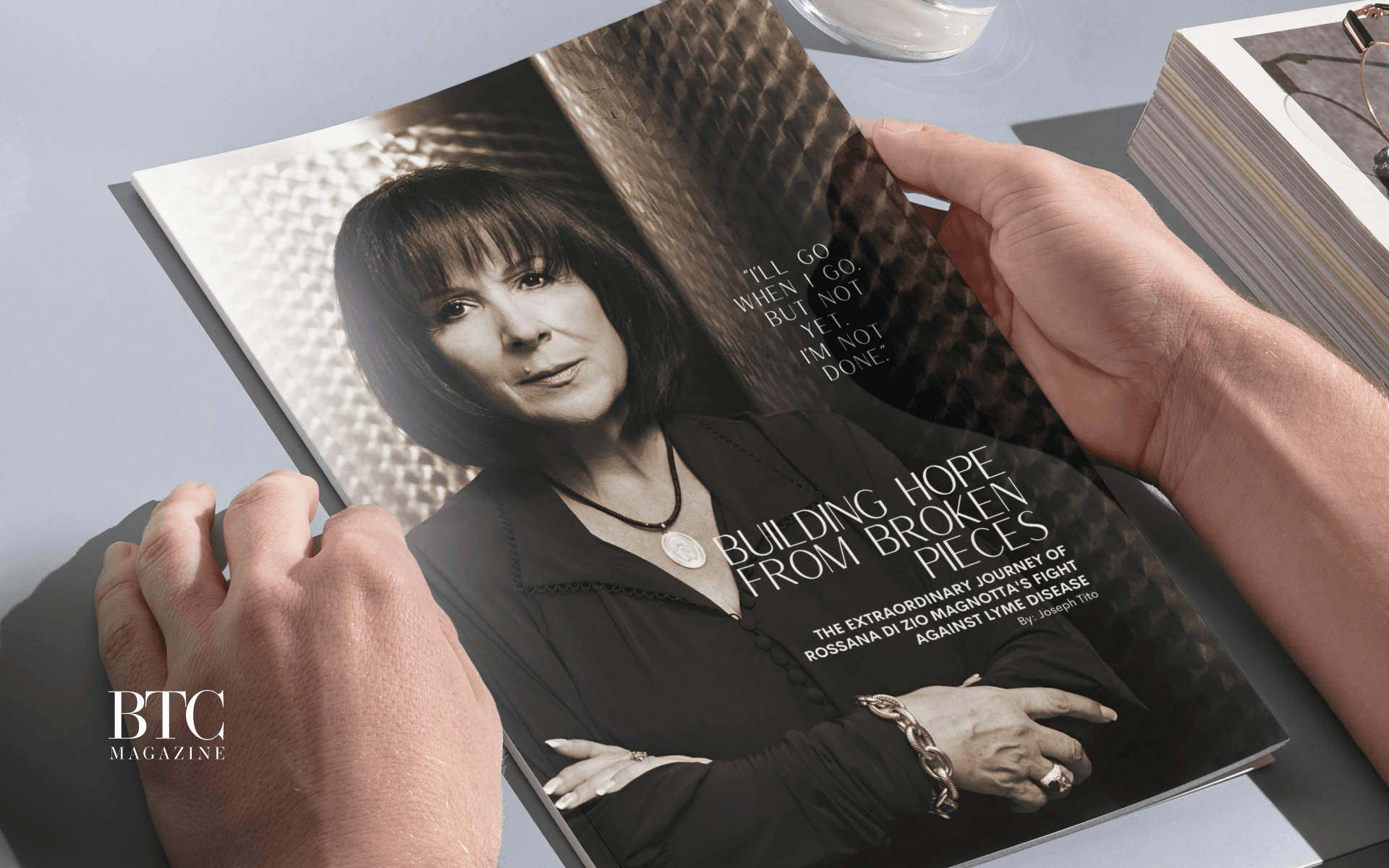
BUILDING HOPE FROM BROKEN PIECES The extraordinary journey of Rossana Di Zio Magnotta's fight against Lyme disease
“I’ll go when I go. But not yet. I’m not done.”The Untold JourneyThere are moments in life that redefine everything—that split existence into a clear "before" and "after." For Rossana Di Zio Magnotta, that moment came when her husband, Gabe Magnotta, the man she built a wine empire with, began showing signs of a mysterious illness that would eventually rob him of his ability enjoy his life to the fullest - especially his passion and love for the outdoors."He went from a six-foot-two, 240-pound man to someone who could hardly walk," Rossana tells me, her voice steady but weighted with memory. "He couldn't talk. He couldn't write. He couldn't even eat. Everything was being attacked by that organism."The organism was Borrelia burgdorferi—the bacteria that causes Lyme disease—though they wouldn't get that diagnosis until much later. By then, it was too late.THE SILENT EPIDEMICWe're sitting in her office at Magnotta Winery, surrounded by photographs and awards that trace the remarkable journey of a woman who transformed a small wine business into one of Canada's largest private winemakers. But today, we're not here to discuss vintages or business acumen. We're here to talk about what happens when life shatters, and how someone finds the courage to not only keep going but to transform personal tragedy into purpose.Lyme disease, a tick-borne illness, remains one of medicine's most controversial and misunderstood conditions. Current diagnostic tests are woefully inadequate, with false negatives common. This testing gap means countless patients suffer without proper diagnosis or treatment."Public health has a test that is faulty," Rossana explains, her diagnostician's precision evident. "So many Canadians have either passed away or have been very ill, and they've had to search for answers. It's been very difficult for them."For Gabe, every test conducted in Canada came back negative, despite his rapidly deteriorating health. It wasn't until they traveled to Germany and the U.S. that they received confirmation of what Rossana had already begun to suspect."I spent my life, whatever I had in my time, trying to save that man," she says quietly. "And I failed because at the end, , even though he was improving, he had a sudden heart attack.”Years later, medical research would confirm what Rossana had already learned the hardest way possible: Lyme carditis—inflammation of the heart caused by the Lyme bacteria—can lead to sudden cardiac events."If we had caught it early, we would have been able to save him. This is an infection," she emphasizes, comparing it to strep throat that, if left untreated, can attack the heart.WHEN TEARS DRY IN SECRETWhat the public didn't see during this period was the private toll on Rossana—the woman who had to simultaneously run a public company, care for a gravely ill husband, and hold her family together while everything threatened to crumble."I would leave work and drive... sometimes I didn't even know where I was driving," she reveals, emotion breaking through her composed exterior. "I'd just get on the 407 to go east, and I would cry and be crying in the car because I knew that when I got home, I had to make sure the tears were dry and my eyes were not red."This invisible burden—the performance of strength whenfalling apart inside—is one many caregivers recognize but rarely speak about."My husband would know," she continues. "He recognized that I was in pain, and it broke his heart—the fact that he felt like he was a burden. So I would go into my basement and I would cry because I had to cry. I couldn't keep it all in."The woman the public saw—commanding boardrooms and navigating the complexities of the wine industry—was simultaneously fighting a private battle that was "tearing me apart," as she puts it. "It was debilitating. I don't even know how I survived it."FROM GRIEF TO PURPOSEAfter Gabe's passing, Rossana found herself at a crossroads familiar to anyone who has lost their anchor: What now?"After days and months—a long time of crying, the loss of my husband—it's almost like I didn't have any more breath to breathe anymore 'cause I lost the person that was part of my life," she reflects.The answer came gradually, emerging from her grief like a vine from seemingly barren soil: she would turn her considerable business acumen, scientific background, and newfound understanding of Lyme disease toward solving the diagnostic problem that had contributed to her husband's death.“Deal with one thing at a time. That’s how you make it through the impossible.”In 2012, she founded the G. Magnotta Foundation for Vector-Borne Diseases, and in 2017, she established the G. Magnotta Lyme Disease Research Lab at the University of Guelph with an initial gift. To date, she has invested eight years and over $4.6 million into developing what has eluded the medical community: a reliable diagnostic test for active Lyme infection."Nobody wants to tackle this problem because it's very expensive to do it, and notoriously difficult to isolate and grow in laboratory conditions," she explains, describing the technical challenges of working with Borrelia.But where others saw insurmountable obstacles, Rossana saw a necessary mission. Her expertise as a diagnostician (she worked in hospital laboratories in her twenties), her experience battling government bureaucracy during her wine industry days, and her intimate understanding of Lyme's devastating effects uniquely positioned her for this fight.THE UNIMAGINABLE SEQUELThen came the loss that Rossana says outweighed even the devastating absence of her beloved husband: the death of her son, Joseph.Before his passing, in honour of his father, Joseph Magnotta created a line of philanthropic wines that would ultimately lead to the contribution of over $500,000 for the G. Magnotta Foundation.$.50 cents from every bottle sold is donated to the G. Magnotta Foundation, which in turn fuels the necessary research. After Joseph's tragic passing, Rossana continued to expand and feature these wines in honour of both men. They have since become a core line of wines for Magnotta.This is the essence of Rossana's approach to grief and purpose: honoring what's been lost by building something meaningful from the broken pieces.“Every day I pray: ‘God, give me one more day to finish what I came here to do.”A TEST OF HOPEThe G. Magnotta Lyme Disease Research Lab is now on the cusp of a breakthrough—a DNA-based diagnostic test that will revolutionize how Lyme disease is detected and treated globally."We're using DNA, and we're thinking outside of the box," Rossana explains.This isn't just a scientific achievement; it's a legacy built from love and loss—one that could prevent countless others from experiencing what Gabe and so many Lyme patients have endured.To me, legacy means being able to say that when I'm gone, it was through hard work and courage that this woman made a difference. She witnessed it firsthand, felt it deeply, and understood it completely. And now, she’s given that strength back to us - so we can live our lives better because of it.THE HUMAN TOUCHThroughout our conversation, Rossana returns repeatedly to what she believes has gotten lost in both business and healthcare: genuine human connection."Don't be afraid to reach out to people. Don't be afraid to touch people because their pain is real," she advises. "And that hug or that handshake or that word or that smile or that 'I understand' comment, it means so much to people out there."This philosophy—that behind every disease, every business transaction, every human interaction is a person deserving of compassion—has guided her through building both a wine empire and a foundation poised to change how we understand and diagnose Lyme disease."In business, a lot of people don't really connect anymore," she observes. "They don't connect with their eyes. They don't connect with their hands. They don't connect with their words. Everything is like fast, fast, fast... There's no human touch, and it's killing, I think, business, but more importantly, this not touching and not communicating with people on a sincere level is just drowning the world."THE ADVICE SHE GIVESWhen asked what advice she'd offer someone facing overwhelming loss while trying to maintain their responsibilities, Rossana shares the wisdom earned through her own darkest moments."The only way that I can deal with all these things hitting me... is the ability to separate all the components and deal with them one at a time," she explains. "Because if you have them all rushing to your head, you fall apart."She also emphasizes the importance of accepting help—something many strong, self-reliant people struggle with, particularly in their most vulnerable moments.“Don’t be afraid to touch people—emotionally, physically, spiritually. Their pain is real.”"You cannot do it all yourself," she says emphatically. "You have to open up to good friends and family, and you have to be able to trust them. Because if you try to do it all yourself, you will end up doing what I did at the beginning, which was crying in the car... because I didn't know how to handle it anymore."A PRAYER FOR TIMEToday, Rossana continues leading Magnotta Winery while driving the foundation's research forward. Her daughter Alessia now serves as a director of the foundation, positioned to carry the torch when the time comes.But Rossana isn't ready to pass that torch just yet."Every day I pray to God that I will be granted a new day to continue to champion the many years of important work that we at the foundation have been doing to improve the diagnotics that will lead to better treatment protocols and will bring change to how Lyme Disease patients get tested and treated in Canada and all over the world.”There's an urgency in her voice—not panic, but purpose. The kind that comes from understanding both how fragile life is and how powerful determination can be.THE LIGHTHOUSE EFFECTRossana Di Zio Magnotta stands at the intersection of extraordinary success and profound loss. She has built a wine empire respected across the country. She has endured the kind of personal tragedies that would crush many spirits. And she has channeled both her business acumen and personal pain into a mission that could save countless lives.Like the best vintners, she understands that sometimes the most challenging growing conditions produce the most remarkable results. That resilience isn't about avoiding hardship but about transforming it into something meaningful."I'm very lucky to have a supporting family," she reflects, acknowledging the network that has helped her sustain both her businesses and her mission. "I'm very lucky to have my people here at work, everyone at the winery. All my employees, they're all very committed to Lyme disease. They lost their co-founder here to it."As our conversation ends, I'm struck by something she said earlier about curiosity being the driving force in her life. It seems fitting for someone who has refused to accept the inadequacies of current Lyme diagnostics, who has questioned every "impossible" and "too difficult" that stood in her way.The words she chose for a plaque at Humber River Hospital's children's outpatient department. A quote from perhaps best capture her philosophy: "As you grow from infancy to young adulthood, may your path be filled with kindness and love, curiosity and spirit, courage and resolve. Remember, as A.A. Milne’s wrote, “You are braver than you believe, stronger than you seem, and smarter than you think."In Rossana's case, those words aren't just inspirational platitudes. They're the principles she's lived by—principles that have allowed her to transform tremendous personal loss into a legacy of hope, not just for Lyme patients, but for anyone who has ever faced the seemingly impossible and wondered how to go on.Sometimes, it seems, our greatest light emerges from our darkest moments. And sometimes, one person's refusal to accept things as they are becomes the catalyst for change that benefits countless others.Want to be part of the change? Join us this November at the Gala for Lyme Hope—a night to honour love, loss, and the legacy being built to save lives. Details and tickets at gmagnottafoundation.com
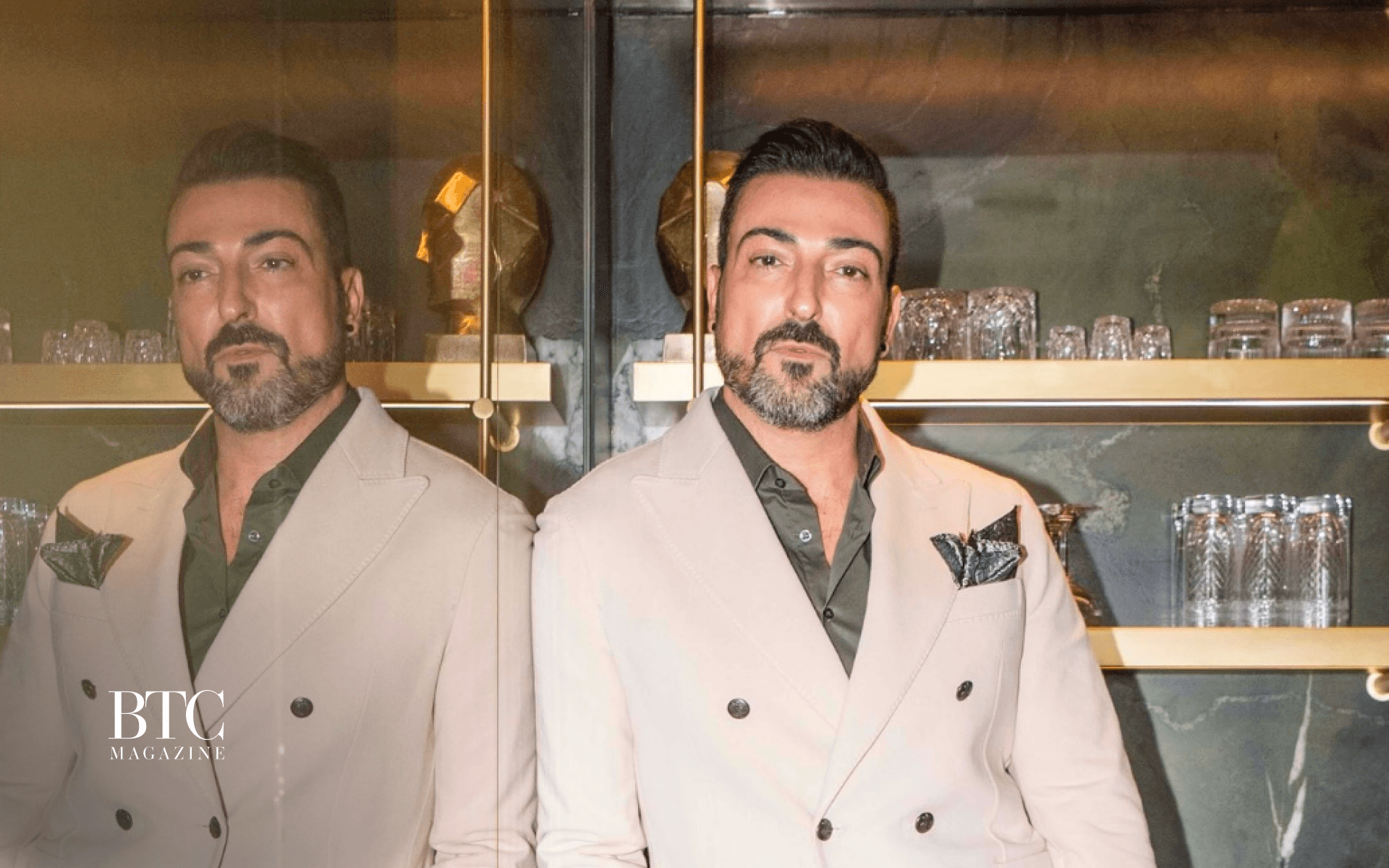
BOOK SPOTLIGHT: RANDOM THOUGHTS: THE SH*T WE DON'T TALK ABOUT
“The space between adoration and suffocation is paper-thin, and we all live there sometimes.”Some books enter your life exactly when you need them, like an old friend showing up at your door with wine and zero judgment. "Random Thoughts: The Sh*t We Don't Talk About" is that friend—the one who sees your mess, sits down right in the middle of it, and makes you feel less alone.Written with raw honesty and unexpected humor, this collection of essays by Joseph Tito tackles the subjects we usually only whisper about at 2 AM or type into search engines with shaking hands: the ambivalence of adulthood, the grief of losing yourself, the quiet rage that builds when your needs always come last, mental health struggles, identity crises, and the guilty relief of sometimes not wanting the life you fought so hard to build.What makes this book extraordinary isn't just its willingness to go there—it's the compassionate hand it extends once it arrives. There's no toxic positivity, no five-step solution, just radical acknowledgment that being human is sometimes beautiful, often brutal, and always complicatedThe Parts That Punched Me in the Heart"There are days when I look at my life—this existence I've carefully constructed—and feel nothing but the desperate urge to be anywhere else. The shame of that feeling has kept me awake more nights than I can count. What kind of person feels trapped by the very things that give their life meaning? A normal one, it turns out. A human one. The space between adoration and suffocation is paper-thin, and we all live there sometimes.""Relationships become a complex negotiation of needs rarely met and resentments carefully cataloged. We talk about date nights like they're magic potions that can restore what sleep deprivation and divided attention have eroded. Sometimes they do help. Sometimes they just highlight how far we've drifted from the people who once couldn't keep their hands off each other. Both realities can be true at once.""The most revolutionary act isn't learning to practice self-care within a broken system—it's refusing to accept that the system is inevitable. What if we built communities where people weren't isolated? Where vulnerability wasn't seen as weakness? Where asking for help was as normal as offering it? The world convinces us our struggles are personal failings when they're actually evidence of collective abandonment. Let's be honest about that, at least with ourselves."Not Just Another Self-Help BookWhat sets "Random Thoughts" apart from the crowded self-help shelf is its refusal to offer easy answers or Instagram-ready inspiration. Instead, it creates space for complexity, contradiction, and community in our most private struggles.The book doesn't try to fix you—it simply sits with you in the uncomfortable places, offering not a roadmap but a companion for the journey. It's the literary equivalent of the friend who brings you dinner when you're drowning, doesn't comment on the state of your space, and says "me too" when you admit your darkest thoughts.In a culture obsessed with optimization and highlight reels, there's something revolutionary about a book that celebrates the messy middle—the place where most of us actually live our lives. It doesn't promise that everything will be okay; it simply assures you that you're not the only one wondering if it will be.For anyone who has ever felt like they're doing it wrong, anyone who has smiled through gritted teeth when asked "isn't it all worth it?", or anyone who just needs permission to be gloriously, catastrophically human—this book is your literary permission slip.Read it in small doses or devour it in one sitting. Either way, you'll close the final page feeling less alone in your most private thoughts. And sometimes, that's exactly the kind of self-care we actually need.

ALEENA MOHSIN MUGHAL: The Architect Who Built an Empire in Flats
Most people graduate from architecture school and start designing buildings. Aleena Mohsin Mughal looked at that path and walked straight past it.While her classmates at the National College of Arts polished CVs and chased internships, Aleena was sketching sandals, sourcing materials, and turning a lifelong obsession with shoes into a business. She didn’t wait for permission. She didn’t wait for the “right time.” She just started.That choice alone was a quiet rebellion.She graduated in 2017. By 2019—just two years out of school—she was already building what would become SAAZ.By 2024, SAAZ—her ethical footwear brand—had crossed PKR 2.6 crore in revenue. On Shark Tank Pakistan, investors competed for her company. She walked away with PKR 1 crore for 15% equity, a deal stronger than the one she originally pitched.What She BuiltSAAZ makes handwoven, ethically produced shoes rooted in traditional South Asian footwear-making techniques—from hand-cut leather to time-honored weaving methods—translated into modern silhouettes.Every pair is a refusal—of fast fashion, artisan exploitation, and the idea that sustainability has to look boring.The name means “a maker” in Urdu. It fits.Aleena doesn’t mass-produce. She doesn’t chase trends. She pays artisans fairly, sources planet-friendly materials, and proves that ethical fashion can still turn heads. Her designs draw deeply from Pakistani craftsmanship while confidently engaging with global influence—including Mexican huarache construction techniques, reinterpreted through an urban South Asian lens.What started as a one-woman operation from a dorm desk grew into a globally recognized brand stocked by multi-brand retailers and sold far beyond Pakistan. No flashy storefronts. No bloated marketing budgets. Just conviction.By 2025, she had won a Business Excellence award from her alma mater, spoken on TEDx stages, and become one of the most visible faces in Pakistan’s emerging sustainable fashion scene.Why She MattersAleena represents a generation building Pakistan’s economy while the rest of the world keeps warning people to look away.As a Pakistani Muslim woman, she occupies a space that is too often misunderstood, boxed in, or erased in global narratives around fashion and business. Instead of distancing herself from her identity, she leans into it. The Urdu name. The indigenous craftsmanship. The values that prioritize community over extraction.She balances tradition with innovation. Faith with fearlessness. Humility with audacity.When she walked onto Shark Tank Pakistan wearing her own shoes, she dismantled the stereotype of what a “female founder” looks like. Calm. Prepared. Unshakeable. A Muslim Pakistani woman holding her ground in a high-pressure business arena—and winning.Not defiance for show. Competence as proof.“Starting imperfectly is more productive than planning endlessly,” she says.Women who move before they’re “ready” tend to change things.The Revolution, Hand-StitchedWhile North America was busy warning people about Pakistan, Aleena was busy building an empire in flats.She isn’t performing empowerment. She’s living it. She isn’t waiting to be included in the story—she’s actively rewriting it.One handwoven pair at a time.
Explore Our Curated Collection
Thoughtfully designed products for the discerning reader
Literary Essentials
Curated book accessories for the discerning reader
Exclusive Merchandise
Thoughtfully designed products for book lovers
Perfect Gifts
Unique items for the bibliophile in your life
Recently Added Places
Discover new places with exclusive deals and offers

Jova Medical
Book a 15 minute complimentary online consultation with Dr. Alisha Smith to discuss treatment options such as BHRT (Bioidentical Hormone Replacement Therapy) and hormonal injections like Sermorelin and Tesamorelin. This virtual session helps determine the best personalized approach for your hormonal health and wellness goals.

Jova Medical
Visit Jova Medical Clinic in London, Ontario and receive 10% off your first treatment. This exclusive offer applies to new patients booking their first in-clinic appointment. Experience personalized care and advanced treatments with a special welcome discount.

Dr. Zargar Eye Care
10% off for treatment and $500 credit for sunglasses/glasses with RF .
Spotlight – Illuminating Modern Voices, Trends, and Stories Welcome to Spotlight — the place where we shine a light on the innovative ideas, cultural movements, and inspiring people shaping our world today. Think of this section as your front-row seat to exclusive features, community stories, and trendsetting voices that deserve to be heard. From groundbreaking artists to grassroots innovators, Spotlight celebrates creativity, diversity, and progress. Our goal is simple: to uncover and share the stories that spark curiosity, encourage dialogue, and inspire positive change. Each feature goes beyond surface-level reporting — we dig deeper into the why behind cultural shifts and the who driving meaningful progress. What You’ll Find in Spotlight 1. In-Depth Profiles We bring you closer to the trailblazers — the thinkers, creators, and leaders redefining what’s possible. From musicians breaking industry molds to entrepreneurs using technology for social good, our profiles capture their journeys, challenges, and visions for the future. 2. Emerging Trends in Culture & Lifestyle Culture is always evolving. Spotlight tracks the pulse of what’s new — from digital art and sustainability in fashion to the rise of wellness movements and social media storytelling. We don’t just report trends; we analyze them, explain their roots, and explore how they shape our communities and daily lives. 3. Community Highlights Global change often starts locally. That’s why we highlight community leaders, grassroots initiatives, and local changemakers who are creating impact on the ground. These stories celebrate resilience, innovation, and collaboration — reminding us that transformation can start in any neighborhood. 4. Exclusive Interviews Spotlight offers you conversations you won’t find anywhere else. Our interviews with visionary thinkers, creators, and influencers reveal fresh perspectives, untold stories, and insider insights. Whether it’s an artist explaining their creative process or a social activist sharing their mission, you’ll get authentic voices — unfiltered and powerful. 5. Cultural Movements & Social Change From global protests to grassroots campaigns, we explore the cultural movements redefining society. Our coverage brings clarity to complex issues, balancing analysis with human stories that show why these movements matter. Why Spotlight Matters In a world overflowing with information, it’s easy for important stories to get lost. Spotlight was created to cut through the noise and amplify the voices and ideas shaping tomorrow. Here’s what sets us apart: Authenticity – We feature real people, genuine stories, and diverse voices. No fluff, just impact. Relevance – We focus on issues, ideas, and trends that matter now — and will matter tomorrow. Diversity & Inclusion – We believe creativity and progress thrive on diversity. Our features highlight stories across cultures, communities, and perspectives. Connection – Through storytelling, we bridge gaps between people, communities, and ideas, sparking dialogue and building understanding.