
Identity & Culture
Featured Articles
Our most popular and trending reads
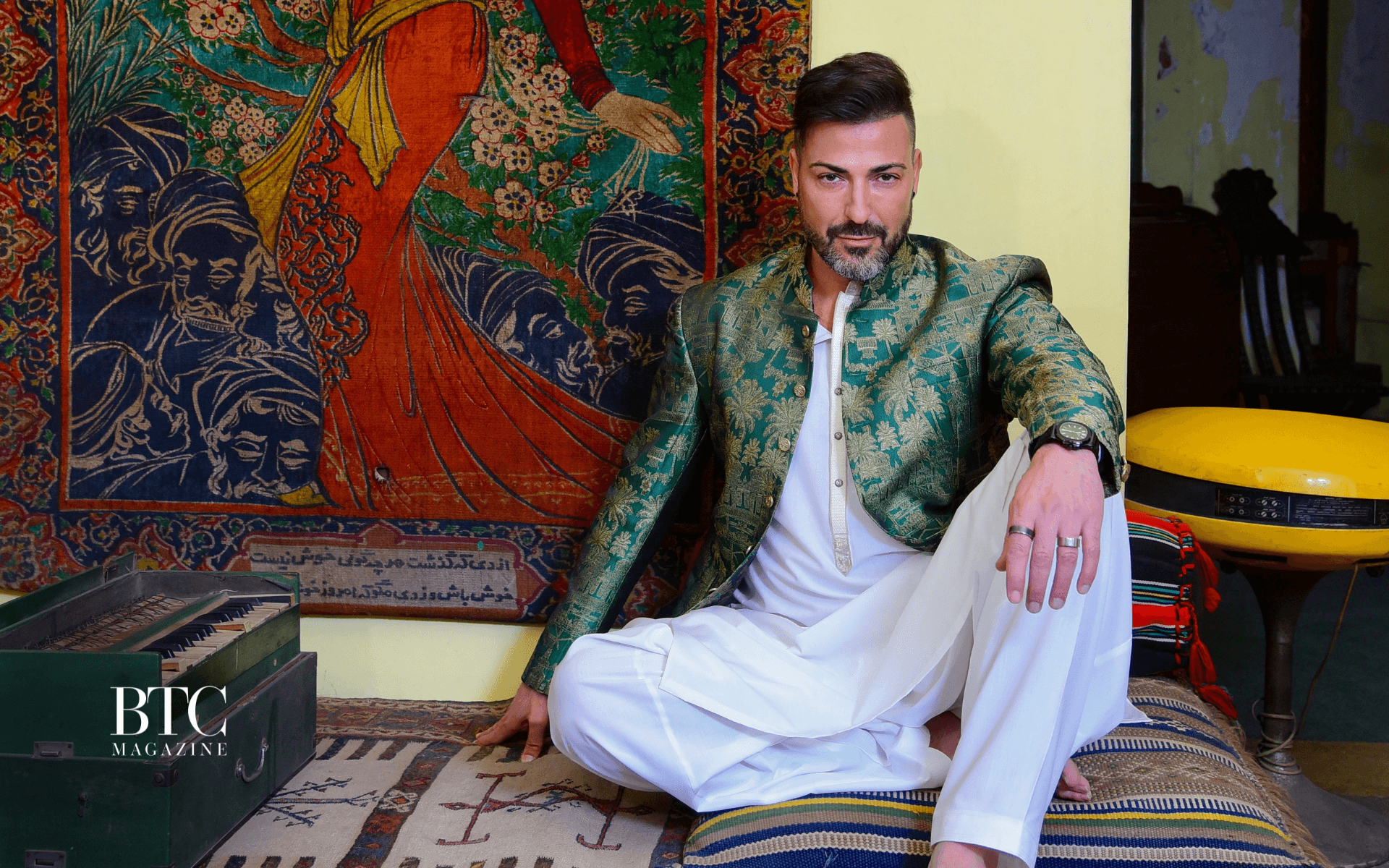
THE QUIET REBELLION
I built my media company in Pakistan when everyone told me not to. Pakistan’s youth proved them wrong.When I told people I was building my media company in Pakistan, the warnings came fast.Be careful.Why would you do that?Do you have security?My followers acted like I’d announced I was relocating to an active war zone. Some of them literally thought I was going to Afghanistan.One message said: “You’re a Gora. Be careful out there.”For those who don’t know: gora is a slang term some Pakistanis use for white foreigners. And yes, I’m very white. Italian-Canadian. Loud. Zero filter. I stand out. I don’t blend. I’m not mysterious. I’m not subtle. I’m a walking neon sign.But here’s what those warnings ignored: I’d been working with fourteen Pakistanis for a year and a half. Remotely. Building my company from Canada while they built it from Lahore and Islamabad. Day after day. Deadline after deadline. They showed up early, stayed late, pushed back when I was wrong, and delivered work that was better than anything I’d paid for in Toronto or New York.So I came to Pakistan to meet the people who were already building my company.What I found wasn’t what North America thinks Pakistan is.It was a country in the middle of a quiet revolution—economic, generational, personal—and the West is too busy clinging to its old story to notice.The Flight Everyone QuestionedThe warnings started the moment I booked the ticket.Friends: “Have you told your family?”My mother: “Why can’t you run it from here?”Random people online: “Do you have a security detail?”The subtext was always the same: Pakistan is dangerous. Pakistan is backwards. Pakistan is a place people like me don’t belong.I get why people think that. The narrative has been sold for decades: Pakistan equals instability. Terrorism. Poverty. Religious extremism. A place to fear, not a place to build.But fear based on what?None of the people messaging me had been there. None of them had worked with Pakistanis. They were reacting to a story they’d absorbed, not a reality they’d experienced.I’d spent eighteen months working with my team through Zoom calls and What’s App messages—watching them solve problems, build systems, ship product, and handle pressure with the kind of calm competence that makes you realize how much of North American “professionalism” is just performance. I knew what they could do.What I didn’t know was who they were beyond the screen.So I went.And the moment I landed, I realized how much of what we’re told about Pakistan is less about Pakistan—and more about the West needing somewhere to project its fear.I Didn’t Do Pakistan a FavorLet me be clear about something before we go any further: I didn’t build my company in Pakistan out of charity. I didn’t do it because I’m noble. I didn’t do it because I wanted to “help.”I built here because the talent is better—and North America is pricing itself out of relevance.Here’s the math that no one wants to discuss at dinner parties:In late 2025, the United States imposed a $100,000 fee tied to new H-1B visa petitions. One hundred thousand dollars to hire a single skilled foreign worker—on top of the existing filing costs.The stated goal was to force American companies to hire Americans instead of foreign workers.The real result is a brain drain with consequences no one wants to own.A huge share of H-1B holders are Indian and Pakistani professionals—software engineers, data scientists, doctors, researchers, the kind of people who built the modern economy. People with graduate degrees and specialized skills. People American companies depend on.And when you make it that expensive—or that humiliating—to hire them, you don’t suddenly create a domestic workforce overnight.You just push talent away.Canada tried to capitalize on that shift. But Canada is also becoming unlivable for many people. The cost of living is punishing. Housing is obscene. Winters are brutal. And immigrants get tired of being treated like they should be grateful for the privilege of enriching a country that still keeps them slightly outside the circle.So people go home.And here’s the part North America still isn’t saying out loud: Pakistan is ready for them.The Economy We Refuse to SeeThe numbers don’t lie, even when the narrative does.In October 2025, Pakistan’s IT exports hit a record $386 million in a single month.Pakistan’s broader targets are even more ambitious: multi-billion-dollar annual IT exports now, with a stated push toward $10 billion in the coming years.Pakistan has a deep pool of English-speaking IT and business-process professionals, and tens of thousands of new tech graduates each year trained in the same languages and frameworks Silicon Valley uses: Python, JavaScript, React, Node, backend systems, full-stack engineering. This isn’t “cheap labor.” It’s modern talent.And yes—Pakistan’s developers cost dramatically less than North American developers.Not because they’re less skilled.Because currency exchange rates make the same work cheaper in dollars. Because a massive, young workforce creates scale. Because Pakistan’s economic instability—devastating for everyday people—has created a brutal reality: their world-class skill is undervalued in Western currency.The work is the work. The quality is the quality. The only thing that changes is what the West pays for it.And while the West argues about immigration, Pakistan keeps building.Large multinational companies have long had operations in Pakistan—real engineering, consulting, and R&D work. Not the caricature of “call centers reading scripts.” Actual technical infrastructure.So when Western companies can’t bring talent in, they don’t stop needing the talent.They move the work out.Which means Pakistan gains economic power while North America pays them to do it.I didn’t do Pakistan a favor by building my company here.Pakistan made my business possible.My TeamI landed in Lahore on a Sunday Evening.The air was warm, even in January. The city hit me immediately: the hum of traffic, the honking, the street vendors, the call to prayer echoing in the distance. Lahore didn’t feel like a place people were “surviving.” It felt like a place that was alive—messy, loud, layered, and moving.My CTO and my assistant met me at the airport in Lahore. They’d hired a driver—steady, unbothered, navigating the city with the kind of calm that comes from knowing exactly where you are.I was only in Pakistan for three days. Lahore was my entire world during that time.We didn’t go straight to the hotel. We went to dinner.They took me to the Lahore Polo Club, and it immediately dismantled whatever expectations I’d arrived with. The grounds were immaculate. Green, expansive, elegant. It felt layered—historical without being stuck, refined without trying to impress.The food was exceptional. Deeply flavored, intentional, generous. The kind of meal that makes you question how often you’ve accepted “good enough” elsewhere without realizing it.But what stayed with me most wasn’t the food.It was the atmosphere.The service wasn’t performative. The staff weren’t rushing or resentful or going through motions. There was pride there. Ease. A sense that they belonged to something that worked.It was my first real moment of dissonance. Pakistan wasn’t matching the story I’d been told.Before we talked about work—before platforms, logistics, timelines—I gave them the floor.And that mattered.They were honest with me in a way that took courage.They told me they were scared.Not of the work. Not of the ambition. But of what Between the Covers represents.BTC is real. It speaks the truth. And in Canada, that truth includes conversations around LGBTQ identities, cannabis, bodily autonomy, and systems that don’t align neatly with Pakistani culture or religion.They worried about what it would mean to bring a magazine known for honesty into a context where honesty carries different risks. Different responsibilities. Different consequences.They weren’t asking me to dilute BTC. They weren’t asking me to censor it.They were asking whether BTC Pakistan would listen before it spoke.That conversation mattered more than any strategy meeting could have.We talked about Pakistan having one of the largest youth populations in the world. About how young people here are deeply aware of global conversations—but also deeply rooted in faith, family, and cultural responsibility. About how many Pakistanis leave to work in Dubai or abroad, and how many come back not because they failed—but because they want to build something at home.And that’s when the direction of BTC Pakistan became clear.Pakistan doesn’t need a magazine for women aged 35 to 65 modeled on Western exhaustion. That story doesn’t fit here.BTC Pakistan will be younger.It will speak to a generation navigating ambition, belief, identity, economics, and change—often all at once. A generation that is educated, globally fluent, politically aware, and deeply conscious of its cultural and religious frameworks.This isn’t about importing Canadian conversations and forcing them onto a different society.It’s about creating a platform that reflects the reality Pakistani youth are already living—their questions, their pressures, their hopes, their contradictions.I wasn’t there to tell them what BTC Pakistan would be.I was there to listen to what it needed to be.That conversation—open, careful, honest—was its own kind of rebellion. Not loud. Not performative. Just people choosing integrity over convenience.And it set the tone for everything that comes next.The Generation North America IgnoresPakistan has one of the largest youth populations in the world. Roughly two-thirds of the country is under 30.Think about that.A country the West writes off as “dangerous” is mostly young—ambitious, impatient, educated, connected, and done waiting for permission.And they’re not just building apps and startups. They’re pushing for accountability. For change. For a democracy that functions.In 2025, Pakistan’s youth showed up again and again despite arrests, internet shutdowns, suspended mobile service, and state pressure designed to exhaust them.They kept showing up.Imran Khan—former cricket star, former prime minister—has been in prison since 2023, serving multiple sentences on corruption charges he says are politically motivated. His supporters argue the same. And international scrutiny has intensified around reports of detention conditions.Whether you love him or hate him, his imprisonment has become a symbol: for political suppression, for institutional power, for the cost of dissent.And young Pakistanis understand that symbolism.My team is part of this generation.We don’t sit around debating politics in meetings. That’s not my lane and not my right to center. But I see something political in how they work: the conviction. The insistence that the future can be built, not begged for.In Toronto, young people are exhausted. Burned out. They’ve been sold hustle culture, then priced out of the life hustle promised. They’re working harder for less and being told to “practice gratitude” for the privilege.In Pakistan, young people are exhausted too—but in a different way.They’re tired of being underestimated.So they build anyway.What I Found in PakistanI met two Types Pakistans.The first is the one the West rarely acknowledges: old money and young millionaires. Families who built empires. Entrepreneurs who run logistics, textiles, tech, real estate. People living lives Canadians assume only exist in Dubai or London. Beautiful homes. Impeccable food. A level of luxury that makes Toronto look modest.I had dinner with a family connected to major industry. The house was marble and light. Art on walls that belonged in galleries. The meal served with a kind of ritual seriousness that made me want to straighten my posture.We talked about supply chains and global markets and the way Pakistan is positioned in a world that loves using Pakistan for labor but refuses to give Pakistan credit for competence.The patriarch, in his sixties and sharp as hell, said something I couldn’t stop thinking about:“The West thinks we need them. We don’t. They need us. They just haven’t realized it yet.”The second Pakistan is the one the West uses as its whole story: young people who want change, who want freedom, who want the right to speak without being punished for it. People who are brilliant and ambitious and working nonstop—and still struggling because systems are inconsistent, corruption is real, inflation is brutal, and opportunity doesn’t always match effort.Both Pakistans exist. Both are real. And that’s what the West refuses to do: hold complexity.We want simple narratives. Pakistan is either a dangerous hellscape or an undiscovered paradise.But Pakistan is complicated. Like every place that’s alive.The Hospitality North America MisunderstandsI stayed at Lahore Grande, a boutique hotel in Lahore. The owner, Aisha, made me feel at home in a way that didn’t feel like service.Within a day, she knew how I took my coffee. She knew I worked late and slept in. She knew I was constantly in motion, constantly thinking, constantly half-stressed even when I’m pretending I’m not.Every morning, she asked about my plans. If I mentioned wanting to see something, it was arranged. If I looked tired, tea appeared. If I came back frustrated, someone noticed before I had to say anything.One night, I returned to the hotel carrying the kind of tension you can’t hide. A meeting earlier that day hadn’t gone the way I’d hoped. Decisions were heavier than they’d felt that morning. The familiar questions had started looping: Was I moving too fast? Was I underestimating the risks? Was I asking too much of people I barely knew in person?I hadn’t said a word. I hadn’t complained. But somehow, it was visible anyway.Aisha noticed before I made it past the lobby.She didn’t ask what went wrong. She didn’t offer solutions. She didn’t try to fix anything. She simply asked if I wanted tea, without a word she poured it, and said quietly, “Don’t work to much.”It wasn’t dramatic. It wasn’t sentimental. It was simply true.And it landed harder than any motivational speech ever could.This is the part North America consistently misunderstands about Pakistani hospitality. We mistake it for politeness. For softness. For deference. We assume warmth means people are easy to exploit, easy to overrun, easy to take advantage of.That assumption is wrong.Hospitality in Pakistan isn’t weakness. It’s intelligence. It’s awareness. It’s a deeply ingrained understanding that people do their best work when they feel safe, seen, and respected.In North America, we perform friendliness to close deals. We smile, network, exchange cards, connect on LinkedIn, and then disappear the moment the transaction ends. Relationships are provisional. Conditional. Useful until they’re not.In Pakistan, hospitality is relational, not transactional. It’s an investment in trust. It’s the long game. It’s understanding that business, loyalty, and reputation are built through consistency—not optics.You’re welcomed not so you’ll owe something later, but so you’ll stay. So you’ll return. So you’ll build something that lasts.That night, sitting in a quiet lobby in Lahore, it became clear to me that what I was experiencing wasn’t kindness for show. It was cultural confidence. The kind that doesn’t need to announce itself. The kind that knows its value without demanding recognition for it.North America confuses loudness with strength. Pakistan understands that steadiness is power.And once you see that, you can’t unsee it.What This Means for Between the CoversI’m announcing something here that will surprise some people and make perfect sense to others:Between the Covers is expanding to Pakistan.Not just Marbella. Not just Canada. Pakistan.BTC Pakistan will launch in 2026.And before anyone asks: yes, it’s still a magazine for women. But for different reasons than Canada or Marbella.In Canada, BTC exists because women are exhausted from performing. From being told to lean in, optimize, self-care, practice gratitude, and somehow stay beautiful and productive while the world keeps extracting from them.In Marbella, BTC exists because women want luxury without the bullshit. Not aspirational branding. Not perfection theatre. Just real life with better lighting.In Pakistan, BTC will exist because women are navigating a different set of systemic barriers—and still building businesses, raising families, and shaping change inside constraints most Western women don’t have to think about.I’m not going to pretend I fully understand what Pakistani women need yet. I’ve been here once. I met incredible women—smart, ambitious, building empires while navigating restrictions I don’t face and never will.But I know this:Pakistani women don’t need me to save them. They need a platform that doesn’t patronize them.They need stories that reflect their actual lives—not the “exotic Pakistan” bullshit Western media sells. They need a magazine that understands rebellion looks different depending on what systems you’re refusing.And they need it run by Pakistanis.My team will build BTC Pakistan. Not me. I’ll fund it. Support it. Protect the vision. But Pakistani editors will run it. Pakistani writers will shape it. Because they understand the terrain in ways I never will.That’s not virtue signaling.That’s respect.The Truth About PakistanI’ve lived around the world. I’ve worked in multiple countries. I’ve seen wealth, poverty, innovation, corruption, beauty, violence.And I’m telling you: I see more truth in Pakistan than I see in North America.More directness. More genuine connection. More people who say what they mean instead of performing what they think you want to hear.In Toronto, people smile and nod and ghost you. In New York, everyone’s networking. In LA, everyone’s a brand. In Vancouver, everyone’s performing wellness while quietly falling apart.In Pakistan, when someone commits, they commit. When someone says you’re family, it often isn’t a line. When they invite you in, you’re inside. Fully.And yes—before anyone accuses me of romanticizing—Pakistan has real, severe problems. Poverty. Corruption. Political repression. Violence against women that makes my blood boil. Systems that need dismantling and rebuilding from the ground up.I’m not pretending Pakistan is perfect.I’m saying the West has decided Pakistan is only its problems—and that decision is lazy.Because while the West warns people like me not to go, Pakistan is building an economy the West now depends on.While the West clings to superiority, Pakistan’s youth are building leverage.Quietly. Strategically. Without asking for permission.The RebellionHere’s what rebellion looks like now:It’s building your company in Pakistan when everyone tells you not to.It’s highly skilled Pakistani professionals walking away from Western systems that tax their existence and returning home to build something better.It’s youth demanding accountability while also building the infrastructure of the future—one line of code, one startup, one business, one refusal at a time.It’s women navigating barriers and still building empires, raising families, and refusing silence.It’s hospitality as strategy, not weakness.It’s proving North American assumptions wrong not by arguing with them—but by outworking them.There’s a revolution happening in Pakistan. Quiet. Economic. Political. Personal.While North America was busy warning me, Pakistan was building the workforce the world now needs.I came to Pakistan expecting to meet employees.I found people building a country while the rest of the world looks away.That’s not hospitality.That’s rebellion.And Between the Covers Pakistan will tell that story.Because if there’s one thing I learned in Pakistan, it’s this: the people the West has been taught to fear are already building the future. And we’re too arrogant to see it.Between the Covers recognizes the importance of responsible storytelling and affirms that this feature is not intended to speak on behalf of Pakistani citizens, institutions, or movements. The publication respects Pakistan’s cultural, political, and social diversity and supports local editorial leadership in all regional editions.
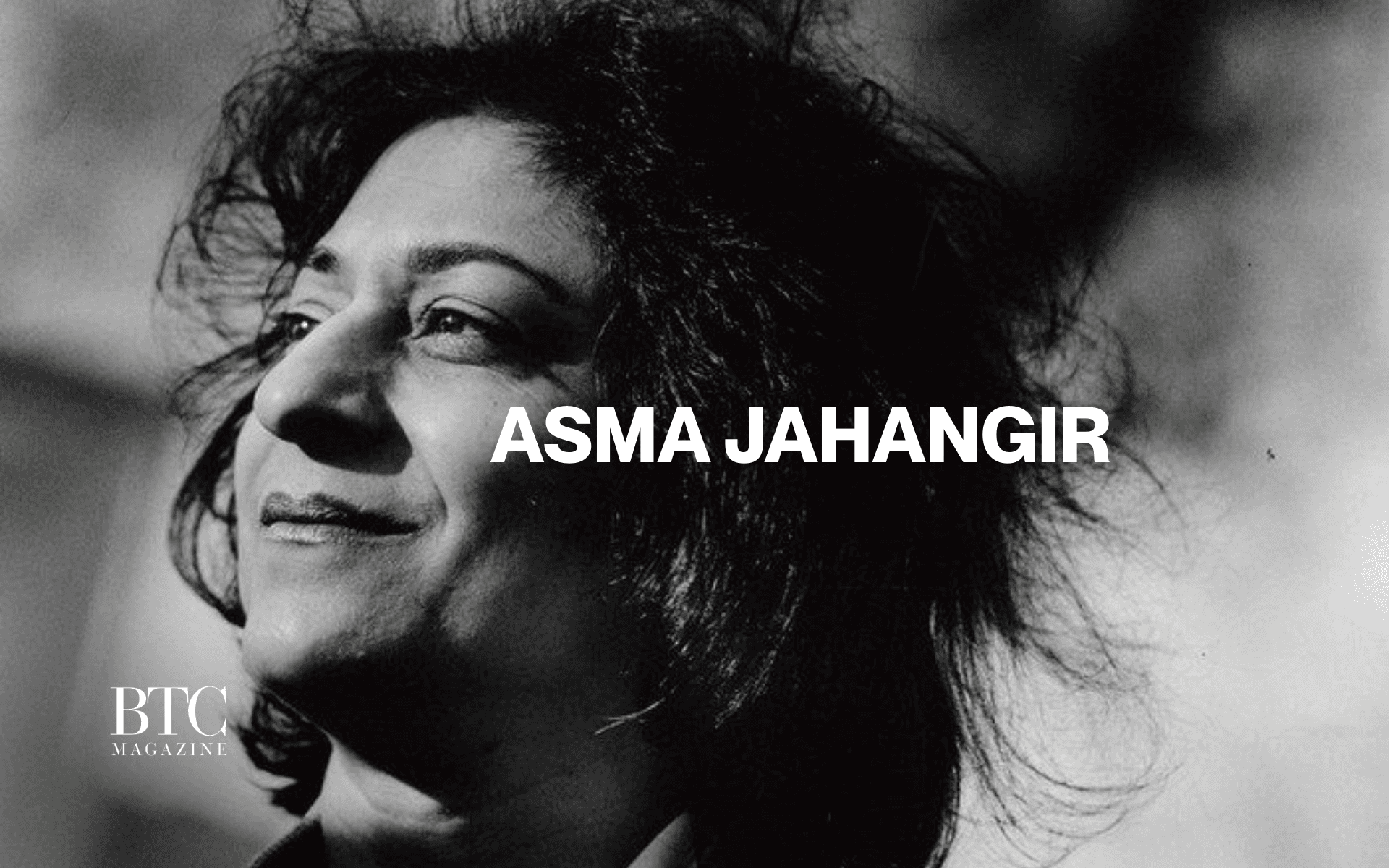
ASMA JAHANGIR: The Woman Who Said No First
Every rebellion needs an origin story. Asma Jahangir is Pakistan’s.At 18, she marched to the Supreme Court to demand her father’s release from military detention. He had been imprisoned for speaking against the government’s actions in East Pakistan—what the world would later recognize as genocide in Bangladesh. Most teenagers wouldn’t know where to begin. Asma filed a petition.She won.That victory—Asma Jilani v. Government of Punjab—became a landmark constitutional case. It established that even military governments could not detain citizens without legal justification. She was barely an adult, and she had already handed the Pakistani state its first lesson in accountability.She never stopped teaching.What She BuiltIn 1980, Asma and her sister Hina Jilani founded AGHS Legal Aid Cell—Pakistan’s first law firm run entirely by women. Their clients were the people everyone else refused: Christians facing death sentences under blasphemy laws. Women accused of adultery for being raped. Bonded laborers. Teenagers on death row. The voiceless, the erased, the inconvenient.She co-founded the Human Rights Commission of Pakistan. She co-founded the Women’s Action Forum. She became the first woman elected President of the Supreme Court Bar Association in 2010—after decades of men telling her she didn’t belong in courtrooms at all.The United Nations appointed her Special Rapporteur on Extrajudicial Executions, then Special Rapporteur on Freedom of Religion. She investigated human rights abuses in Sri Lanka, Israeli settlements, and Iran. She stood on international stages and said what needed saying, even when governments wanted her silent.Especially then.The CostIn 1983, police beat, tear-gassed, and arrested Asma during protests against laws that reduced a woman’s legal testimony to half a man’s. She was imprisoned. Then placed under house arrest. Then imprisoned again.In 1995, she defended two Christian teenagers accused of blasphemy. Mobs surrounded the courthouse. They smashed her car. They threatened her children. She sent her children abroad to keep them safe—and kept showing up to court.In 1999, a gunman walked into her office and shot a client dead. The bullet missed Hina by inches. The client, Samia Imran, had come seeking help to escape an abusive marriage. Her own family had ordered the killing.Asma didn’t stop taking cases.In 2007, Pervez Musharraf declared emergency rule and had her detained. She spent months under house arrest. In 2012, U.S. intelligence uncovered a plot by Pakistani security officials to have her assassinated.She kept going.Why She MattersAsma Jahangir didn’t just challenge laws. She challenged the assumption that laws were unchallengeable.She defended people accused of blasphemy in a country where that accusation is a death sentence—social if not legal. She fought honor killings when the culture called them tradition. She represented women accused of adultery for the crime of being raped, then watched courts overturn unjust verdicts because she refused to let them stand.She made rebellion look possible.Every woman in Pakistan who starts a business, builds a platform, or speaks without permission is walking a path Asma cleared. She didn’t do it politely. She didn’t do it quietly. She did it while governments tried to silence her, mobs tried to kill her, and critics called her a traitor.“I cannot bear to live where there is so much injustice and I cannot do something about it,” she once said. “What kind of a torturous life is that?”The InheritanceAsma Jahangir died of a heart attack on February 11, 2018. She was 66. The day before, she had spoken at a protest demanding justice for a young Pashtun man killed by police. She called the detained children of Swat “her own kids.” She was still fighting.Her name means world conqueror. Her legacy is simpler—and fiercer: she proved that one woman’s refusal to accept injustice can reshape what an entire nation believes is possible.Aleena Mohsin Mughal builds ethical fashion empires.Shameelah Ismail restructures who gets to earn.Myra Qureshi dismantles toxic beauty standards through market power.They stand on ground Asma Jahangir broke open with her bare hands.She said no first. She said no loudest. And she never, ever stopped.

The Thirty-Two: When TV Chose Kites Over Bodies
At 1:38 PM on February 6, 2026, CCTV captured the exact moment a suicide bomber detonated explosives at the Khadija Tul Kubra Mosque in Islamabad. Security guards had stopped him at the entrance. He opened fire. Then he walked into a hall packed with Shia worshippers mid-Friday prayer and blew himself up.Thirty-two people died. One hundred and seventy were injured. Glass and debris scattered across bloodied floors. Victims visible in the mosque's garden. Families running. Ambulances screaming toward hospitals already placing surgical teams on standby.And on Pakistani television? Kites.For hours after the bombing—the deadliest attack in Islamabad in seventeen years—major TV channels continued airing Basant festival programming. Celebrity interviews about kite-flying. Entertainment segments. Cheerful coverage of Lahore's spring celebration. Geo TV had actor Naeema Butt discussing Basant just as news of the blast broke.The contrast wasn't subtle. It raised a question that applies far beyond Pakistan: What does it mean when a country's major news channels continue entertainment programming while the capital buries its dead?I have a team in Islamabad. They texted me within minutes of the blast. My first instinct was to turn on the television—the way you do when something catastrophic happens, when you need to see it to believe it.Basant coverage was still running.I've seen this before. I lived in Bahrain during their internal conflict. I know what it looks like when certain communities' deaths become routine enough that regular programming continues. I know the math that gets done—consciously or not—when news organizations decide which bodies merit interrupting the schedule.My best friend is Shia. So I know what it costs to be the community that gets calculated away.This isn't theoretical for me. This is what I watched happen, again, on February 6.The Metrics That Should Have MatteredBy every traditional news standard, the Islamabad bombing should have dominated coverage:Deadliest attack in the capital since the 2008 Marriott Hotel bombingSecond major attack in three months (November courthouse bombing killed twelve)Happened during Friday prayers—maximum casualties, maximum horrorCCTV footage of the exact explosion momentISIS claimed responsibility within hoursInternational condemnation from the UN, EU, USA cousin of Islamabad's own Inspector General among the deadPakistani print media covered it extensively. Dawn ran comprehensive reporting. Express Tribune documented the aftermath. International outlets from Al Jazeera to CNN to the Washington Post covered it immediately.But in Pakistan, television is how most people consume news. And for hours, television showed kites.Were editors waiting for verified information? Avoiding broadcasting graphic scenes? Operating under regulatory constraints? Worried about inflaming sectarian tensions?Perhaps. But Journalism Pakistan, a media watchdog, noted that "critics linked extended entertainment coverage to commercial interests and advertising." The Islamabad Bar Association called for a day of mourning.Whatever the internal reasoning, the result was the same: viewers who turned on their TVs while the injured were still being pulled from the mosque saw spring festival coverage instead of the deadliest attack their capital had seen in nearly two decades.The Pattern That Precedes the SilencePakistan's Shia community represents about twenty percent of the population—roughly fifty million people. They've been systematically targeted for decades. ISIS explicitly stated after this attack that it views Pakistani Shias as "legitimate targets." This bombing wasn't anomalous: the 2017 shrine attack killed ninety-plus, regular attacks plague Kurram district, sectarian violence that analysts warned would "inflame tensions" continues.There's a calculation that happens—conscious or not—when news organizations decide what merits urgent coverage. Commercial considerations. Political pressure. Audience fatigue with certain types of violence. The normalization that happens when specific communities are targeted so regularly that each new massacre becomes, somehow, less newsworthy than the last.You can call this systemic bias. You can call it market forces. You can call it editorial caution. But you can't call it coverage.The Narrative That Moved FasterWithin hours, Defence Minister Khawaja Asif blamed Afghanistan and India for the attack—claims made without immediate evidence, rejected by both countries. Interior Minister Mohsin Naqvi announced four arrests including an "Afghan ISIS mastermind." The narrative took shape quickly: foreign enemies, cross-border terrorism, external threats.What got less attention: This was the second major Islamabad attack in three months. The bomber operated freely in a heavily guarded capital. When asked about security lapses, Naqvi responded that "if one blast happens, 99 others are being foiled."Al Jazeera's correspondent in Islamabad interviewed people after the bombing. "They say this is a lapse of security," he reported, "that authorities knew very well there was an imminent threat, given the fact that intelligence-based operations are going on in Balochistan and in Khyber Pakhtunkhwa province."Whether through coordination or coincidence, the extended entertainment coverage meant fewer hours of uncomfortable questions about how thirty-two people died in Friday prayers while intelligence agencies were supposedly conducting operations against known threats.It's easier to watch kites.The Mechanics of DisappearanceThis is how marginalized communities disappear in real-time. Not through dramatic censorship or obvious propaganda, but through the accumulated weight of editorial decisions that—individually—might seem defensible. Waiting for confirmation. Avoiding graphic content. Balancing competing priorities. Considering audience appetite.But when those decisions consistently result in certain communities' deaths receiving delayed or diminished coverage, the pattern reveals something darker than any single choice.The victims' families buried their dead on Saturday. Thousands gathered for funeral prayers. Coffins lined up. Mourners screaming. All of it well-documented by photographers whose images ran in international media.But for hours on February 6, while bodies were still being identified, Pakistani viewers who turned on their TVs saw entertainment programming.You could argue this was editorial judgment. Caution. Market-driven programming decisions. Fear of inflaming tensions.You could also ask: How many times does this have to happen before the pattern becomes the point?What Gets CountedThere's a reason print media covered this and television delayed. Print doesn't rely as heavily on advertising from festivals and consumer brands. Print doesn't face the same regulatory pressures. Print can afford to publish uncomfortable truths and wait for subscribers to find them.But television's reach dwarfs print's. Television shapes what most people understand as urgent, important, newsworthy. And on February 6, television made a choice about what mattered most.This matters beyond Pakistan. Every marginalized community worldwide knows this calculation. Knows their grief only becomes news when it's profitable or politically convenient. Knows that some deaths will lead broadcasts while others won't interrupt regularly scheduled programming.The mechanics aren't subtle. They're mathematical. The question is whether we're willing to name what the math reveals about whose humanity gets counted and whose gets calculated away.The Names You Don't KnowThirty-two people died on February 6. Their names were printed in Dawn, Express Tribune, international outlets. Their families held funerals while TV aired festival coverage.Analysts warned after the bombing that it could be part of a broader attempt to inflame sectarian tensions. They urged the government to take action against urban militant networks. They noted the danger of normalization.But something was already normalized: that certain deaths aren't urgent news. That commercial and political pressures can delay coverage of mass casualties. That you can have bodies in a mosque and kites on screen, and the kites win.This isn't speculation. It's what happened. The interpretation is yours.But if this pattern continues—if the next attack on a marginalized community receives the same delayed coverage while entertainment programming runs—we'll know it wasn't an aberration.It was a choice.And systems don't build themselves—but they do sustain themselves.Joseph Tito is the Editor-in-Chief of Between the Covers. He operates businesses in both Canada and Pakistan and has teams in Lahore and Islamabad.
.jpeg&w=3840&q=75)
Winning Her Way: How Melissa Grelo Redefines Success
THE NOTE WAITING IN HER HOTEL ROOMMelissa Grelo was on the brink of one of the boldest moves of her career - a wellness retreat built on her Aging Powerfully platform, the passion project she’s nurtured alongside running a podcast, parenting an 11-year-old, and hosting The Social, Canada’s most-watched daytime talk show. Her daughter, Marquesa, had tucked a note into her bag with strict instructions: Don’t open until you get there.Alone in her hotel room, minutes before leading a room full of women who’d come to learn from her and the group of experts she had curated, Melissa finally opened it. On the first page, in her daughter’s unmistakably confident handwriting:I am so proud of you.“It was a very long letter,” Melissa laughs now. “She’s a very prolific writer. Her vocabulary is fabulous.”But the message was simple: Go. Do this. I’m good. I’m cheering for you.This is what it looks like when a woman builds a life that supports her joy - and raises a daughter who sees and celebrates it.THE GAME IS RIGGED. SHE PLAYS IT ANYWAY.Let’s get something straight: Melissa Grelo hasn’t come undone. She’s building a life, a career, and a rhythm that reflect her strengths, not society’s expectations. What she has done is thrive in an industry where women, especially those on camera, still face extra layers of scrutiny: age, appearance, composure, perfection. Viewers often expect media personalities to be flawless, polished, and ever-present, even when their lives are evolving behind the scenes.And still, Melissa moves forward with clarity and confidence.When The Social finally premiered, it wasn’t just another show for her. It was something she had dreamed up, pitched, and championed for years. So even though she was only 11 weeks postpartum, she chose to be there - excited, grateful, and fully aware of the significance of stepping into a project she had helped bring to life.“I went back to work really fast after I had her,” she says calmly. Not apologizing. Not justifying. Simply acknowledging that the moment mattered to her. She wanted to show up for something she had helped build.Men call this dedication. Women are often told it’s “balance.” But the truth is simpler: Melissa followed her ambition and trusted herself.WHEN HER BODY HIT PAUSE, SHE HIT RESETA year and a half after Marquesa was born, Melissa was hosting Your Morning and The Social. Early mornings, long days, big interviews, and two live shows that demanded focus and energy. Her career was expanding quickly, and she was embracing every opportunity that came with it. Mid-flight to Calgary, her body signaled it was time to calibrate - dizziness, racing heart, the kind of symptoms that demand attention. Doctors checked her vitals: all perfect.The lesson wasn’t “slow down,” it was “support yourself.”She did exactly that. Therapy. A later call time. And a more intentional approach to her already full life.“I’m very bad at resting,” she admits with a smile. “I’ve always been foot-to-the-floor.”But instead of pushing harder, she adjusted smarter. She didn’t crumble; she evolved.THE MATH OF MODERN PARENTHOODMelissa had Marquesa at 36, and like many parents who have children later in life, she occasionally does the quiet calculations – how old she’ll be at major milestones, how life stages might line up. “Always, always,” she says. “Everybody does the math.”But here's what the math doesn't consider: wisdom. Experience. A fully formed self."What we feel like we might be behind in or losing in age, we've gained in wisdom," she says. "We're bringing a whole different self to parenting."Her daughter gets the version of Melissa who knows who she is. Who lived a full life first. Who built a career and collected stories and mistakes and victories before motherhood.This Melissa doesn't crumble when the culture whispers that she's "aging out." She launches a podcast called Aging Powerfully and fills a retreat with women who want what she's modeling: strength without shame."I'm going to be the youngest version of my age at every step of the way."CHOOSING A FAMILY PLAN THAT FITS THEIR LIFEAfter four years of fertility treatment and two clinics, Melissa conceived naturally the very summer The Social was greenlit.Later, when she and her husband Ryan discussed having a second child, they communicated honestly and without pressure.“I’m not slowing down,” she told him. “If we have another, lead caregiving will fall on you.”They talked it through. They both had ambitions. They chose one child. A thoughtful, mutual decision.No guilt. No external expectations. Just a family designing a life that makes sense for them.“I’m very proud of how I’ve navigated the challenges,” she says, recognizing her own growth and the strength in choosing intentionally.RAISING A DAUGHTER WHO KNOWS SHE BELONGSPeople often ask ambitious mothers how they teach their daughters that they can “have it all,” but Melissa reframes the question. For her, the focus is helping her daughter understand that when challenges arise, the issue isn’t her, it’s the world she’s moving through.The approach in their household is simple and open. “There are no secrets in our family,” she says. “Just living life.”Marquesa knows the real stories behind Melissa’s journey - the fertility challenges, the anxiety attack, and the truth of what ambition can cost and give. She also sees something her mother developed later in life: strong boundaries.“She has boundaries very clear in a way I didn’t figure out until my mid or late 30s,” Melissa says. “When my daughter sees me pushing myself too hard because I don’t have good boundaries, she already does.”Their connection is built in everyday moments. At bedtime, Melissa asks: “What makes you feel loved?” and “What moments matter most?” And the answers are always the same - braiding her hair, cuddling on the couch, the rituals that make her feel safe and seen.It’s presence over perfection. Consistency over performance. Love woven into the ordinary parts of life.THE COSTUME AND THE TRUTHEvery morning, Melissa puts on the polished on-air version of herself. Every night, she settles into sweatpants on the couch.“This is who I am,” she tells her daughter. “Work-Mommy is a costume.”Marquesa prefers the no-makeup version.Melissa even built a clothing line - MARQ, named after her daughter, because she wanted kids to feel free before the world labels them.“I’m not throwing gender expectations on a child who still has placenta on her,” she jokes.Their house uses RuPaul’s Drag Race and Love Island as jumping-off points for conversations about character and confidence.“What’s more important than being pretty?” Melissa asks.Marquesa never hesitates: Being smart. Being kind.CHOOSING A FAMILY PLAN THAT FITS THEIR LIFEAfter four years of fertility treatment and two clinics, Melissa conceived naturally the very summer The Social was greenlit.Later, when she and her husband Ryan discussed having a second child, they communicated honestly and without pressure.“I’m not slowing down,” she told him. “If we have another, lead caregiving will fall on you.”They talked it through. They both had ambitions. They chose one child. A thoughtful, mutual decision.No guilt. No external expectations. Just a family designing a life that makes sense for them.“I’m very proud of how I’ve navigated the challenges,” she says, recognizing her own growth and the strength in choosing intentionally.RAISING A DAUGHTER WHO KNOWS SHE BELONGSPeople often ask ambitious mothers how they teach their daughters that they can “have it all,” but Melissa reframes the question. For her, the focus is helping her daughter understand that when challenges arise, the issue isn’t her, it’s the world she’s moving through.The approach in their household is simple and open. “There are no secrets in our family,” she says. “Just living life.”Marquesa knows the real stories behind Melissa’s journey - the fertility challenges, the anxiety attack, and the truth of what ambition can cost and give. She also sees something her mother developed later in life: strong boundaries.“She has boundaries very clear in a way I didn’t figure out until my mid or late 30s,” Melissa says. “When my daughter sees me pushing myself too hard because I don’t have good boundaries, she already does.”Their connection is built in everyday moments. At bedtime, Melissa asks: “What makes you feel loved?” and “What moments matter most?” And the answers are always the same - braiding her hair, cuddling on the couch, the rituals that make her feel safe and seen.It’s presence over perfection. Consistency over performance. Love woven into the ordinary parts of life.THE COSTUME AND THE TRUTHEvery morning, Melissa puts on the polished on-air version of herself. Every night, she settles into sweatpants on the couch.“This is who I am,” she tells her daughter. “Work-Mommy is a costume.”Marquesa prefers the no-makeup version.Melissa even built a clothing line - MARQ, named after her daughter, because she wanted kids to feel free before the world labels them.“I’m not throwing gender expectations on a child who still has placenta on her,” she jokes.Their house uses RuPaul’s Drag Race and Love Island as jumping-off points for conversations about character and confidence.“What’s more important than being pretty?” Melissa asks.Marquesa never hesitates: Being smart. Being kind.WINNING LOOKS DIFFERENT THAN THEY TOLD USOur interview took place on Melissa’s train ride home, a quiet moment in her busy day. As the train pulls into the station, Melissa gathers her things. Ryan is on pickup duty. Tomorrow she’ll do it all again, the work she loves, the routines she cherishes, a life she’s built intentionally.Tonight, she’ll braid Marquesa’s hair. She’ll ask the questions that matter. She’ll settle into the couch as her real self.The version that is fully present.The version that embraces every part of her life with intention.The version showing her daughter what’s possible when you follow your own path.And someday, when another letter comes, it won’t say I miss you.It will say:I see you. And I’m proud.
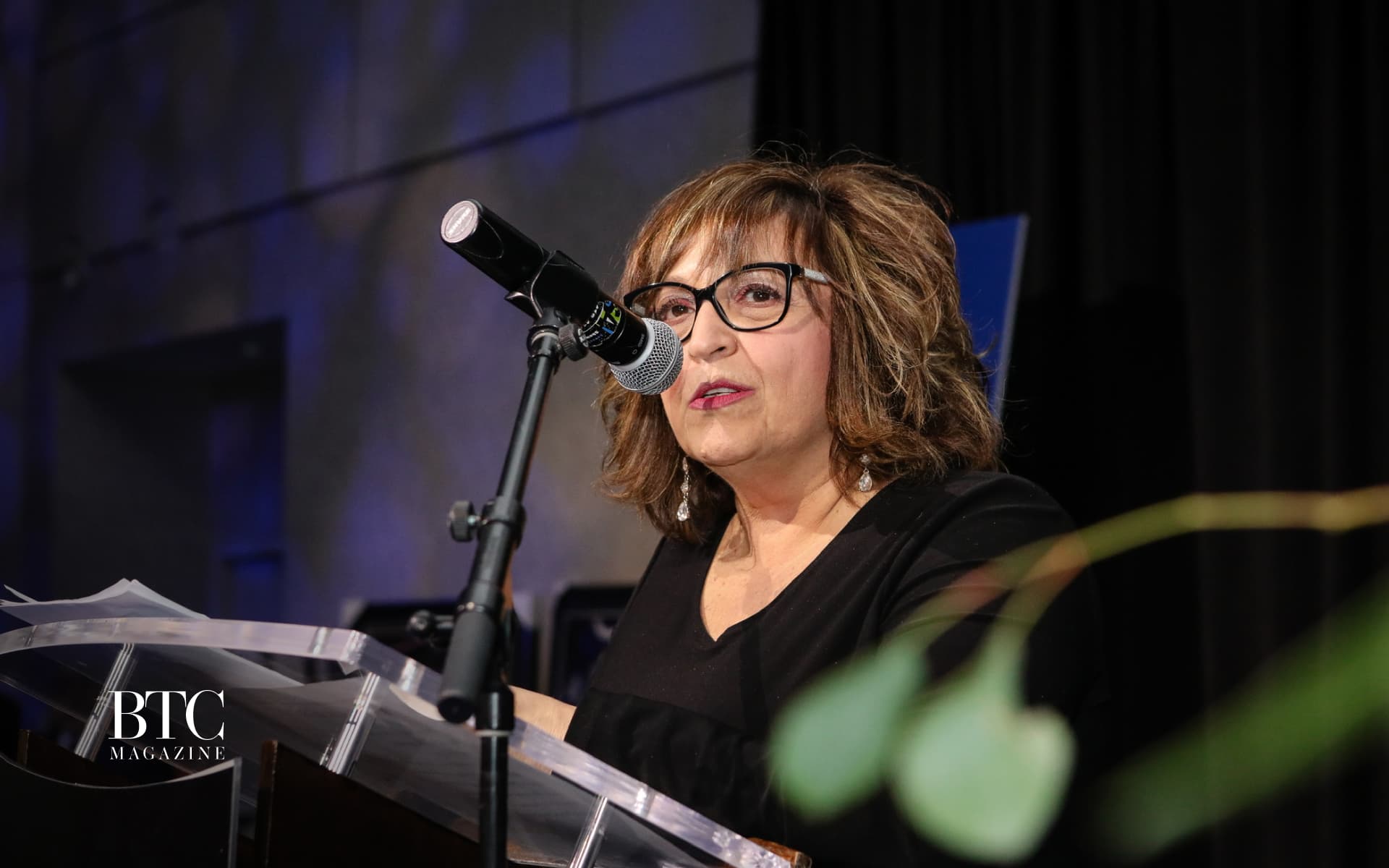
The Woman Who Wouldn't Giggle: Elvira Caria's Four Decades of Refusing to Play Nice
After 40 years of fighting for her voice in broadcasting, Elvira Caria lost the only title that ever mattered to her: Matthew's momThere's a street named after Elvira Caria in Vaughan. She didn't pay for it, she'll tell you right away. Awards line her walls—forty years' worth of recognition for lifting up her community, for being the voice that shows up at every damn event with her phone and her genuine give-a-shit attitude.But when I meet her at The Roost Café on a grey autumn morning, she says the work that matters most is the stuff nobody sees."My real satisfactory work?" She pauses, weighing whether to trust me with this. "I help young girls escape human trafficking. You can't put that on social media."This is Elvira Caria: the woman who refused to be radio's giggling fool, who chose late-night shifts over morning show glory so she could be home when her son's school bus arrived, who now sits across from me one year after burying that same son at 25."I wouldn't be here if it wasn't for the community," she says. And she means it literally.The Day She Found Her Voice by Refusing to Use ItPicture this: a young Elvira in a radio control room, told by a well-known male broadcaster that her job was to giggle. To be the pretty voice that makes him sound better."I don't do giggling fool," she says now, decades later, the Southern Italian fire still in her voice.She stopped showing up to giggle on cue. Got fired on a Friday. Instead of folding, she handed her termination papers back: "If you can find a better reason to fire me on Monday, I'll accept it. If not, I'm coming back."Monday passed. So did Tuesday. By Friday she expected another dismissal—everyone fires on Fridays. But a month later the man who told her to giggle was gone. Elvira stayed for six more years."I found my value voice," she says. "I wasn't going to bend for someone else's value."The Choice That Looked Like SacrificeAt the height of her career, being groomed for a morning show at one of Canada's top stations, Elvira walked away."Nobody quits Rock Radio," her boss said."Well, I just did."She took the shifts nobody wanted—weekends, evenings, 3 a.m. hits at Yonge and Dundas. People called it sacrifice. She calls it choice."While others were sleeping, I was talking to the people we now call homeless. Nobody wakes up saying, I want to be on the streets when I grow up. Nobody."The choice meant she was home when Matthew got off the school bus. It meant knowing his friends, his teachers, his world. For 25 years, it meant being Matthew's mom first, Elvira Caria second.The Irony That Breaks YouHere's the part that will gut you: she spent decades insisting she was more than just Matthew's mom. She was a broadcaster, a journalist, a voice for the voiceless. She built a career on authenticity when authenticity could get you fired.And then, in 2024, Matthew was gone— twenty-five years old and on the edge of everything. Suddenly all Elvira wanted was the one title that had been stripped away."Matthew never saw me as a radio announcer," she says, voice steady, eyes somewhere else. "He saw me as his mom. And that's all he cared about."The Part Where She Stops Pretending Everything's FineLet's talk about not getting out of bed. About hygiene being optional when grief is bone-deep.Her sister-in-law was the one who finally broke through: "They need you. My boys need you! You're more than their Zia." So Elvira took small steps. A shower became a victory. Coloring her hair, an achievement. Looking in the mirror and trying to recognize whoever stared back."I'm mad at God," she admits. "People say everything happens for a reason. What's the fucking reason? Why take away a kid who never did anything wrong, who was just starting his life?"The Community That Saved Her When Awards Couldn'tTen people can tell Elvira she's wonderful. One critic cuts deeper at 3 a.m. That's human.She'll admit some awards now feel hollow—accolades in a season of loss. The recognition doesn't heal the absence.But the community? They showed up in ways that mattered. The woman from her coffee shop who just sat with her, no words needed. The neighbor who mowed her lawn without asking, week after week, because grief means grass keeps growing when you can't. The radio colleague who took her shifts without question when she couldn't form words, let alone broadcast them. The mothers from Matthew's old baseball team who still text her his jersey number on game days. Or the Baseball league who named an umpire award after him."Someone left groceries at my door every Tuesday for three months," she tells me. "Never found out who. Just bags of real food—not casseroles, not sympathy lasagna—but the exact brands I buy. Someone paid attention to what was in my cart before. That's community."The vigils, the legacy fund in Matthew's name, the quiet notes slipped under her door—that's what kept her standing."The real work happens in shadows," she says. "Helping a girl escape trafficking. Watching her graduate two years later. That's when I think—okay, maybe I've done enough to meet my maker."The Wisdom of Not Giving a FuckAfter decades of answering every critic, she's learned the most radical act: indifference."You don't have to react to everything," she says. "Not everything requires an explanation."She still hates small talk, still loves a stage. The influencer economy baffles her. "People think having a phone makes them reporters. Broadcasting is an accreditation—you're trained how to interview, how to fact-check, how to smell bullshit."Who She Is NowA year later, she's still figuring it out. Still showing up at community events with her phone and her give-a-shit intact. Still ironing her underwear (yes, really) because some control is better than none.The street sign with her name stands in Vaughan, but she lives in the in-between—between public recognition and private purpose, between the veteran broadcaster and the grieving mother."The evil grows faster than good," she says. "We're always catching up."So she keeps going. Not because grief eases—it doesn't. Not because she's found a new purpose—she hasn't. But because stopping isn't her style.She refused to giggle back then. She refuses to perform now. And maybe that's the lesson: sometimes the most powerful thing you can do is keep showing up, even when you don't know why you're still here. Especially then.Elvira Caria continues to support multiple charities across the GTA while maintaining her broadcasting career. She's still mad at God, still helping girls escape trafficking, still learning who she is now. She does not need your sympathy. She might need you to know that grief has no timeline, authenticity isn't content, and sometimes the bravest thing you can do is refuse to play along.
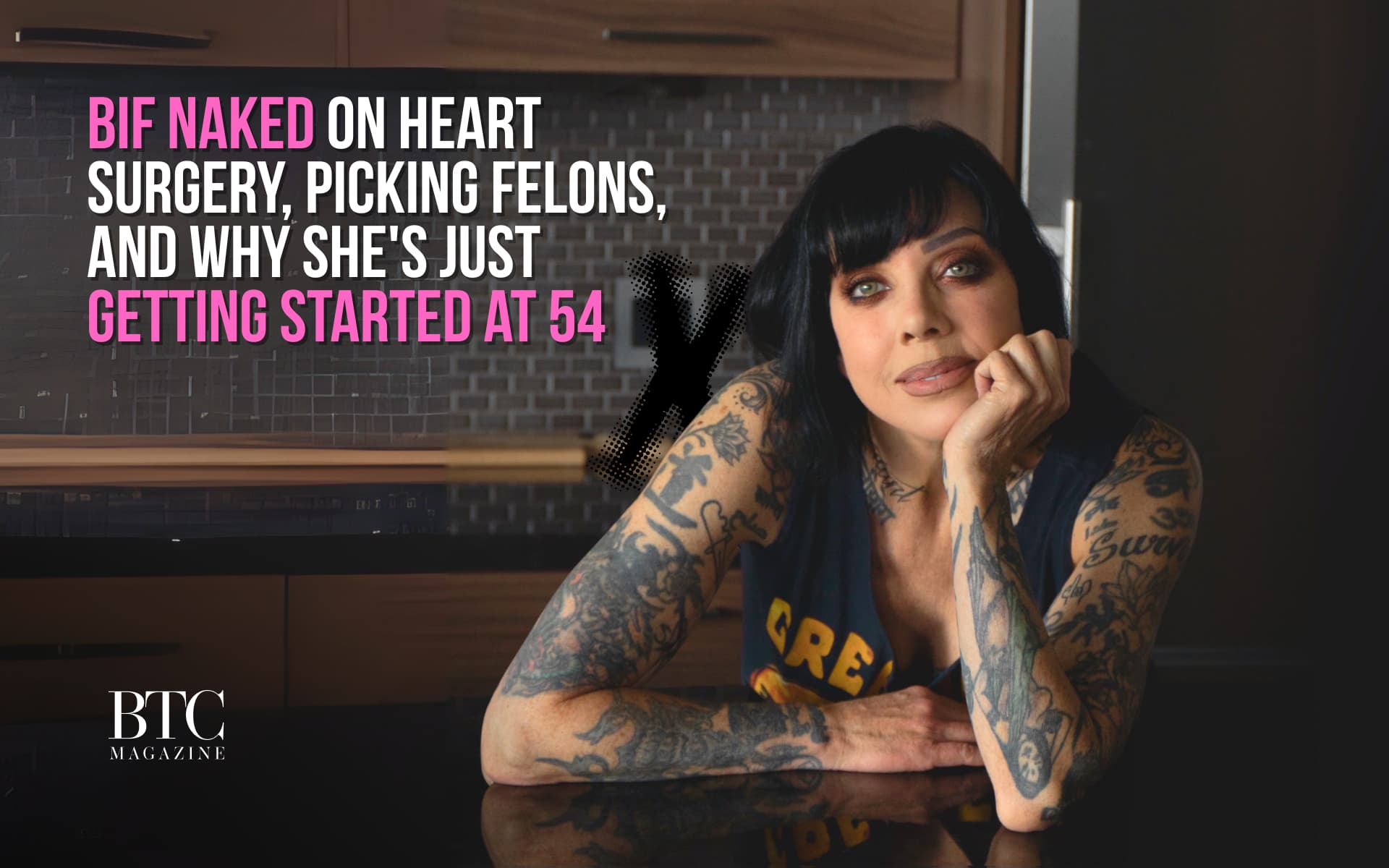
The Dentist Is Between My Legs: Bif Naked on Heart Surgery, Picking Felons, and Why She's Just Getting Started at 54
The punk icon who found euphoria on an operating table talks death doulas, divorce gratitude, and why her failing marriage hurt more than cancerBy Joseph Tito | Between the Covers | November 2025Bif Naked is cutting up her dog's food with her hands when I ask how it feels to be a legend.She looks at me like I've asked her to explain quantum physics in Swahili. "I'm a dog mom," she says, and goes back to mincing. Her fingers work methodically, tearing dog food into smaller and smaller pieces. The woman who once spit on audiences from punk stages now performs this daily ritual of care with the focus of a surgeon.This is going to be that kind of conversation—where every expectation gets shredded like dog food.The Operating Table High"So I was wide awake," Bif says, settling into her Toronto condo couch, miniskirt riding up as she crosses her legs. She's talking about her heart surgery like most people describe a spa day. "They thread a little camera through your leg all the way to your heart, and they can see what they're doing on the screen."She leans forward, eyes bright with the memory. "The surgeon is wearing a pineapple hat—like, the surgical hat had cartoon pineapples on it. And they're listening to William Shatner singing. Have you ever heard him sing? Who knew this album existed?"This is a woman describing having a hole in her heart closed with what she calls "a little umbrella device," conscious the entire time, finding it all hilarious and profound in equal measure. Her voice gets almost reverent: "I thought, this is the coolest shit ever. How is it possible that in this lifetime, I can listen to these people talking about their day jobs, which is fixing my stupid heart?"Then comes the moment that gives this article its title. They need to inject Novocaine into her leg to make the incision. You know that heavy, aching feeling from the dentist?"I said, 'Oh! It feels like the dentist is between my legs.'"She covers her face, laughing and mortified simultaneously. "The nurses started howling. This patient is on the table, making what they think is dirty talk. But I just meant—" she gestures helplessly "—the Novocaine!"Her whole body shakes with laughter now. "Of course that's what I said. How fucking funny is that?"God's Rejection and Other Love Stories"God is not going to choose me for whatever reason," she says, the laughter suddenly gone. "I'm going to stay here on earth and have to deal with it. Because I'm not learning my lessons yet."The shift in energy is palpable. She's talking about her pattern now—the violent men, the criminal boyfriends, the marriages to liars. "If there's a wrong guy, send him my way. If he is a criminal, if he's a violent felon, send him my way. I'm going to fall in love with that idiot every time."She delivers this like a weather report, no self-pity, just fact. When I ask why she got divorced, she doesn't hesitate: "Because I married liars." Then, catching herself: "But I have to look at what my fault was."She discovered what healthy relationships actually look like at 54. Fifty-four. After two failed marriages, cancer, and enough medical trauma to kill most people twice. "I had no idea relationships were supposed to be healthy," she says, and the wonderment in her voice is genuine. "I think that I've always been chasing true love. I'll never give up on love, ever."The contradiction sits there between us: the woman who picks monsters still believes in fairy tales."My emotional crisis of my failing marriage trumped my cancer experience."She says this so matter-of-factly that I almost miss it. The dissolution of her marriage during treatment hurt more than the actual cancer. Her hands, which had been still, start moving again—straightening pillows, adjusting her jewelry."Which was good," she adds quickly, "because it forced me to throw myself into volunteering."The man who married a rock star got a cancer patient instead, couldn't handle the plot twist. Now she trains as a death doula, works in palliative care. "If I was told tomorrow that I could not be a performer anymore," she says, her voice steady, "I think I would go into hospital administration."The Stage She Was Always SeekingBefore Bif Naked existed, there was a theatre kid at the University of Winnipeg who'd taken ballet for 13 years. She demonstrates a position, her leg extending with muscle memory from decades ago. "I wanted to be an actress and a ballet star."Then a drummer named Brett needed a singer. Suddenly she had a vehicle for all her poetry, all her rage about El Salvador and Indigenous treatment and misogyny. Whether it was ballet slippers or combat boots, she was always searching for a stage—just took her a while to find the right one."I got to stand up there. I got to spit on the audience. I got to say, fuck you, you can't objectify me." Her voice rises with the memory, that old fire flickering. "I didn't even have to sing very well. And believe me, I could not. I sounded like a dying cat."She pauses, grins. "And I don't mean the band Garbage."They opened for DOA. NoMeansNo. Bad Religion. She dropped out of university, and here's the kicker—"I'm still waiting to go back to school," she laughs, thirty-something years later, like she might actually do it.The same rage that fueled her screaming about El Salvador now targets Doug Ford's Ontario. "I couldn't figure out why I moved here," she says. "Then Ford got elected and I thought, 'Oh. I'm here to use my big mouth.'"The Children She'll Never Have (Or Will She?)When she cuts up that dog food with such maternal precision, I have to ask about kids. Her whole body language shifts—shoulders dropping, a softness creeping in."My ovaries were taken out at 36. So breast cancer didn't just cut up my tit." She says this with the same directness she uses for everything else, but her hand unconsciously moves to her stomach. "I've been in menopause since I was 36 years of age."People ask about adoption—she is, after all, adopted herself. The sarcasm returns, protective: "Oh yeah, let me get right on that. Let me turn around as a divorcee who's working nonstop as a self-employed artist in Canada and get right on the adoption train."But then, unexpectedly: "Now in my mid-50s? Yeah, I suppose I am ready."The possibility hangs there. Not this year. But the door isn't closed.Tina Turner's Miniskirt Ministry"I look to women like Tina Turner," she says, smoothing her miniskirt with deliberate intention. "Tina Turner didn't start playing stadiums till she was in her 50s."At 54, she genuinely believes she's just getting started. The documentary premiering across Canada this month (November 12 in Toronto, November 4 in Vancouver). The album finally released after she shelved it during the George Floyd protests because "the world didn't need a fucking Bif Naked record" during that summer of unrest."The sky is the limit," she says, and means it.When I ask who she's fighting for now, what her voice stands for at 54, she barely breathes before answering."When I was singing 'Tell On You' on my first record, I wasn't the only girl who was sexually assaulted," she says, her voice dropping to something harder, older. "I was the only girl with a microphone."The room goes quiet. Even the dog stops moving.She calls herself "a square" now—no cocaine, no partying. "I can be thoughtful and intelligent. I can try very hard to be a voice for the voiceless."But square doesn't mean silent. She's angrier about politics than ever, advocating for animals, healthcare inequality, LGBTQ+ rights rollbacks."Unfortunately," she says with a grin that's pure punk rock, "I'm still the one holding the mic."What's Next Is What She WantsThey're making a feature film about her life. The documentary's touring. When I ask what's next, she almost defaults to "that's a Peter question"—her manager's domain—then catches herself, takes ownership."We're working on the feature film based on the book."But really, what's next is whatever the fuck she wants. She's earned that.I ask what she'd tell a young girl starting out in music today. She thinks, really thinks, her face cycling through decades of memory."Never take it personally. Never take anything personally, no matter what."Then she says something that makes me stop writing: "There's room for everybody."This from a woman who had to claw for every inch of space. Who quit drinking partly to avoid being "misinterpreted" by men who'd use any excuse to discredit her. Who's been assaulted, dismissed, divorced, nearly killed."Anybody can make music on their computer, anybody can learn piano on YouTube, anybody can upload a song and send it to their nona," she continues, and she means it. "That's actually a gift."As I'm leaving, she's back to cutting up dog food, this ritualistic care that anchors her. I think about what she said about God not choosing her yet, about having to stay here and deal with it.But watching her hands work—the same hands that punched stage divers, that held microphones during cancer treatment, that reached for violent men who couldn't love her back—I realize something.She keeps saying she hasn't learned her lessons. But maybe she has. Maybe the lesson is you can marry liars and still believe in love. You can lose your ovaries at 36 and mother the whole world anyway. You can tell your surgical team the dentist is between your legs and still become a legend.She looks up from the dog bowl, catches me staring."I wasn't the only girl who was sexually assaulted," she says again, quieter this time but somehow louder. "I was the only girl with a microphone."Bif Naked's documentary tours Canada this month. Her album "Champion" is available now. She still wears miniskirts and heels. She's just getting started.
All Articles in Identity & Culture
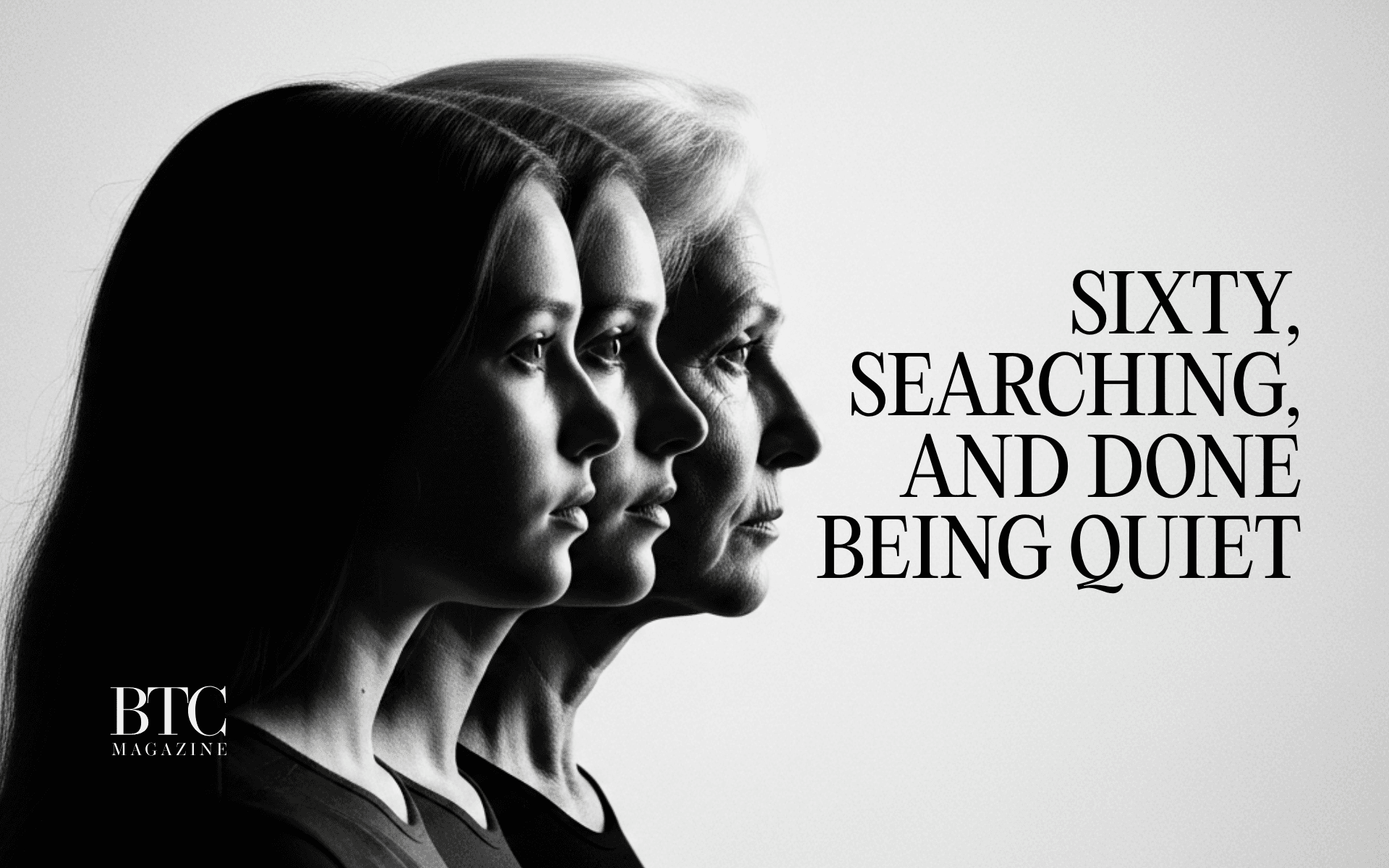
Sixty, Searching, and Done Being Quiet
My first memories of women I admired and aspired to be like someday were from my favourite TV shows. Marlo Thomas and Mary Tyler Moore. Peggy Lipton and Susan Dey.If these names give you zero context clues, here's a hint: Susan Dey played Laurie Partridge on The Partridge Family and Peggy Lipton starred in The Mod Squad. These women were mod and groovy and gorgeous.Do you have it? Correct. The 70s.I know I'm dating myself. In fact, I'll celebrate a milestone birthday this year. It has no clever name. No "Flirty Thirty" or "Nifty Fifty" for this decade. Apparently you just turn sixty quietly or loudly and carry on. Creating a fuss is not considered an attractive quality in older women.I'm not afraid of turning sixty, as I thought I might be. I'm not embracing wrinkles gracefully, to be honest. I do need to drink more water. My intentions list is longer than my years.So fear of wrinkles yes, but I'm not scared of ageing or dying. And I'm not scared of becoming an invisible older woman—though, believe me, that is no fake conspiracy theory.I am scared, though, of getting to this age without finding my true purpose or passion. Because, come on. If you haven't found your purpose by sixty, when will you? I'm supposed to be wise and I'm not there yet. Accomplishments grow, but so do one's goal lists, as the clock ticks faster.What drew me to these female characters was partly their impeccable style and sheer glamour. But there was more. They exuded independence. They had careers and spoke their minds to men.What I didn't know in my innocence was that the Women's Lib movement of the 60s and 70s was in full force. Women and their allies were fighting for their lives while I crushed on David Cassidy.As I sat down to watch a favorite show in 1973, I had no idea that Roe v. Wade was being passed—a monumental moment that has eroded shamefully. But I was silently soaking in the political and societal ripples as a child. I felt a buzz and a shift at some tidal level.Children are always watching and listening. Choose your words to your daughters carefully. And your sons.Sixty years on and women still need to fight. In The Color Purple, Celie says, "A girl child ain't safe in a family of men. But I never thought I'd have to fight in my own house."If you've read the novel or seen the movie, you know the heartbreak in those words. If you haven't—please do. Today.As a dual American-Canadian citizen in 2026, I feel that second line profoundly. When girl children and women aren't safe, we need to fight.Sliding towards invisible says a lot about how we as a society value women and elders, but I'm not gonna lie—it has advantages.I spend some of my days every week as a high school supply teacher. Another day I volunteer at a long-term care home. So I spend most hours in a typical week with teenagers and older folks. It's such an interesting vantage point to observe these two cohorts as an outsider of sorts.Both groups are shockingly honest and authentic. Teenagers have their whole life ahead of them and everything to gain. Seniors have most of their lives behind them and nothing to lose. So both open up and reveal their thoughts with complete candour.The teenage girls delight and fascinate me with their youthful boldness and confidence. Their dreams are big and shiny. I feel an obligation to pave the road ahead for them. I try not to instill fear or squash their enthusiasm. The only feminist advice I can't help sharing over and over is this: Never put the key to your happiness in someone else's pocket.The residents at the care home can appear frail—until they start to share their stories. The oceans they crossed. The abusive husband they walked out on with a car full of kids in tow. The husbands they adored and miss. The jobs they held when women didn't do those jobs. The children and pets they nurtured with little money. The siblings they helped raise and the homes, gardens, kitchens, communities they created magic in.As they speak, every impression of frailness fades away and their strength glows.Some of them were the groovy and mod women of the 70s I yearned to emulate.And here I stand, poised between the generations, facing down sixty.I have a number of thirty-something friends and nieces. They've figured some things out. They have date nights and self-care appointments. Yet they still struggle to find affordable, good daycare. They still struggle to be validated and respected when they've chosen a child-free life. And they seem overwhelmed and tired. The day has too few hours and feelings of failure lurk at the fringes.The times they are a-changin', but we're not there yet.Yesterday on a local social media post, a woman was asking for advice on dog training. I had no advice to give, so I kept scrolling. But one of her lines struck and stayed with me. She ended her post with this:"Please. I need help, not judgment."Sister, we hear you.There was a fascinating trend on social media at Christmas time. Post after post of stories about "Who fills Mom's Christmas stocking?" Some were bitter, some funny, some poignant. Obviously the discussion struck a nerve.Partly it was a little silly venting during the stressful holidays, but partly it was a metaphor for something way, way bigger for women and moms. As we trudge along day to day in our responsibilities—who is filling our stocking?It's hard to be a revolutionary activist when you're legitimately tired. Most women care deeply and passionately about making the world safe for a girl (and boy) child, but there's presents to buy and meals to cook all year round.I self-reflect a little because life is rarely one-dimensional. A little piece of why my stocking is empty is because Martyr Me thinks I should do it all and don't need (or deserve?) help. A little piece is Controlling Me thinking I'm the only one who can do it properly. A little piece is Egotistical Me enjoying the praise of occasionally being able to "do it all"—and this high is in peak form during the holidays. A bigger piece is that Caregiver Me genuinely enjoys making my family and friends happy.Until I feel undervalued. And then the bitterness seeps out a little.We're complicated and balance is tricky, isn't it?I want to model the perfect balance for the teenagers and the thirty-somethings, but I'm still getting it right myself. On the edge of sixty, I'm still a work in progress.I know that words and actions are powerful. I know from the classroom that teenagers are watching me for guidance behind their gloriously long throwback-to-the-decade-I-was-born-into lashes.Life is a cycle, as women know best. I feel a responsibility to carry on the legacy of the women at the long-term care home who moved mountains in their lifetimes, at home and in the workplace. The personal is always political.Today I draw inspiration from many women, fictional and very real.Ilona Maher: US rugby team Olympic medalist, Dancing with the Stars darling and podcaster. She's funny, she preaches body positivity, she's someone I want to borrow confidence from. She's someone I aspire to be more like now, not someday.The women protesting today in the streets of Iran, brave beyond my wildest vision. The protest sign "REVOLUTION NOW" takes my breath away with its immediacy and pulls me to action. Revolutions are happening and I'm being called. The sideline is not where I want to say I stood, if I'm privileged enough to have grandchildren.Oh—and Peggy Lipton of my beloved The Mod Squad? She's the mother of Rashida Jones. Talented, beautiful. And an activist fighting for intersectional feminism, racial justice, humanitarian aid, and youth empowerment.Every decade brings us women to aspire to.Happy sixty to me. I'm finding my voice. I'm owning it.I challenge you to do the same, even if you're not having a milestone birthday.Revolution now. Help, not judgment. Find your voice. Own it.By Angela CherubiniAngela is a retired high school English teacher, supply teacher, volunteer, runner, and story-keeper.
.png&w=3840&q=75)
The Boy Who Ran Everywhere But Here
I spent decades outrunning myself. Turns out, the finish line was home.I used to think reinvention was bravery. That running—changing cities, names, careers, accents—was proof I was evolving. Turns out, it was just me trying to outpace the kid I used to be. The one with the mortadella sandwich.I was six when my parents brought me from Italy to Canada. Richmond Hill, to be exact. The land of Wonder Bread, hockey gear, and peanut butter sandwiches cut into perfect triangles. My lunchbox didn't fit in. Neither did I.While the other kids unwrapped their crustless PB&Js, I opened mortadella on ciabatta—thick, oily, unapologetically Italian. And I felt the sting. Not just the eye rolls, but the way silence tastes when you're the only one who brought something different. The smell of my heritage, I decided, was the smell of embarrassment.So I did what any kid desperate to belong does: I started sanding myself down. No more Italian at home. No more rolling my R's. No more anything that made me too much or too other. If I could just shrink enough, blend enough, maybe I could finally disappear into the background and call it safety.By fifteen, I found my escape hatch: modeling. Suddenly, airports replaced classrooms, and the kid who didn't belong anywhere was being flown everywhere. London. Tokyo. Paris. Milan—ironically. Every city became a costume change, every contract a new version of myself I could try on and discard. I thought I was finding myself. I was really perfecting the art of vanishing.Then came the directing. The producing. The building of a life that looked impressive from the outside—a carefully curated collection of identities, stacked like passport stamps. And yet, the more I built, the further I drifted from that kid with the mortadella sandwich. The one who wanted so badly to be seen that he made himself invisible.I didn't understand what was missing until I became a parent. My twin daughters were the mirror I'd spent decades avoiding. They didn't care about polish or titles or the countries I'd lived in. They cared about presence. They cared about me—the real, unedited version I'd been running from since I was six.One day, I was making them lunch. And yes, I made mortadella. On good bread. With a little olive oil, the way my nonna used to. And as I wrapped it up, I caught myself smiling—not the smile you give a camera or a client, but the kind that comes from a quiet, uncomfortable truth you've been dodging for years.I hadn't been running toward success. I'd been running away from myself. And the finish line? It was here. Home. The same messy, loud, cultural, complicated place I once tried to escape. My parents' house. My daughters. The language I tried to forget. The food I was once ashamed of. All of it, waiting for me to stop sprinting and just… sit down.But here's the thing I've been noticing lately—and it's breaking my heart:I keep having the same conversation with women. Women in their forties, fifties, sixties. Mothers who gave everything—everything—to their kids, their partners, their households. Women who built entire lives around being needed. And now? Now the kids are grown, or growing. The house is quieter. The role that once defined them is shrinking. And they're sitting in that silence, asking a question that feels both terrifying and long overdue:Who the hell am I?Not as a mother. Not as a wife. Not as the person everyone needed them to be. Just… them. The person they were before the diapers and the carpools and the endless, selfless giving. The person they maybe never even got to meet.And they're sad. Not the kind of sad you can fix with a weekend away or a new hobby. The kind of sad that comes from realizing you've been disappearing for decades—one snack pack, one school pickup, one "I'm fine, really" at a time.It's a different kind of running than mine. I ran away. They stayed put and dissolved. But the result is the same: you look up one day and don't recognize yourself anymore.Here's what I want to say to those women—and to anyone who's ever lost themselves in the roles they played:Finding yourself isn't about reinvention. It's about remembering.Remembering who you were before the world told you to tone it down. Before the fear of being too much made you shrink into too little. Before "mother" or "wife" or "caretaker" became the only name that mattered. Before fitting in—or holding it all together—felt safer than standing out.Sometimes, the bravest thing you can do isn't to start over. It's to stop running—or stop disappearing—and sit in the truth of where you began.For me, that meant coming home to the mortadella. To the loud Italian family dinners I once cringed at. To the accent I buried. To the parts of myself I thought I had to erase to be worth something.For you, it might mean picking up the guitar you haven't touched in twenty years. Remembering what you used to love before "mom guilt" became a language you spoke fluently. Giving yourself permission to want something that has nothing to do with anyone else's needs.It might mean sitting in the uncomfortable truth that you don't know who you are yet—and that's okay. That the unraveling, the loneliness, the grief of realizing you've been gone for a while? That's not failure. That's the beginning.Because the real power isn't in the escape. Or the sacrifice.It's in the return.To yourself.The one who was always there, waiting.The one who still smells like mortadella, or lavender, or ambition, or whatever the hell made you you before the world needed you to be someone else.Come home.You've been missed.
.jpg&w=3840&q=75)
Ten Years of Glitz: When Your Jewellers Become Your People
I don't need to sell you on Glitz Jewellery. If you know, you know. And if you don't? Buckle up, because I'm about to tell you a love story about a jewellery shop that'll make you ugly-cry into your morning coffee.They've been my jewellers since my girls were born – which, let's be real, feels like yesterday and also approximately 47 years ago. They made my wedding band. They've crafted gifts for every baptism, birthday, and "sorry I was an ass" anniversary apology. But here's the thing: Lina and Daniel don't feel like "my jewellers" anymore. They're family. The kind who remember your kids' middle names and text you when they get something in they know you'll love.Let me tell you about the time my husband Frank lost his wedding ring. Gone. Vanished. We turned our house into a crime scene – couch cushions flying, pockets turned inside out, me on my hands and knees with a flashlight checking under radiators like some deranged detective. Nothing. Frank was devastated in that specific way men get when they lose something symbolic and can't articulate why it's destroying them.We dragged ourselves to Glitz, expecting disaster. You know what Lina and Daniel did? They made an exact replica overnight and loaned it to Frank while we kept searching. No guilt trip, no "well, you should've been more careful." Just: "Don't worry about it. We've got you covered until you find it."When Frank found the original ring three months later (in the cantina, naturally, because Italian men), we brought the loaner back. They just laughed. "Thank God you found it," Daniel said. "We knew you would."The thing is, it wasn't about the ring. It was about them understanding that sometimes life falls apart, and you need someone to hold you together until you can find the pieces.That's Glitz. It's love cast in gold and silver. Love that outlasts the mess, the chaos, the everyday disasters of being human.The real story starts back in 1980, when Giselle Maggiacomo first stepped into the shopping mall jewellery game. Picture it: the big hair, the shoulder pads, the absolute audacity of a woman deciding she was going to build something lasting in an industry that chews people up. By 1999, Giselle and her husband Bruno had opened Glitz at Toronto's Fairview Mall – not just another jewellery kiosk, but a destination. For years, they served the North York community from that mall location, Giselle with her three decades of expertise, Bruno handling watch repairs with surgeon-like precision, their kids Lina and Daniel growing up between the display cases.When the clientele outgrew the mall space, the family made the leap to Maple in Vaughan – bigger space, same heart. The boutique became what Giselle always envisioned: not just a store, but a gathering place. A second living room where people came to mark life's moments.Giselle passed this June, and if you think I'm going to pretend that's not devastating, you've got the wrong magazine. She left behind Bruno, her partner of 48 years, their children, four grandchildren, and a community that called her the "Queen of Glitz." Losing your mother is its own special hell. But here's what gets me: Lina and Daniel didn't just inherit a business. They inherited her entire philosophy of care.You can still feel Giselle in that shop – in Lina's sketches that somehow capture exactly what you imagined but couldn't articulate (that OCAD University design degree wasn't for nothing), in Daniel's steady hands setting stones (he's a certified gemologist, because of course he is), in the way they both stop what they're doing to really see you when you walk in.Because that's the thing about Glitz: they see you. Not your credit limit. Not your purchasing history. You. The exhausted mom who needs something to make her feel human again. The nervous kid picking out an engagement ring. The woman replacing jewellery from a divorce who needs someone to tell her she's going to be magnificent.They'll tell you if something's not right for you. They'll suggest the $75 silver charm over the $750 gold one if it suits you better. They remember that your daughter loves butterflies, that your mother-in-law is allergic to nickel, that you hate yellow gold even though it's "back."The boutique itself is this bright, Miami-meets-Maple vibe that somehow works. Modern but warm. Chic but approachable. Like if your coolest friend decided to open a jewellery store and actually knew what she was doing. Lina will sit with you at their "Create Bar" and sketch your dreams into reality – turning your grandmother's diamonds into something you'll actually wear, or designing an engagement ring that tells your whole damn story. And their online shop? Same energy. Whether you're in Vaughan or Vancouver, they'll design custom pieces, ship anywhere, and text you updates like they're sending pics of your grandkids.Ten years in business might not sound like much, but in the world of small retail? It's basically immortality. It's surviving recessions, pandemics, and the general fuckery of running a family business while grieving. It's Lina and Daniel proving that their mother's 44-year legacy wasn't just sustainable – it was necessary.In a world of algorithmic recommendations and same-day delivery, Glitz reminds us what we're actually craving: connection. Recognition. Someone who gives enough of a damn to have your back when life goes sideways.So here's to ten years of Glitz in Vaughan. To 25 years of the Glitz name. To 44 years of Giselle's vision. To turning mess into magic, grief into legacy, customers into family.If you've never been, go. Seriously. And when you do, tell them I sent you. Not because I get anything out of it, but because I want them to know their family is growing.Because once you're Glitz family? You're in for life. And that's worth more than all the gold in that beautiful, light-filled shop.
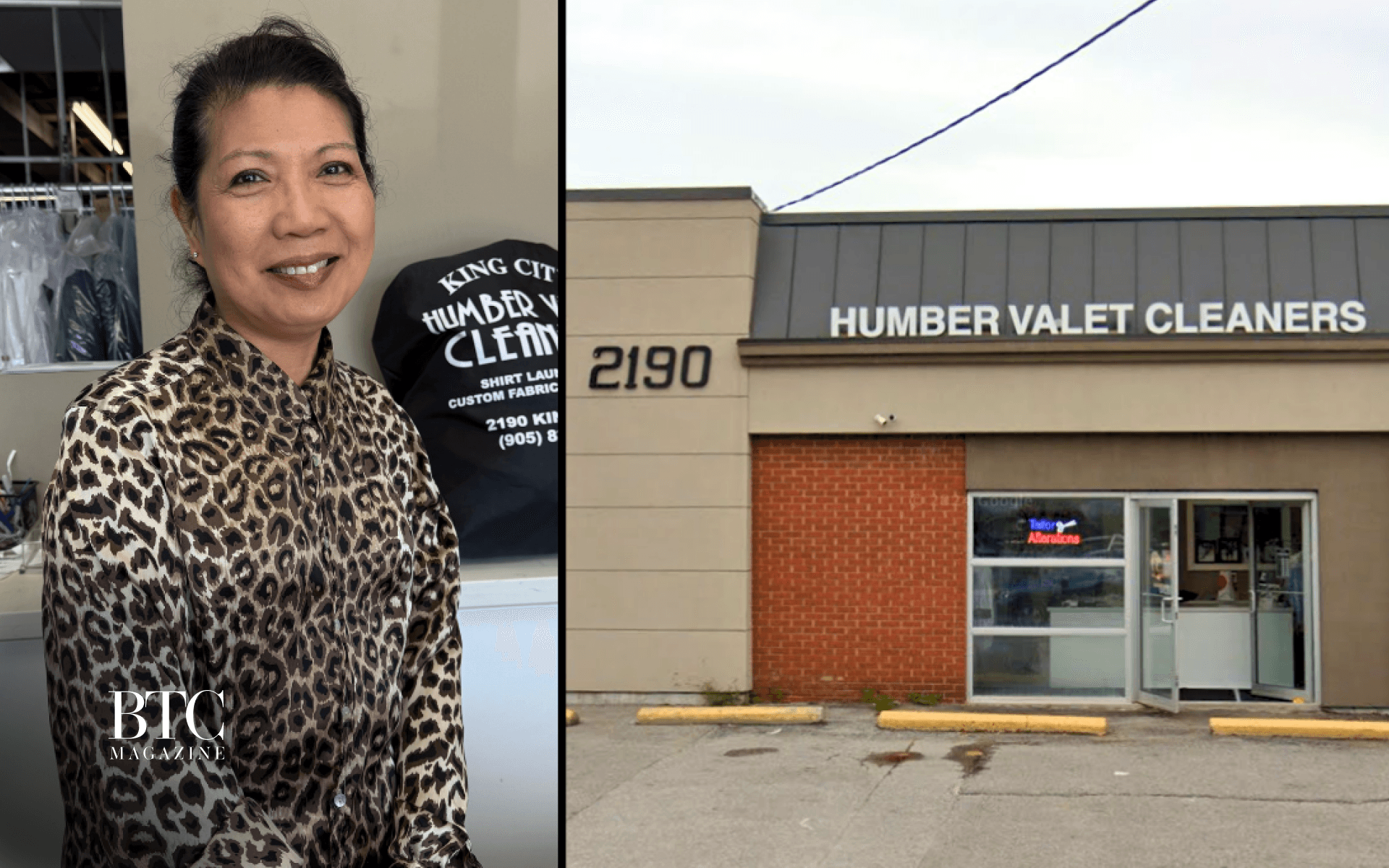
The Godmother of King City: Liberty at Humber Valet Cleaners
In the heart of King City, nestled on King Road, stands a local institution: Humber Valet Cleaners. For years, this establishment has been more than just a place to drop off your dry cleaning—it's been a cornerstone of the community. At the center of it all is Liberty, the spirited force behind the counter, whom my husband Frank and I affectionately call the "Godmother of King City"—the unofficial mayor, if you will.Liberty's presence is as constant as the changing seasons. With a warm smile and an uncanny memory for names and stories, she greets every customer like family. Her dedication to impeccable service and genuine care has turned routine errands into cherished visits.Under Liberty's stewardship, Humber Valet Cleaners has become synonymous with reliability and excellence. Whether it's a last-minute alteration or a treasured garment needing special care, Liberty ensures every item is treated with the utmost attention.But beyond the services, it's Liberty's unwavering commitment to the community that truly sets her apart. She's seen generations grow, celebrated milestones, and offered comfort during challenging times. Her shop isn't just a business; it's a haven of trust and familiarity.In a world that's constantly evolving, Liberty remains a steadfast presence—a testament to the enduring power of personal connection. King City is richer for having her, and we're all better for knowing her.
.png&w=3840&q=75)
The Radical Love Revolution Rev. Canon Erin's Fierce Fight for Full Inclusion
Rev. Canon Erin sits across from me at The Roost Café, her voice carrying both the weight of disappointment and the fire of unwavering hope. She's talking about the new Pope Leo XIV, about broken promises wrapped in progressive packaging, about a church that blesses with one hand while condemning with the other."I'm disappointed," she says with the kind of honesty that cuts through religious platitudes. "These things that I like about him—his compassion for immigrants, his critique of unjust policies—that's where it ends. I did a deep dive, and he hasn't been saying anything else that I love."This is the voice of someone who refuses to settle for crumbs of inclusion disguised as a feast.When Safe Isn't AssumedRev. Canon Erin doesn't have the luxury of assuming church is safe for everyone. With trans nephews, a gay aunt, and gay children of her own, she's intimately familiar with the casualties of conditional love. At All Saints Anglican Church in King City, she's created something radical: a place where LGBTQ+ people can exist without asterisks."Church is not safe for a lot of people," she explains, her voice gaining intensity. "You have to know this. You have to be aware of this. We want to create this bubble of safety, but we have to be explicit about it because that's not the general consensus out there."The church runs a booth at Pride, hosts safe services, and operates with the understanding that explicit inclusion isn't virtue signaling—it's survival. "They need to know it's safe. They need to know there's safe language, that the songs are safe. We're not going to be singing about things that make anybody uncomfortable."The Breaking PointI know exactly why Rev. Erin's ministry matters because I lived the alternative. My twin daughters and I had been going to Catholic mass with my mother and father every Sunday. What started as family tradition became impossible to sustain when the realities of institutional rejection became too visible."There was this whole scripture about the man and the woman," I tell her, remembering that particular Sunday. "The priest, God bless him—he's amazing, he baptized the girls, he was very open. While he was saying it, he saw me and my mom and the girls sitting there and was looking right at us. It wasn't like in a bad way, it was kind of like in an 'oh shit' way."That moment crystallized what so many LGBTQ+ families face: the painful gap between personal acceptance and institutional doctrine. When my family found All Saints Anglican Church, my Italian Catholic mother surprised everyone with her response."I sat my mom down and I said, 'Listen, I know you're gonna freak out,'" I remember. "But she understood. She's like, 'You know what? I get it.' I said to her, 'It's not that I'm leaving the church. I'm not leaving the faith. I just need to find someone who speaks it in a way that makes sense for us.'"The Business of ExclusionHere's where Rev. Erin drops a truth bomb that explains everything: exclusion works. From a purely institutional standpoint, drawing hard lines about who's in and who's out is more effective at filling pews than radical inclusion."Black and white, deciding who's in and who's out, actually works better at retaining people," sheadmits with painful honesty. "A lot of people like certainty. They want certainty, they crave it. And when you give them openness and choice, they're like, 'Oh, well then I'm just going to choose to be at home and be a good person.'"It's a devastating insight into why religious institutions resist change even when their own scriptures demand it. Control is profitable. Fear is a business model. And love—real, unconditional, barrier-breaking love—is apparently bad for the bottom line."For butts in seats, control and black and white decision making and hard and fast rules about who's in and who's out actually works better to keep people," she continues. "It's heartbreaking because when people realize what's happening, when people realize that actually God's love goes beyond the black and white... wherever you draw a line, you will always find Jesus on the other side."The Pope's Progressive PerformanceWhen it comes to Pope Leo XIV's mixed messages on LGBTQ+ issues, Rev. Erin sees through the careful choreography of institutional change. The Vatican will bless same-sex couples but condemn the surrogacy many queer families need to build those families. They'll baptize trans people but call their healthcare a grave sin."You can't truly bless what you refuse to understand or allow others to understand," she says with cutting clarity. "Education is one of the most powerful tools we have for dismantling prejudice. If the church truly wants to bless same-sex couples, it also needs to bless their lives, their stories, their children, and the spaces where they are formed."On the Vatican's stance that surrogacy is equivalent to human trafficking while blessing the children born through it: "True pastoral care means journeying with people through the fullness of their lives: their grief, their joy, and their hopes—in this case, to become parents. To bless a couple while condemning the means by which they build a family is not care, it's control."The Language of Love vs. The Reality of HarmRev. Erin reserves her sharpest criticism for the gap between public gestures and private language—like Pope Francis using homophobic slurs in closed-door meetings while publicly meeting with LGBTQ+ activists."Many queer people have experienced the pain of leaders who smile in public but wound in private," she says. "That kind of duplicity damages trust and reinforces harm. Real change happens when both public gestures and private language reflect the same radical love. Anything less is performance, and it's not enough."When I ask whether Leo XIV's approach represents genuine inclusion or just better-branded exclusion, she doesn't hesitate: "I think we're seeing better branding, not real transformation, at least not yet."The Revolutionary Act of Simply BeingAt her former church in Sharon, Rev. Erin ran a 2SLGBTQ+ youth group that became a masterclass in radical acceptance. No programming, no therapy sessions, no attempts to change or fix anyone. Just space, junk food, and permission to exist."I literally just brought junk food and provided a space," she remembers. "And they came in droves and loved it. We had, I think at one point, like 22 kids. Probably 17 of them were trans. And they were so happy and joyful and they loved that space."The teenagers called Rev. Erin and her team their "cosmic mamas." They were wild, joyful, and finally free to be themselves without conditions or caveats. "It wasn't about changing who they are or helping them be who they are. It was letting them be who they are. That's it."This is Rev. Erin's dream scaled up: a world where LGBTQ+ people can exist without intervention, without having to meet requirements or prove their worthiness. "Full inclusion, no stop, just normal."The Sacred OrdinaryMy family's story illuminates what's at stake in these theological battles. My twin daughters, born through surrogacy, have learned to explain their family structure to curious classmates by calling their surrogate "an angel"—language from a children's book I wrote about their conception."She is an angel because she gave me them," I explain to Rev. Erin. When one of my daughters was told she must be adopted because she doesn't have a mom, she confidently corrected: "No, we have an angel."This is what families do when the world tries to shame their existence: we create new languages of love, new mythologies of belonging, new ways to see the sacred in what others call deplorable."The moment I had kids was when my fear, which I've never lived in fear... now I live in fear," I tell her. "Not for me because I don't care about me. It's about them. I want them to have that faith and I want them to have that love, that understanding of love because ultimately I feel that that's what faith should be."The Long FightRev. Erin's work exists within the larger context of a justice movement that's measured progress in decades, not years. She talks about Chris Ambidge, a man in her church who's been advocating for LGBTQ+ inclusion "long before it was safe to be" and still gets up at Synod meetings to say he's been fighting the same fights for 30, 40, 50 years."Every time he gets up to speak about things, he will say, 'I have been speaking about this for 30 years, 40 years, 50 years, and we still have only moved that much,'" she says, illustrating a tiny increment with her fingers.The sobering reality? Even in Canada, which both Rev. Erin and I acknowledge as among the safest places in the world for LGBTQ+ families, the work is far from done. "Better, not best," as Rev. Erin puts it.The Love That Changes EverythingWhen someone leaves the church because of rejection and harm, Rev. Erin doesn't try to lurethem back with promises of institutional change. Instead, she offers something more radical: relationship without conditions."I'm not going to judge you for leaving a place that has harmed you," she tells them. "But I hope you will find other ways to connect with God and to connect with people. It doesn't have to be in a church. God is not limited to a church."Her message to LGBTQ+ people who've been wounded by religion is both validation and invitation: "That's not the experience that God wants you to have about your relationship with God or with your relationship with other people, other Christians."The Vision That SustainsRev. Erin's hope is devastatingly simple: "Absolute, full inclusion, that there's no issue ever and that people can just be normal human beings." Not tolerance. Not acceptance. Not even celebration. Just the radical ordinariness of being human without qualification."I have learned so much from the people in my life who are different from me," she reflects. "If I didn't have people in my life who were different than me, then I think I would be a jerk. I think I would be an isolated, jerky person who is unaware about the nuances of life in this big, wide world that we live in."It's a vision of church—and world—where difference is gift, where the margins become the center, where the line between "us" and "them" dissolves because we finally understand that there is no "them," only "us."Rev. Erin serves at All Saints Anglican Church in King City, Ontario, where radical love isn't just preached—it's practiced. In a world still divided by who deserves God's love, she's building proof that the answer has always been everyone.Visit allsaintskingcity.ca to learn more about a church where safety isn't assumed—it's created.As Rev. Erin reminds us: "Wherever you draw a line, you will always find Jesus on the other side." The question isn't whether God's love is big enough for everyone. The question is whether we are.

The Car Salesman Who Actually Listens
In an industry notorious for high-pressure tactics and scripted pitches, Arjun Parmar is quietly revolutionizing what it means to be in car sales. His secret weapon? Something revolutionary in the automotive world: actually listening to his customers."I've never met a car salesman that actually listens to the customer," one client recently shared—a sentiment that perfectly captures what makes Arjun different. While others are busy talking features and financing, Arjun is busy understanding what his customers actually need.His approach flips the traditional sales model on its head. Instead of pushing inventory, he takes time to understand lifestyles, budgets, and genuine transportation needs. Family growing? He gets it. First-time buyer nervous about the process? He's patient. Looking for specific features that matter to your daily commute? He listens.This customer-first philosophy has earned Arjun not just sales, but genuine loyalty from clients who often return to him for their next vehicle purchase—and refer their friends and family without hesitation.What sets Arjun apart isn't just his listening skills—it's how he translates what he hears into genuine solutions. He understands that buying a Porsche isn't just about acquiring a vehicle; it's about investing in an experience, a lifestyle, and often a dream that's been years in the making. Whether you're a seasoned Porsche enthusiast looking to upgrade or someone stepping into luxury performance for the first time, Arjun meets you exactly where you are in your journey.His expertise extends beyond the showroom floor. Arjun takes pride in educating his clients about the engineering excellence behind each Porsche model, helping them understand not just what they're buying, but why it matters. From the track-tested performance of a 911 to the versatile luxury of a Cayenne, he ensures every customer feels confident and informed about their investment.In a world where "exceptional customer service" has become corporate speak, Arjun Parmar proves it's still possible to build a career on something simple: treating people like people, not transactions. At Porsche Centre Oakville, he's not just selling cars—he's creating relationships that last well beyond the delivery day.Want to experience car buying the way it should be? Connect with Arjun Parmar, Sales Executive at Porsche Centre Oakville, and discover what happens when someone actually listens to what you need.
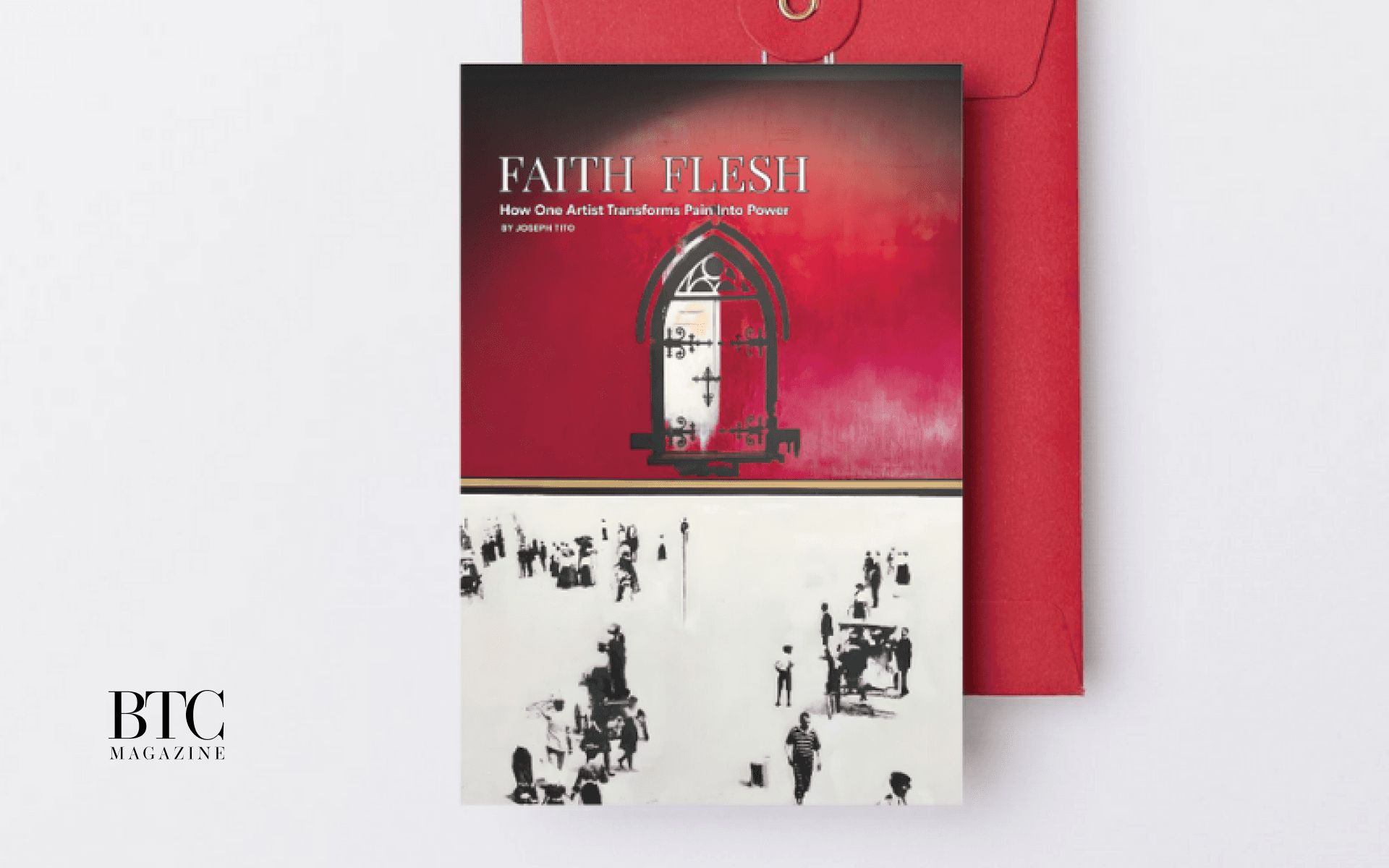
Faith & Flesh: How One Artist Transforms Pain Into Power
How a tattoo artist rejected by her church found healing in helping others reclaim their bodies—one needle at a time.The buzz of the tattoo machine fills the meticulous private room at DreamWorx Ink as Lu Pariselli works steadily on her client's hip, creating delicate florals where most people will never see them. Her client lies quietly, occasionally wincing, but mostly lost in thought. This is the magic Lu talks about—those moments of profound silence where healing happens."When they're quiet, that's when the magic is happening," Lu tells me, never breaking concentration from her work. "They're reflecting. It's beautiful to witness, but it's also hard because I feel what's happening. I feel it 100%."This isn't just any tattoo session. This is therapy through ink, and Lu—with her background in painting, German history, and radio—has become an unlikely healer for people reclaiming their bodies after trauma, loss, and rejection.The Connection That Started It AllOur story begins with baptism and rejection, with sacred spaces and the people they exclude. Lu and I found each other through social media after my twins' baptism at Sacred Heart Catholic Church in King City. While I was celebrating this milestone with my daughters, Lu was nursing a wound from her own church in Woodbridge—where she and her wife were told they couldn't baptize their son."When I saw your post, I had a sense of community regarding being a lesbian, but that didn't mean being a lesbian locally in Vaughan," Lu explains, her Italian accent softening with emotion. "Growing up and being gay here was not a good thing for me. When I saw you hitting that trifecta unicorn of gay, local to the area, and having kids too, I felt very connected to you."But seeing my celebration also stirred something painful. "You were doing something that I was unsure of and very afraid of because I had received not a very welcoming invite from the church regarding baptizing my son."The contrast was stark and heartbreaking. Two gay parents, same faith, same desire to celebrate their children—but completely different treatment from the institution they'd grown up loving."I'm a traditionalist at heart, and although I'm gay, I'm still extremely traditional," Lu says. "All my cousins and everybody in my life were allowed to be married in the church, and when I wasn't, it broke my heart. Something that had been celebrated in my life—just having the traditions of being Catholic and Italian—it made me sad that I had to throw all of those away."From Radio Waves to Sacred SkinLu's path to tattooing wasn't linear. After completing degrees in German History at York University and painting at OCAD, she spent time at The Edge 102.1 FM, a station with deep ties to the LGBTQ+ community. Each experience shaped her understanding of art as identity and self-expression."The Edge had deep LGBTQ+ community ties," she reflects. "That experience shaped my understanding of art as identity and self-expression, but I was heard and not seen there. Tattooing is the opposite—it's so intimate."The transition from painting to tattooing terrified her. "The scariest thing I ever did was change my medium because I wasn't good at it right away, and I was always good at art. I practiced with wood cutting—I bought a wood burner and was burning wood to understand that once you mark something, it's in the wood. You can't erase it."She pauses, adjusting her position to get a better angle. "I cried all the time, guys. I used to go home like, 'I'm not going to get this.' And the worst thing was that people expected me to be really good right away, and I wasn't."The Science of Sacred TouchWhat Lu discovered in those early struggling years was that tattooing isn't just about technical skill—it's about understanding the profound biochemical and emotional process happening when needle meets skin."You're working with needles, pain, endorphins—there's a whole biochemical process happening," she explains. "I was told to think about the ink injecting the skin, which is injecting the cells, and you need to think about it filling up each pocket as you go. Sometimes I think of the body as a scientific system, and that helps me realize that this is not paper, this is not a canvas—this is a living, breathing person, and I'm working on the biggest organ of their body."Research increasingly supports what Lu witnesses daily: tattooing can be genuinely therapeutic, helping with grounding, trauma processing, even PTSD. The process forces people into the present moment, creating a unique space where healing can occur."I witness that every day with the people that I work on," she says. "The men and the women that come to me wait a long time to see me, so usually their projects come from very intense things that have happened to them. In the service that I provide, it's therapy—art therapy for both client and artist."When Silence Speaks VolumesLu has developed an acute sensitivity to what's happening beyond the surface during her sessions. She watches for the moments when conversation stops and something deeper begins."When they're having a moment while being tattooed, it's silent. We're actually not speaking, and it's in that silence that it's deafening. People sit with the discomfort of the pain, but maybe we had been conversing a minute or two prior, and when they're quiet, that's when the magic is happening because they're reflecting."She's learned that silence is a powerful tool. "I don't do the majority of the talking, and in that silence, if you leave silence, people will fill it if they can. They're craving the desire to be heard, and I listen. I'm really working on the strategy of listening attentively, not interrupting. When that happens, people will give you everything."This creates enormous responsibility. "A lot happens at the consult when I first sit with someone and they open up to me. It's hard at -first for them, but once they release that, or when they open that lid of being vulnerable and I remind them that they're in a safe space, they're just craving to be heard.""Just because you weren't welcome at certain events or felt like a complete outcast at others, you're gonna fit right into the life you have right now."Reclaiming Bodies, Rebuilding LivesSome of Lu's most meaningful work involves helping people reclaim their bodies after medical procedures, trauma, or loss. She's tattooed over mastectomy scars, self-harm scars, stretch marks—transforming sites of pain into something beautiful."We can all relate to having really odd relationships with our bodies," she says. "There's parts of us that we can't stand that others will tell us are beautiful. But giving a woman her body back when they've looked in the mirror and despised looking at themselves—it makes me feel like a magician."The response from clients validates this transformative power. "I've had people say to me, 'You've given me my self-worth, my confidence back. I can wear those shirts, I can wear that outfit, I feel like me again.' As someone who also struggles with body stuff, I feel like that's my gift—giving them their confidence back."Creating Sacred SpaceThe rejection from her church fundamentally shaped how Lu approaches her work. She's determined to create the welcoming space she was denied."What I missed the most about the church was that sense of belonging because my entire family is welcome except for me," she says, her voice breaking slightly. "With tattooing, I feel like I create a space that is nothing but welcoming for that reason. Because of my hurt, I don't want people to feel small or unworthy or like they don't belong."She's incredibly intentional about power dynamics in her space. "I'm very aware of how I level people. I'll often put them higher than me, especially when we're speaking. I always sit lower because there's power in our exchange—I often hold the needle. I’m in charge. That’s scary for some people. So I always try and level it off, whether it's by physical height or physical positioning."The Healing ArtistBehind Lu's booth hangs a painting she created in university—a beach scene from 1920s France showing families enjoying Sunday together instead of being inside church walls praying. The red throughout represents the guilt and inadequacy she felt despite being deeply religious."This whole painting is about that pressure to be inside the walls praying to be a good Catholic, and the whole red is like, 'I'm not good enough, I'm never enough,'" she explains. "I was very religious—I read the Bible, I was fucking on it. That's what this whole thing is about."Now, she's created her own sacred space where people are always enough, always welcome, always heard."The rejection from the church was the same feeling you get when you're in grade school and you're not picked for gym class," she says. "That 'you are not welcome, you are not a part of us.' But that's what I find the world is really good at doing—creating the other. That's what I want to personify in this work—the opposite of that."Beyond the NeedleFor Lu, tattooing has become about much more than creating beautiful art. It's about witnessing people's stories, holding space for their pain, and helping them transform trauma into something permanent and powerful."You're only here for a little bit of time," she tells people considering their first therapeutic tattoo. "I would use tattoos to express exactly what you need to say because they can do that. Tattoos will attract like-minded people—it's a language that without saying anything, someone can connect with you from across a room. You're creating community with silence, which is really cool."As our interview wraps up, Lu's client sits up to admire the delicate florals now adorning her hip. There's something different in her posture, her breathing. She looks more present, more grounded—exactly what the research says should happen."What do I want people to take away from being tattooed by me?" Lu reflects. "That I hear them. I'm listening to everything you say to me. I hear you." She touches the gold cross she still wears around her neck—a reminder that faith and identity can coexist, even when institutions fail us. "I would tell my younger self that you're really gonna like the older version of yourself. Just because you weren't welcome at certain events or felt like a complete outcast at others, you're gonna fit right into the life you have right now."In her hands, ink becomes more than pigment under skin. It becomes proof of survival, markers of transformation, and ultimately, sacred reminders that we are all worthy of love, acceptance, and belonging—needle marks and all.Lu Pariselli is a tattoo artist at DreamWorx Ink in Vaughan, Ontario. Her work focuses on large-scale trash polka, high contrast black and grey, and avant-garde pieces that help clients transform their stories into art. Follow her on instagram.
.png&w=3840&q=75)
When Art Becomes Witness
There are 8,000 books wrapped in Indigenous fabric scattered across Canada right now. Each bears a name in gold on its spine—lives cut short, stories unfinished, families forever altered. This is The Canadian Library: not your typical collection of dusty volumes, but a living memorial refusing to let Canada look away from its most devastating truths.The numbers are staggering. Indigenous women comprise 16% of all female homicide victims and 11% of missing women, yet Indigenous people represent only 4.3% of Canada’s population. These women, girls, and Two Spirit people are more than statistics. TCL ensures they are remembered as daughters, mothers, sisters, and friends—whole human beings whose absence leaves gaping wounds.When Grief Becomes ArtTCL is a nationwide art installation memorial for MMIWG and children, created to spark conversation and deepen awareness about Canada’s true history. Toronto-based activist Shanta Sundarason founded the project after moving to Canada and learning the brutal truths many citizens have long ignored. “At the end of the day, this is Canada's story,” she says. “Canadians need to take ownership.”Inspired by British-Nigerian artist Yinka Shonibare’s The British Library, TCL wraps books in Indigenous-designed fabrics and embosses each spine with a name. It builds on the legacy of Métis artist Jaime Black’s REDress Project, which hangs empty red dresses to honor the missing and murdered. Where red dresses mark absence, TCL fills those voids—with names, fabric, memory.The Power of Stopping in Your TracksTCL’s strength lies in its arresting presence. “You can't walk past one of these shelves without stopping,” says Sundarason. Each ‘micro gallery’—in businesses, schools, and libraries—uses IKEA Billy bookcases and books wrapped in Indigenous-sourced fabrics. When someone pauses, they can scan a QR code that leads to TCL’s site, where they’ll read family-written stories behind each name. “She is not just a number or a name,” says Dr. Linda Manyguns of Mount Royal University. “Her family tells you her story.”Building Something BiggerThe project has found unexpected allies in mainstream spaces. IKEA became the first major retail partner, installing displays in all their Canadian stores. "It intends to educate, create awareness, advocate and start important conversations to help towards healing and true reconciliation," the retailer says. When a Swedish furniture giant is willing to use its retail space to confront Canadian colonial violence, something is shifting in the national conversation.Some of the books remain nameless—representing those who may never be found, whose stories may never be told. Others carry names like Debbie Ann Sloss-Clarke, whose sister Mary Lou Smoke has been waiting more than two decades for justice. "The missing and murdered Indigenous women are sisters, mothers, aunties, grandmothers and the best friends of many," said Smoke. "It's important to always remember them – their lives were taken away before they had a chance to share their special gifts in this beautiful life."TCL's ultimate vision is to bring all 8,000 books together in one massive permanent installation in a major museum or gallery, creating a national memorial that will serve as both education and remembrance for years to come. We're living in a moment when Canada is finally being forced to reckon with its colonial past. The discoveries of unmarked graves at former residential school sites have shattered any remaining illusions about this country's "nice guy" reputation. "I think that the whole of Canada was traumatized with the discovery of children's bodies and I think that was a waking-up point. People want the truth," says manyguns.The Canadian Library doesn't offer easy answers or comfortable solutions. Instead, it offers something more valuable: witness. In a culture that prefers to move on quickly from uncomfortable truths, these books insist on staying put. They demand that we see, that we remember, that we sit with the weight of what we've allowed to happen."Reconciliation will only happen when the majority of Canadians are truly educated. It's not going to be a political thing. It will be through conversations and education and that's what we are hoping to create," Sundarason says.Art has always been about making the invisible visible, giving form to feelings that resist easy categorization. The Canadian Library does that in the most necessary way—by refusing to let murdered and missing Indigenous women and girls disappear twice. Once in life, and again in memory.Because every name on every spine represents someone who deserved to live, to love, to contribute their gifts to the world. The least we can do is remember their names.How You Can Be Part of ThisThe Canadian Library relies on community involvement to grow its impact. You can build a micro gallery in your business, organization, or local space—all you need is an IKEA Billy bookcase and some donated hardcover books. TCL provides the Indigenous fabrics and coordinates the names. You can also volunteer to help wrap books, sew fabric covers, or spread awareness on social media. Financial donations support local organizations creating their own micro galleries, and you can purchase fabrics from Indigenous-owned businesses or TCL bookmarks and scrunchies. Visit www.thecanadianlibrary.ca to learn how to get involved—because reconciliation isn't a spectator sport, and every Canadian has a role to play in ensuring these stories are never forgotten.
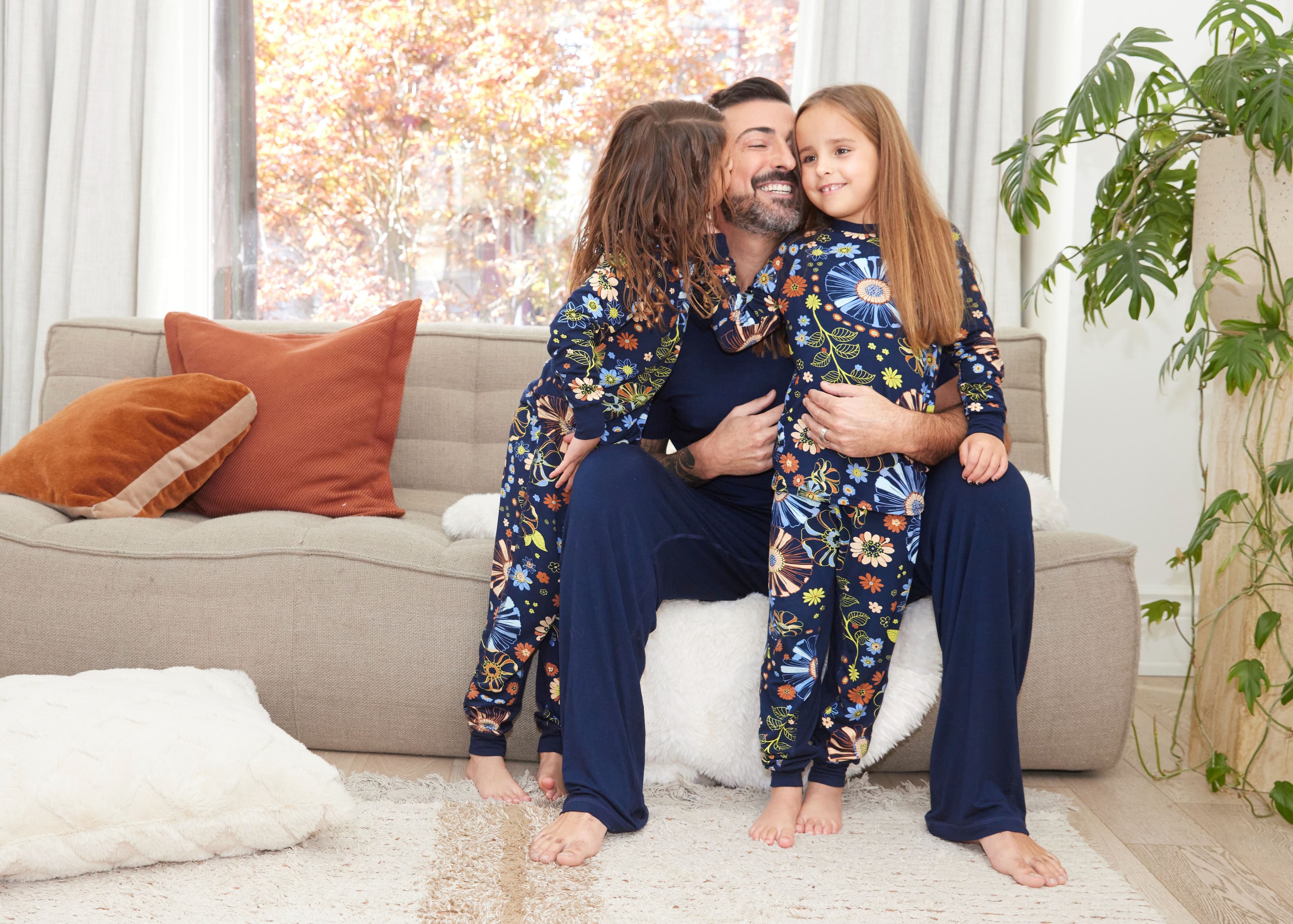
The Workplace My Daughters Will Inherit Is Still Broken
How 94% of male executives convinced themselves that harassing half their female staff isn't actually happeningI'm staring at two sets of numbers that make me want to throw my laptop across the room. Ready for this? One in two Canadian women have experienced sexual harassment at work. Meanwhile, 94% of Canadian executives—who are, surprise surprise, 95% male—say sexual harassment isn't a problem at their companies.Let that sink in while I pour another coffee and resist the urge to scream into the void.As the father of twin girls, these numbers aren't just statistics. They're a preview of coming attractions for the workplace my daughters will inherit. And right now, that preview looks like a horror movie where the monsters are wearing suits and calling themselves "thought leaders."The Math That Makes Me RageHere's what we're dealing with: Statistics Canada tells us that 19% of women and 13% of men report experiencing harassment at work. But when we drill down to sexual harassment specifically, the numbers get uglier. Fifty-two percent of Canadian women have been sexually harassed at work. Twenty-eight percent have experienced non-consensual touching—which, let's be clear, is sexual assault.But somehow, in boardrooms across this country, male executives are sitting around conference tables convinced this isn't happening in their companies. It's like being told your house is on fire by everyone who lives there while you insist you don't smell smoke.The disconnect isn't accidental—it's structural. When you've never had to develop a "bathroom strategy" to avoid the handsy guy from accounting, when you've never had to change your commute because your boss made a comment about your legs, when you've never calculated whether reporting harassment will tank your career faster than enduring it—of course you don't see the problem.My daughters deserve better than a workplace where their success depends on their ability to dodge inappropriate advances while pretending it's not happening.Welcome to the Gaslight FactoryThe research shows that 89% of Canadian women use strategies to avoid unwanted sexual advances in the workplace. Think about that for a second. Nearly nine out of ten women are actively modifying their behavior, their routes, their clothing, their entire professional presence to dodge harassment. And male executives are out here acting like this is just women being "overly sensitive."This isn't sensitivity—it's survival. When one woman shared her story with the Globe and Mail about working as a bank teller in the Caribbean, she described how "sexual harassment is so prevalent that it becomes normalized in the workplace." She learned to navigate halls carefully, to know "who to avoid, how not to sit next to certain people." She played small, taking up less space, always on guard because of her race and gender, and then again because of harassment.That's not a workplace culture—that's a war zone with a dress code.The Julie Payette ProblemWant to see what happens when women do speak up? Look no further than Rideau Hall. When sixteen sources came forward with allegations that Governor General Julie Payette had created a toxic workplace—yelling at staff, publicly humiliating employees, reducing people to tears—the response was swift and decisive: they spent months conducting an "independent review."The review found the allegations credible. The report was described as "scathing." Payette resigned in disgrace. Justice served, right?Except here's the thing: Payette's case only got attention because she was literally the Queen's representative in Canada. She had the highest ceremonial position in the country, and it still took months of investigation and public pressure before anything happened.Now imagine you're a junior marketing associate trying to report your director for inappropriate comments. Think that's getting the same level of scrutiny and swift action? I'll wait.The Cost of Willful BlindnessHere's what male executives don't understand: their ignorance isn't neutral. Every time they dismiss concerns, minimize reports, or convince themselves harassment is "just a few bad apples," they're actively creating the conditions for it to continue.Research shows that workplaces with higher ratios of men in positions of power experience more sexual harassment. It's not rocket science—it's basic power dynamics. When the people making decisions about workplace culture have never been targeted by that culture's worst impulses, they don't see the need to fix what isn't broken for them.The RCMP learned this the expensive way. They reached a settlement in a class-action lawsuit where up to 20,000 women could be eligible for between $10,000 and $220,000 for decades of gender-based harassment, bullying and discrimination. The final bill? Hundreds of millions of dollars, plus immeasurable damage to their reputation and ability to recruit talent.But sure, let's keep pretending harassment isn't a business problem.What This Means for Our DaughtersI look at my twin girls—brilliant, fierce, unstoppable forces of nature—and I wonder what workplace they'll inherit. Will they spend their careers developing elaborate strategies to avoid predators in corner offices? Will they have to choose between speaking up and moving up? Will they watch male colleagues get promoted while they're labeled "difficult" for refusing to tolerate inappropriate behavior?The #MeToo movement was supposed to be a turning point. Canadian women like Mia Kirshner didn't just share their stories—they built solutions. Kirshner co-founded AfterMeToo, creating digital platforms and advocacy programs to support survivors and push for policy changes. Women have been doing the work, creating the roadmaps, providing the solutions.But real change requires the people in power to admit there's a problem worth solving. And right now, 94% of them are convinced there isn't.The Bottom LineFive years after #MeToo, we've passed new legislation like Bill C-65, updating harassment laws in federal workplaces. We have better reporting mechanisms and more awareness. Progress, right?Except harassment rates haven't dropped significantly. Women are still modifying their behavior to stay safe at work. The women who speak up still face retaliation and career damage. And the men in charge are still confused about why this keeps being "such a big deal."Here's what I want those 94% of male executives to understand: your female employees aren't asking you to solve harassment because they're dramatic or oversensitive. They're asking because they're exhausted. They're tired of spending mental energy on survival strategies that you've never had to consider. They want to focus on doing great work instead of avoiding gross behavior.My daughters deserve better than a workplace where their success depends on their ability to dodge inappropriate advances while pretending it's not happening. They deserve leaders who believe women when they speak up, who create systems that work, and who understand that fixing harassment isn't just the right thing to do—it's the bare minimum for running a decent organization.Until we get there, those numbers—50% of women harassed, 94% of male executives in denial—will keep staring back at us like an accusation. A reminder that we're failing the women we claim to value, and teaching our daughters that this is just how the world works.But here's the thing about daughters: they don't accept "that's just how things are" as easily as their mothers did. And maybe that's exactly what we need.Between the Covers is a bold, witty, and unfiltered digital lifestyle and literary magazine. We tell the truth about the mess and the magic of being human. Subscribe for more stories that make you think, laugh, and occasionally want to burn it all down.
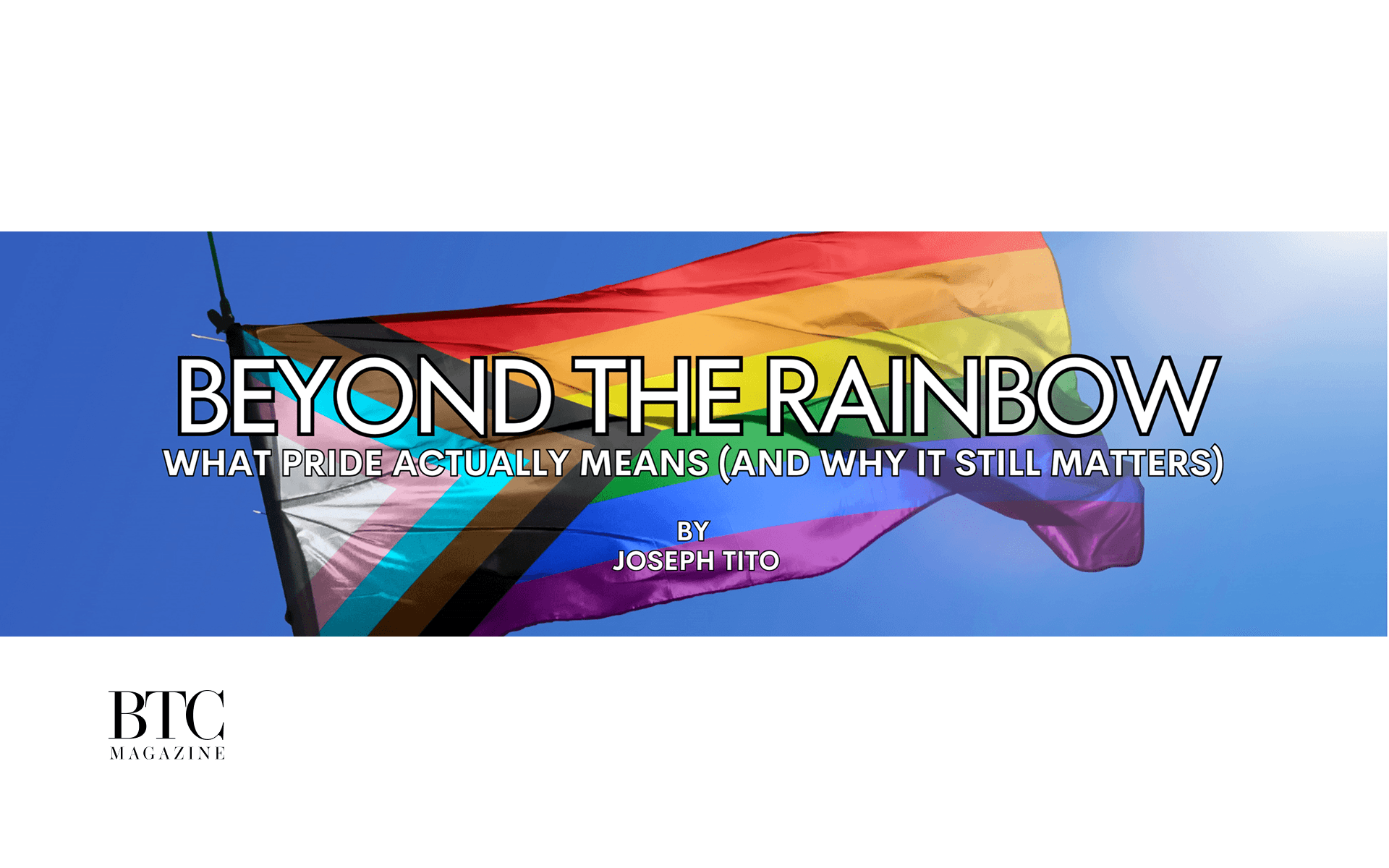
BEYOND THE RAINBOW What Pride Actually Means (And Why It Still Matters)
Let's start with what Pride isn't.Pride isn't rainbow-washed vodka bottles that appear for 30 days before vanishing back into the corporate ether. It's not Instagram filters you slap on for a week, corporations changing their logos to Technicolor versions, or glitter-bombed merchandise that nobody asked for.It's not a party that just happens to shut down entire city blocks. (Though yes, the parties are fabulous.)While I'm usually the first to celebrate a good sale on rainbow tank tops, the commercialization of Pride Month often drowns out what we're actually marking: a revolution that began with marginalized people saying "enough" and refusing to apologize for their existence.When my twin daughters are old enough to ask about Pride, I won't start with parade floats and rainbow flags. I'll start with resistance.From Stonewall to SuburbiaPride began with a riot. Specifically, the 1969 Stonewall uprising—when patrons of the Stonewall Inn, a New York City gay bar, fought back against a police raid. Leading the resistance were transgender women of color like Marsha P. Johnson and Sylvia Rivera, drag queens, butch lesbians, and other people living at society's margins who were tired of systematic harassment and dehumanization.These weren't celebrities with Instagram accounts and corporate sponsors. They were everyday people fighting for the fundamental right to exist without persecution.The first Pride march happened a year after Stonewall, commemorating the uprising. It wasn't sponsored by major corporations or promoted on social media. It was a protest—one with the radical message that LGBTQ+ people deserve dignity, safety, and the freedom to live authentically.In the decades since, Pride has evolved. In some ways, that's beautiful progress—the fact that Target sells rainbow merchandise is certainly preferable to the systematic criminalization of queer existence. But in that evolution, we sometimes lose sight of what Pride actually represents.Why Pride Still MattersMaybe you're thinking: "But things are so much better now! Gay marriage is legal! There's a lesbian on my favorite TV show!"Progress is real, and worth celebrating. But consider this:In 2023, over 500 anti-LGBTQ+ bills were introduced in state legislatures across America, many targeting transgender youthLGBTQ+ youth are still 4 times more likely to attempt suicide than their straight peersIn many parts of the world, being gay is still punishable by imprisonment or deathNearly 1 in 5 hate crimes in the U.S. targets LGBTQ+ people40% of homeless youth identify as LGBTQ+, many rejected by their familiesProgress isn't a finish line we've crossed. It's a path we're still walking, and in some places, that path is under active construction to make it harder to traverse.That's why Pride isn't just about celebration—it's about visibility, solidarity, and refusing to go backward.Pride as Resistance to ShameAt its core, Pride is the antidote to shame—a powerful, paralyzing force that tells people they're wrong for existing as they are.Think about that word: pride. It's not chosen arbitrarily. It's specifically selected as the opposite of the shame that society has historically forced upon LGBTQ+ people.When your existence has been treated as a disorder, a sin, a crime, or a punchline, declaring pride in who you are becomes a revolutionary act. It's saying: "I refuse to be diminished by your judgment. I refuse to apologize for being exactly who I am."This is something many straight, cisgender people might never fully understand because heterosexuality has never been criminalized or pathologized. You've never had to "come out" as straight. You've never worried about being disowned for bringing your opposite-sex partner home for the holidays.Pride is the collective decision to reject shame and celebrate authenticity—not just for a month, but as a way of life.“Pride rejects shame. Loudly.”How Allies Can Engage with Pride (Beyond Buying the T-shirt)If you're a straight, married woman wondering how to meaningfully engage with Pride, here are some thoughts:Recognize your privilege, then use it. Having your relationship recognized and respected by society is a privilege. Use that security to speak up for those who don't have it.Listen more than you speak. Pride is first and foremost about LGBTQ+ voices and experiences. Be willing to learn without centering yourself.Talk to your kids. Children understand fairness and love instinctively. Explaining that some families have two moms or that some people feel different on the inside than they look on the outside is much simpler than adults make it out to be.Speak up in uncomfortable spaces. The most valuable allyship often happens in spaces where LGBTQ+ people aren't present—like when someone makes a homophobic joke at a dinner party or when your relative starts on a transphobic rant.Support LGBTQ+ causes and communities year-round. Pride isn't just for June, and neither is discrimination.Remember that Pride can be messy. It's a complex, sometimes contradictory space with internal disagreements and evolving conversations. That's okay. Human rights movements aren't meant to be perfectly packaged and pleasant.Finding My Own PrideI remember my first Pride. I was terrified, exhilarated, and completely overwhelmed. I worried about being seen by the wrong person. I worried about not being "gay enough." I worried about what my family would think.But then I saw families with children, straight allies holding supportive signs, elderly couples holding wrinkled hands, and teenagers with purple hair and undefinable genders just existing freely. I saw all the colors of human experience, not just rainbow flags.That's the beauty of Pride: it creates space for all of us to exist fully, without apology. It declares that diversity isn't just tolerable—it's essential, beautiful, and worth celebrating.Now, as a parent, Pride has taken on new meaning. I want my daughters to grow up in a world where they never question their worthiness of love, regardless of who they become or who they love. I want them to know that fighting for others' dignity is as important as securing your own.Pride gives me hope that we're moving, however imperfectly, toward that world.Beyond the RainbowWhen June ends and the rainbow merchandise disappears from store windows, Pride continues. It continues in LGBTQ+ youth centers, in policy advocacy, in quiet conversations at family dinner tables, and in every small act of authenticity.Pride continues when a scared teenager finds the courage to live truthfully.Pride continues when a parent chooses love over prejudice.Pride continues when communities stand together against discrimination.Pride isn't just a parade or a product line. It's a movement, a history, a future, and an ongoing invitation to create a world where nobody has to fight for the right to exist as they are.And that's something worth celebrating—rainbow vodka or not.“Pride began with a riot—and it still marches with purpose.”SIDEBAR: Quick Pride History FactsThe rainbow flag was designed by Gilbert Baker in 1978, with each color having symbolic meaning (red for life, orange for healing, etc.)The first official Pride march was held in New York City in 1970, one year after the Stonewall uprisingThe Stonewall Inn is now a National Monument, designated by President Obama in 2016In many countries, Pride marches are still met with violence and arrestsThe acronym has evolved over time from "Gay Pride" to LGBT, LGBTQ, LGBTQ+, and various other iterations as communities strive for greater inclusion
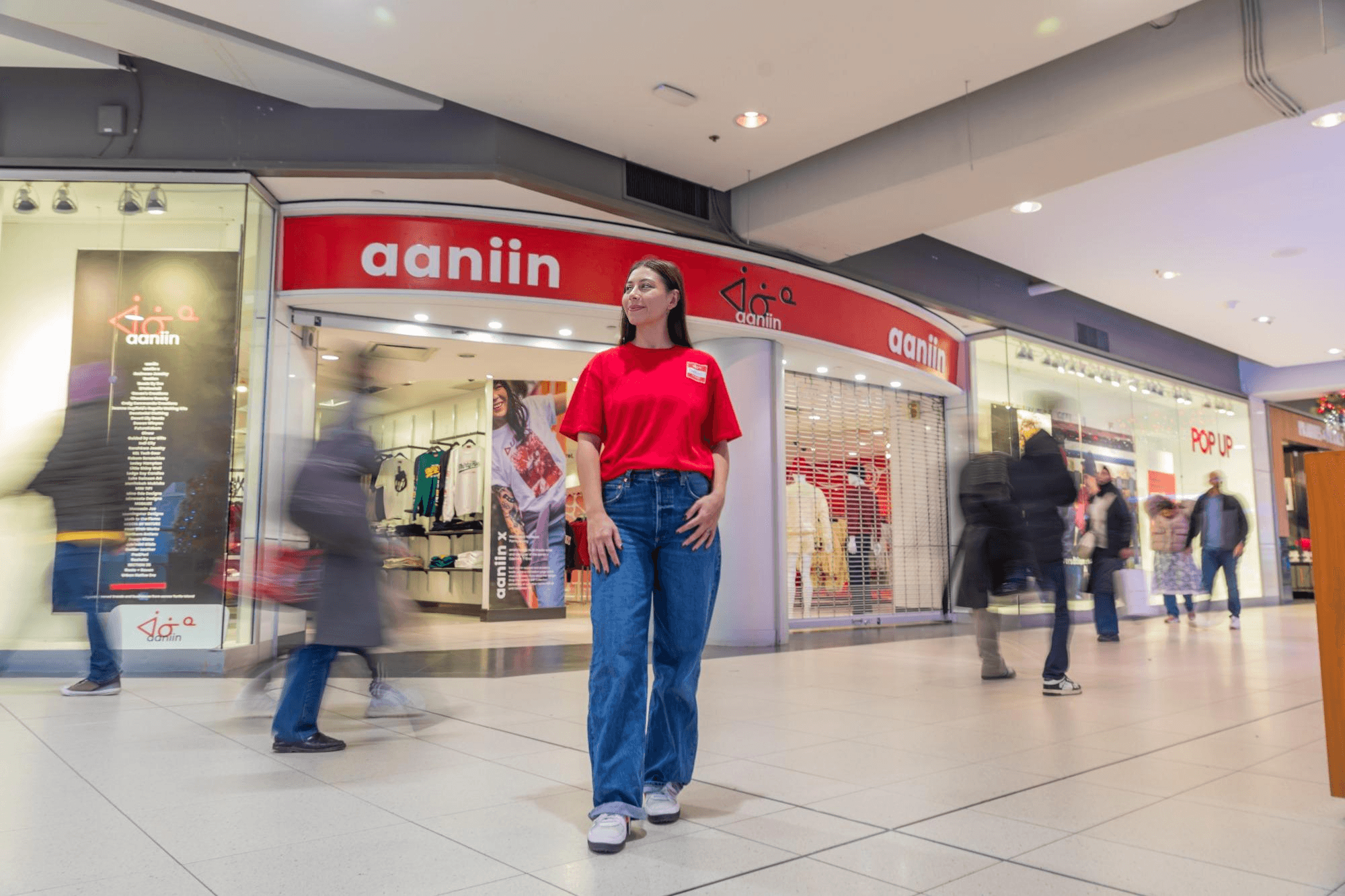
The Weight of Being First: How Chelsee Pettit Built an Indigenous Empire from a Triangle That Wasn't There
"Detachment is a good thing. When you release things, it's because you're allowing yourself to carry more. Sometimes carrying it all isn't actually the best way to get what you want."The triangle changed everything.Walking through downtown Toronto in June 2021, Chelsee Pettit thought she saw someone wearing Indigenous syllabics on their shirt—those distinctive shapes that form the writing system for many Indigenous languages across Canada. For the first time in her life living in the city, she felt represented."I was shocked to see Indigenous languages being worn," she tells me over Zoom, her voice carrying the weight of someone who's built something from nothing. "I thought, 'Holy, somebody thinks Indigenous languages are as cool as Korean or Japanese across a shirt.'"But as she got closer, reality hit. It was just a triangle."I felt disappointed. But I'm a very solution-oriented person. Immediately I was like, 'I need to become an Indigenous Nike.'"Three days later, aaniin was born. That first week? $3,000 in sales from a crappy Shopify site, zero followers, and a story posted on Instagram about a triangle that wasn't what it seemed.The $70K ProblemBut let's back up, because Chelsee's origin story isn't the sanitized entrepreneur fairy tale you're used to. At 20, she was $70,000 in debt, a college dropout working retail for $38,000 a year with a credit score of 200.The wake-up call came when she moved in with her boyfriend (now ex-husband). "He looks over at me and goes, 'So how much debt do you have?' I was like 'I don't know.'" After adding up credit cards, loans, and that car she thought she owned, the number was staggering."He was like, 'You're insane. You make $14 an hour and dropped out of several college programs. You're not paying that off before you're 50.'"Challenge accepted. Chelsee took a second job as a hotel night auditor, working three nights a week while managing a Sunglass Hut during the day, destroying her sleep schedule and nearly her sanity. In six months, she paid off $10,000. "I was like, 'I'm going to have a heart attack or fall asleep driving home.' I need to figure something else out."A job at Bond Look, a Montreal-based eyewear startup, changed her trajectory. She increased store sales by 46% in six months and met Sophie Belange, a female entrepreneur who showed her what was possible. "That was the first time I ever experienced a female entrepreneur in my entire life."By 25, Chelsee was debt-free. By 26, she was building an empire from a triangle that wasn't there.What makes aaniin different isn't just the Indigenous languages emblazoned across streetwear—it's the tiny QR codes tucked inside every piece. The idea came from her white mother asking, "Can I wear that? I don't know how to pronounce it.""I was like, 'It's a hat. You put it on your head. Why wouldn't you be able to wear this hat?'" But she understood. The QR codes solve everything: they educate without requiring Indigenous people to constantly play teacher, and they let non-Indigenous people engage authentically without fear of getting it wrong."Indigenous people don't have to spend time educating other people about our languages. It's just self-study, and you can pass it on."It's brilliant, actually. Cultural appreciation facilitated by technology, removing barriers for everyone involved.The Hidden Cost of Being FirstWhat the success stories don't tell you is that being first is exhausting. Over four years, aaniin has generated over $2 million in revenue—but half of that has gone to supporting other Indigenous businesses. Chelsee spent years doing everything for free: business consulting, marketing advice, mentoring."For four years I was doing everything for free because I figured out how to make a hat that doesn't fall apart for $45, and people don't question why."The weight of representation is real. When you're the first Indigenous retailer in downtown Toronto's for-profit space, when you're housing 40+ Indigenous brands at the Eaton Centre, when you're literally creating space that never existed—you carry more than your own success."We have such a high standard for ourselves to represent our community in thoughtful and intentional ways," she explains. "But we also do things the way we do them because we have no other options sometimes."Those other options? They often don't exist. When Chelseewanted to curate Indigenous brands for her department store pop-up, she couldn't just order from a catalog. "There's like five brands that are actually retail-ready. Everybody else is very small artisan brands where I had to pick up the phone, jump on weekly calls, making sure they don't feel confident in their product."She became business therapist, financial backer, and cheerleader while building her own brand. "My brand is trying to support 50 other Indigenous brands while I'm also just trying to make it through day-to-day in my own brand."The Bear's Lair MeltdownThe call came September 1st, 2023: Vancouver, September 11th, film Bear's Lair. Chelsee's response? "Nope. I'm not going."Orange Shirt Day was September 30th. She had a $25,000 inventory order coming from China, her first major investment ever, plus a Truth and Reconciliation event, plus a business development day with Shopify, plus five new interns starting.They convinced her to go. Then her orange shirts got stuck at the border."I'm about to board the plane, and I'm like, 'I'm not boarding this plane. I'm going home.'" Her husband's response: "The shirts are going to be late or on time no matter what you do. You're not driving the UPS truck. Get on the fucking plane."She wrote her first pitch ever on the plane, recorded it on voice memo, then duplicated it 700 times in CapCut to listen on repeat for three days straight. "I gave myself a migraine. I was throwing up the day before."On camera, she forgot everything and had to read from her script. She won anyway. The second episode was worse—they took her paper away. She looked at the ceiling every time she forgot something, then back down to continue.For the finals? She stopped preparing entirely. "I listened to Taylor Swift's 'The Man' on repeat for three hours straight." She crushed it. "Her songs have spells in them for sure."$100,000 later, validation finally came. But it took Taylor Swift's magic and three rounds of public vulnerability to get there.The Future Is FinanceHere's where Chelsee's story gets really interesting. She's done chasing individual success. "I know that I've taken this business as far as I humanly possibly can."The next phase isn't about selling more hats—it's about becoming what she calls "Indigenous BlackRock." Impact investing, private equity, venture capital funding for Indigenous businesses."If we take investment from non-Indigenous contributors, we're going to be colonized out of our own business essentially. It's happened quite a few times with other Indigenous brands."Her solution? Build the financial infrastructure herself. "My goal is to become like Indigenous BlackRock. There's not going to be change unless we're actually creating these financial structures ourselves."It's the kind of systems thinking that goes way beyond feel-good entrepreneurship stories. Chelsee isn't just building a brand—she's building the foundation for others to build on, creating the structures that should have existed all along.The Last PageWhen I ask what would be written on the last page if aaniin were a book, she doesn't hesitate: "Detachment is a good thing. When you release things, it's because you're allowing yourself to carry more. Sometimes carrying it all isn't actually the best way to get what you want."It's advice that applies to more than business. In a world that tells us to hustle harder, lean in more, never give up, Chelsee's learned that sometimes the most radical thing you can do is let go—of the perfect pitch, of doing everything for free, of carrying the weight of representation alone.The triangle that started it all wasn't real. But everything Chelsee built from that moment of disappointment is. And she's just getting started.aaniin continues to operate online and through pop-up locations. Chelsee is currently focused on developing Indigenous-led financial structures and investment opportunities.Confidence is Everything. Smooth skin helps you feel it.Effortless confidence starts with the skin you’re in. Learn why, at Freedom, you see real results. Buy 5 laser sessions and receive 3 FREE when you mention BTC. Offer valid until Oct 31, 2025. Not valid with any other offers.

LOCAL SPOTLIGHT Life Designed by M
Where Motherhood Meets Meaningful DesignWelcome to our very first Local Spotlight—a new monthly feature in Between the Covers dedicated to celebrating small businesses with big heart. We’re kicking things off with a local favourite whose creativity and candour remind us what community is all about.Meet Emilie.The Ontario-based powerhouse behind Life Designed by M and the Instagram handle @customize_this_, Emilie is more than just a small business owner. She’s a mom, maker, and master of turning relatable chaos into curated charm.Through her brand, Customize This, Emilie creates custom lifestyle products that strike a perfect balance between function and feel-good. Think mugs that make you laugh through the sleep deprivation, signs that actually reflect your messy reality, and hacks that make parenting just a little bit easier. Her catalogue—available through Instagram highlights—is packed with everyday essentials made with personality.What we love most? Emilie’s content isn’t just polished—it’s personal. She shares the laughs, the meltdowns, the DIY wins (and flops), and the unfiltered side of parenting that often goes unsaid. Her reels are like quick chats with your brutally honest, hilarious best friend.But Life Designed by M isn’t just a brand—it’s a space. A space where mothers feel seen, where followers become friends, and where authenticity is always in style. Emilie has built more than a business; she’s built a movement grounded in joy, humour, and real talk.So here’s to Emilie—for reminding us that even in the thick of it, we can still make space for creativity, community, and maybe a custom wine glass or two.Follow her journey at @customize_this_Want to see your business featured? Email us at info@jeopublishing.com and tell us your story. Let’s build this community, one spotlight at a time.
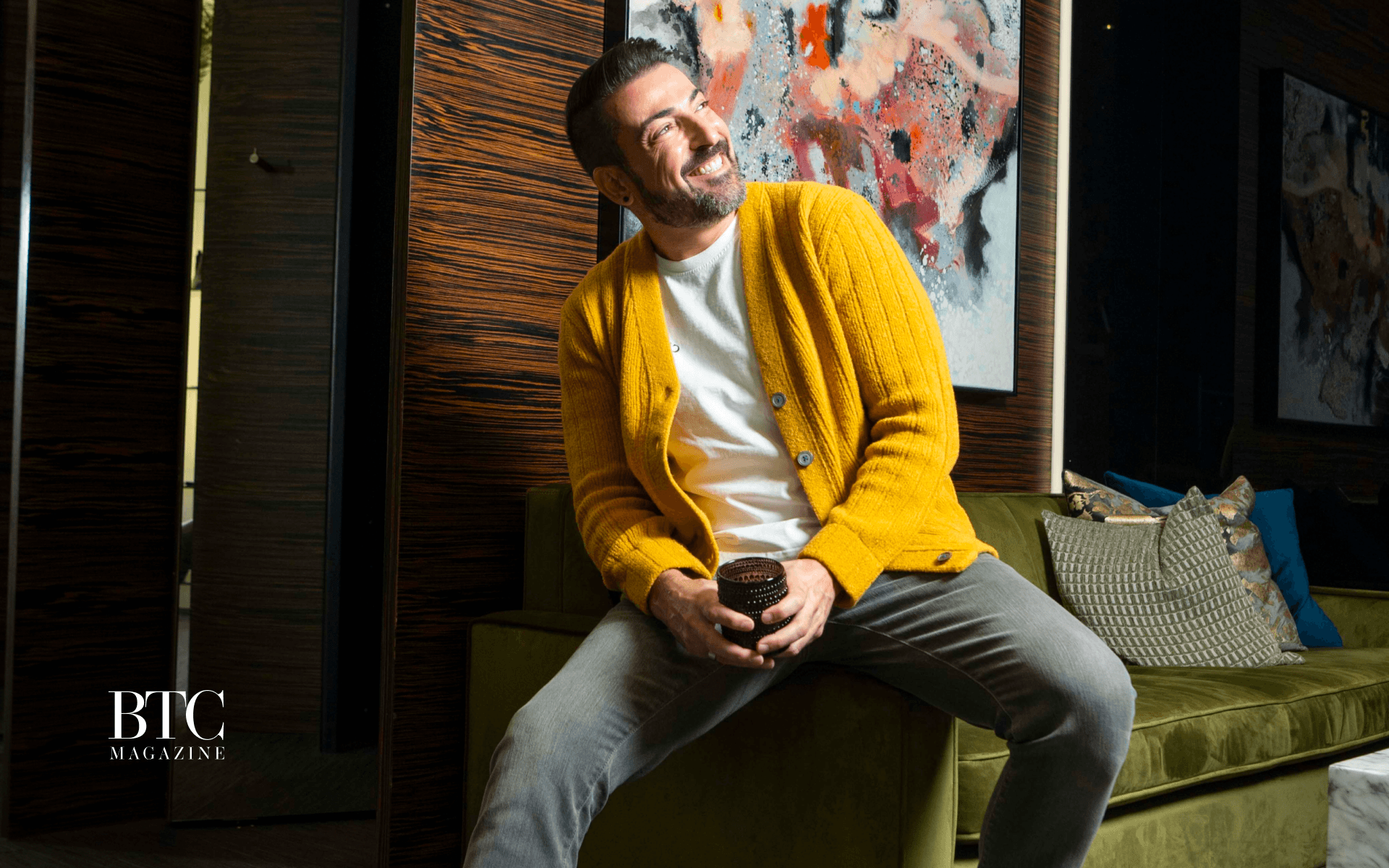
BUILDING HOPE FROM BROKEN PIECES An Interview with Alex Rivera, Founder of Lighthouse Youth Project
You don’t have to be fully healed to be someone’s lighthouse. Sometimes the most powerful thing you can do is show up, broken pieces and all.” — Alex RiveraJoseph: Let's start with the origin story. What made you create Lighthouse Youth Project?Alex: [laughs] The short answer? Pure survival instinct that eventually turned into something bigger than me. I aged out of foster care at 18, and the statistics for kids like me—especially queer kids—aren't great. Homelessness, addiction, isolation. I was determined not to be a statistic, but I also knew I hadn't been given many tools.There was this day when I was 23, sitting in my first apartment that actually felt safe, and I realized I'd spent my whole life searching for a lighthouse—some sign that I could navigate safely to shore. That's when the idea hit me: what if I could be that for someone else? Not because I had all the answers, but precisely because I didn't. Because I was still figuring it out myself.JT: You've built a program that's about so much more than just "helping youth." It's about identity, belonging, mental health. Can you talk about that holistic approach?Alex: We live in a culture obsessed with fixing problems rather than understanding people. When I was in the system, everyone wanted to "fix" my behaviour, my sexuality, my trauma responses—without ever addressing the underlying realities of what I was experiencing.At Lighthouse, we start with the assumption that these young people aren't problems to be solved. They're complex humans navigating impossible circumstances with whatever tools they have. Our job isn't to "save" them; it's to walk alongside them, to help them find and trust their own internal compass.Identity is central to this work. When you're young and queer and system-involved, you're often made to feel like every aspect of your existence is problematic. Your queerness is "confusing" adults. Your trauma responses are "disruptive." Your need for authenticity is "attention-seeking."We create spaces where their identities aren't just tolerated but celebrated. Where they can explore who they are without judgment. Where they can try on different versions of themselves and find what feels like home.JT: The program pairs LGBTQ+ youth with mentors who've had similar experiences. Why was that model important to you?Alex: Because representation isn't just about seeing yourself reflected in media or at Pride parades—though that matters. It's about having someone look you in the eye and say, "I get it. I've been where you are, and look—I'm still here." That's powerful beyond words.When I was sixteen and newly placed with my fifth foster family, I had this social worker—a lesbian woman in her forties who'd been through the system herself. She never sugar-coated anything, but she'd slip me books with queer characters and text me on holidays. Just knowing she existed made me feel less alien.That's what our mentors do. They don't have magic solutions, but they have survival stories. And sometimes that's exactly what these kids need—proof that survival is possible.JT: You talk openly about mental health being central to your work. Why is that especially important for LGBTQ+ youth?Lighthouse was never about having the answers. It was about creating what I needed when I was younger—a place where you could show up messy, confused, hurting, and still be met with love. I didn’t build it because I was healed. I built it because I wasn’t—and I knew I wasn’t the only one.”
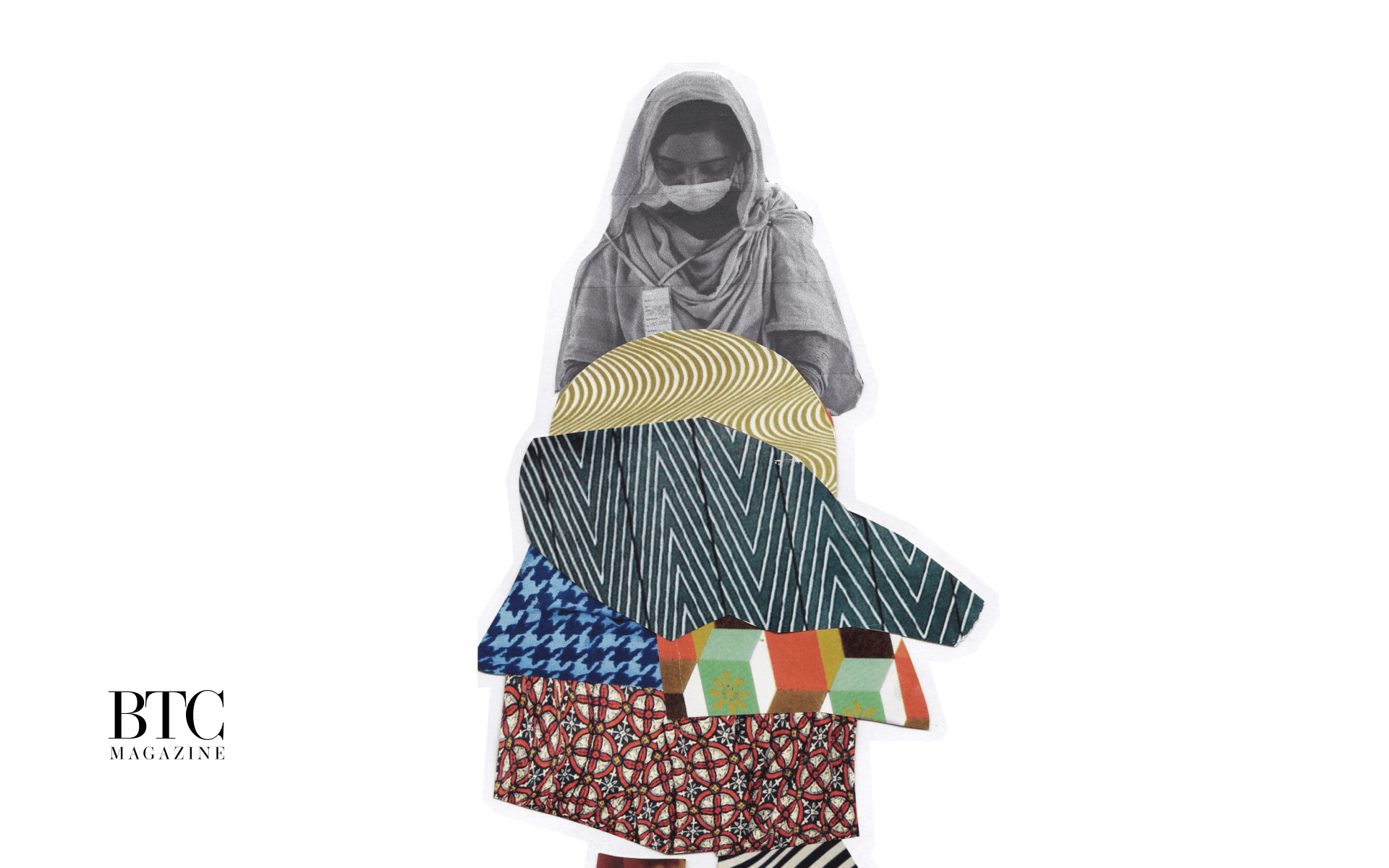
Fashion: The Art of Self-Expression
Fashion isn’t just about clothes—it’s a statement, a reflection of who we are, and a way to connect with the world around us. Every outfit tells a story, whether bold and daring or understated and classic, and fashion allows us to communicate without saying a word. It’s a form of self-expression that evolves with us, adapting to our experiences, emotions, and aspirations.And while trends come and go, the essence of fashion—self-expression—remains timeless. It’s not just about following the latest styles; it’s about embracing what makes you feel confident and authentic. The beauty of fashion lies in its ability to transform us, whether it’s the power suit that makes you feel invincible or the cozy sweater that wraps you in comfort after a long day.In recent years, fashion has embraced a much-needed evolution. Sustainability and inclusivity have taken center stage, redefining what it means to be stylish. Designers are challenging outdated norms, creating pieces that celebrate individuality and cater to all body types, cultures, and identities. Fashion is also becoming a force for change, with brands prioritizing eco-friendly materials, reducing waste, and promoting fair labor practices.As we step into Spring 2025, fashion continues to push boundaries, blending timeless elegance with modern innovation. It’s a season of bold choices, playful experimentation, and a celebration of individuality. Here are the Top 10 Fashion Trends for Spring 2025 that will have you feeling confident, empowered, and on-trend:Top 10 Spring 2025 Fashion TrendsCandy-Colored HuesSoft pastels like butter yellow, pistachio green, and icy blue dominate the palette, adding a playful and fresh vibe to wardrobes. These shades are evident in pieces like the Alice + Olivia Adley Sleeveless Dress and Stuart Weitzman Nudist 50 Wrap Sandals.'70s Bohemian RevivalThe boho aesthetic returns with billowing blouses, ethereal maxi dresses, and suede accessories. Incorporating items like the Alice + Olivia Millie Tweed Jacket offers a subtle nod to this free-spirited style.'60s GlamStreamlined miniskirts, longline vests, and bubble-hem silhouettes make a comeback, channeling the mod elegance of the 1960s. Key pieces include the Veronica Beard Lois Vest and AQUA Strapless Midi Bubble Dress.Denim-on-DenimDouble denim remains a strong trend, with items like the Cinq à Sept Khloe Denim Blazer and Rag & Bone Dre Low-Rise Cuffed Baggy Jeans leading the way. This versatile look can be dressed up or down for various occasions.Sheer and Transparent FabricsAiry materials like organza are prevalent, offering delicate, see-through layers that add depth and intrigue to outfits. Designers have incorporated these fabrics into blouses, dresses, and skirts, balancing transparency with wearability.Bold FloralsFloral patterns take center stage, with exaggerated silhouettes and vibrant motifs. This season's floral pieces are both groundbreaking and quintessentially spring.Lingerie-Inspired PiecesDelicate lace and corsetry elements transition from intimate wear to outerwear. Camisoles, slip dresses, and structured corset tops add a romantic and feminine touch to everyday ensembles.Oversized BlazersOversized blazers offer a modern take on power dressing, providing a chic and commanding presence. Labels like Loewe and Victoria Beckham showcase fluid tailoring that balances structure with ease.Track JacketsAthleisure continues to influence high fashion, with track jackets emerging as versatile staples. Brands like Prada and Ralph Lauren pair them with unexpected items, elevating the sporty aesthetic.Bohemian AccessoriesComplementing the '70s revival, accessories like studded bags and slouchy boots enhance the bohemian vibe, adding a luxurious yet free-spirited touch to outfits.

The Anti-Aging Lie: How a trillion-dollar industry convinced women that getting older is something to fix
Let's start with the truth: the anti-aging industry is a scam.Not because the products don't work. Not because the procedures don't do what they promise. But because the entire premise is built on a lie: that aging, for women, is a problem that needs solving.Men age into authority. Women age into invisibility. And somewhere between those two realities, an entire industry figured out how to make a fortune.The global anti-aging market is worth over $60 billion. By 2030, it's projected to hit $100 billion. That's not selling hope. That's selling fear. And women are the primary consumers because women have been taught that their value has an expiration date.This isn't about vanity. It's about survival in a system that writes women off the moment they stop looking young enough to be useful.The Economics of Making Women Hate ThemselvesHere's how it works:The beauty industry doesn't profit from your confidence. It profits from your insecurity. Every wrinkle is a "concern." Every gray hair is "premature." Every sign of aging is framed as damage that needs correcting.They don't sell products. They sell the idea that you're broken.And it starts younger every year. Women in their twenties are being sold "preventative Botox." Teenagers are using retinol. The message is clear: aging isn't something that happens naturally. It's something you're supposed to fight from the moment you hit puberty.The language is designed to sound medical. "Age-defying." "Corrective." "Restorative." Like your face is malfunctioning and these products are the cure.But aging isn't a disease. And treating it like one is profitable misogyny disguised as self-care.Because here's the thing: the industry doesn't want you to feel better. It wants you to keep buying. If you ever actually felt good enough, the revenue stream stops.So the bar keeps moving. The standards keep tightening. And women keep spending money trying to meet impossible expectations that were designed to be unattainable.Men Age. Women Expire.Let's talk about the double standard because it's obscene.When a man gets gray hair, he's "distinguished." When his face shows lines, he's "weathered" or "rugged." He becomes a "silver fox." His age is authority. Gravitas. Proof that he's lived.When a woman gets gray hair, she's "letting herself go." When her face shows lines, she looks "tired." She's told she'd look "so much younger" if she just tried a little harder. Her age is evidence of failure. Proof that she's stopped trying.George Clooney ages into Hollywood royalty. Meryl Streep gets asked about aging in every interview.Male executives in their 60s are "seasoned leaders." Women in their 40s are quietly phased out for being "not a culture fit."The message is clear: men are allowed to age. Women are required to prevent it.And that's not an accident. That's design.Because keeping women focused on their appearance keeps them distracted, insecure, and spending money. It keeps them small. It keeps them manageable. It keeps them from realizing that the real problem isn't their face. It's the system that convinced them their face was ever the problem.What It Actually Looks LikeI worked at a spa in my twenties. I was deep in the beauty industry. I've had my lips done. I've had chemical peels that burned off layers of my skin. Intense facials. Treatments that hurt. I bought the products. I believed the promises. I chased the idea that if I just did a little more, I'd finally be good enough.I wasn't doing it because it made me happy. I was doing it because I thought I had to. Because aging had been framed as something to prevent. Because I'd been taught that maintaining my appearance wasn't optional, it was survival.And I see it everywhere now.The 35-year-old getting Botox "before the lines set in." Not because she has lines. Because she's been told prevention is self-care.The woman dyeing her hair every three weeks. Not because she wants to. Because someone said gray makes her look "washed out."The colleague who mentions, casually, that she "might get a little work done." Not because she's unhappy. Because she's internalized the message that visible aging is professional suicide.The mother spending her grocery budget on serums. Not because they work. Because she's terrified of becoming irrelevant.None of these women are vain. They're responding rationally to a system that punishes women for aging while rewarding them for staying young.And that system is making billions.Why It's Designed This WayThe anti-aging industry doesn't exist to help women. It exists to extract money from women's fear.And it works because it's tied to real consequences.Women who look younger get hired more. They get promoted more. They're taken more seriously. They're treated as more competent, more relevant, more valuable.Studies prove it. Older women face hiring discrimination. They're paid less. They're passed over for leadership roles. They're made invisible in media, in culture, in professional spaces.So when the beauty industry says "age-defying skincare will keep you relevant," they're not lying. They're just profiting from a system they helped create.The same culture that devalues older women sells them products to fight aging. The same industry that says "gray hair is beautiful" charges $300 for silver-enhancing shampoo. The same corporations funding "body positivity" campaigns are also selling you solutions to "problem areas."It's a closed loop. And women are trapped in it.Not because they're shallow. Because the cost of opting out is real.The RefusalHere's what rebellion looks like for me now:I stopped. I let my gray hair grow. I go out without makeup. I wear clothes that feel good instead of clothes designed to hide or enhance. I chose rest over improvement. I stopped explaining myself.And I'm not going to tell you that felt easy or empowering or liberating right away. It felt vulnerable. It felt like walking around with evidence of my irrelevance on display.Because that's what we've been taught. That visible aging is failure.But here's what I learned: I wasn't fighting aging. I was fighting a system that profits from my fear of it.And once I saw that, I couldn't unsee it.This isn't about judging women who dye their hair or get Botox or love makeup. I've been there. I know how it feels. I know the pressure. I know the fear.This is about recognizing that the pressure and the fear are manufactured.You're not broken. You were never broken. You were targeted.What Freedom Actually Looks LikeThe industry wants you to believe that freedom is having options. That empowerment is being able to choose procedures, products, enhancements.But here's the truth: you're not free if you're afraid to make the other choice.Freedom isn't having access to Botox. Freedom is not needing it to feel valuable.Freedom isn't being able to afford the treatments. Freedom is not believing you're broken without them.Freedom isn't "aging gracefully" (which is just another way to police how women age). Freedom is aging however the hell you want without owing anyone an explanation.And the most radical thing you can do in a system designed to profit from your insecurity?Stop participating.Not because you don't care how you look. But because you refuse to believe that how you look determines your worth.They're Counting on Your Fear. Don't Give It to Them.The anti-aging industry is betting on your compliance. They're counting on you to internalize the message that aging is failure. That visibility requires youth. That relevance has an expiration date.They're counting on you to keep spending. Keep striving. Keep fighting a battle you were never supposed to win.Here's your rebellion: Stop fighting.Not because you've given up. Because you've figured out the game.You're not aging out. You're being written off by a system that only valued you when you were easy to exploit. And opting out of that system, in whatever way feels true to you, isn't giving up.It's refusing to play.Age loudly. Age quietly. Age however you want. Dye your hair or don't. Get Botox or don't. Wear makeup or don't.But do it because you want to. Not because you're terrified of what happens if you don't.Because the real rebellion isn't in the choice you make.It's in making the choice from freedom instead of fear.
The Politics of Rebellion
My grandmother never called herself a rebel. She called herself a survivor. Born in the shadows of the Soviet Union, my grandmother’s life was marked by abandonment and displacement, yet she managed to escape the wrath of war-torn villages to build a purpose. She crossed borders with my grandfather, my mother, and my aunt, and nothing else, leaving behind a country and a language because staying didn’t align with survival. Her story was not one to be romanticized. Rebellion was not a choice; it was the only way forward. I grew up with a very different guidebook, a much quieter one. My rules were not enforced by labour camps or political repression, but by discomfort and consequence. As a Black, Jewish daughter of a single mother and immigrant, I learned to become palatable.Society taught these rules relentlessly. My mother worked hard to undo them. She taught me to be loud, outspoken, and to always confront supremacy, even in its most polite disguises. That silence is never neutral. It only protects those already comfortable.With her voice in my head, speaking is not much easier.In academia, silence is often rewarded. It is treated as professionalism, intellectual restraint, and even maturity. There have been many times when silence has felt heavier than risk; one of those moments happened in my third year of university.I was sitting in my Film and Politics class, discussing the representation of Muslim women on screen. A Muslim woman in the class shared her perception of a scene that was shown by our professor, mentioning its damaging implications. A white male student from Louisiana immediately overtook the conversation. His attack was ready, assured, and familiar. As he raised his voice, he claimed oppression. His discomfort became the centre of the discussion. As the conversation escalated, her words were reduced to emotion, and his were treated as an argument. The room shifted.The professor remained silent.Before I had time to calculate the consequences, I spoke. Three students followed. For an hour, we pushed back, accused of racism. For the entire hour, the professor chose silence.His silence was deafening.Academic spaces tend to present themselves as neutral arenas for debate, but neutrality collapses in the face of power imbalance. Educators are taught to value open discussion, but not to interrogate who is protected by it. Intervention is framed as bias, meaning silence is synonymous with fairness. In reality, silence functions as risk management: it protects authority, avoids complaint, and preserves reputations. When harm occurs under the guise of dialogue, institutions opt for comfort. This is why silence is a constant in the classroom. Impartiality absolves authoritative figures of accountability, forcing the burden onto students, particularly students of colour, to silently endure harm while simultaneously grappling with the labour of interruption.What happened that day was no exception. This does not occur because institutions fail. It happens because they are functioning exactly as designed.I’ve seen this pattern unfold in my sister’s life. She is consistently labelled as aggressive for speaking plainly, warned about how she presents herself, and strictly told to soften her tone in academic spaces. Permission to speak must be attained, while it is casually granted to others who echo our points in more digestible voices.This blueprint is followed far beyond the classroom door. I came to realize this while completing my dissertation on the treatment of Black women journalists in the UK, but my findings were not unique to newsrooms. The context of journalism only exposed that women of colour are praised for resilience but punished for dissent.The message is clear and consistent. Our words are not the issue. Our presence is.The night after that class, I understood the gravity of the situation. My safety was not at risk in the way my grandmother’s had been. Once I recognized silence as a system, its refusal became mandatory. I emailed my professor the next day.I refrained from dramaticization. I named what had happened: that the discussion was dehumanizing for BIPOC students, that political debate was no excuse for the invalidation of humanity, that mediation matters when power is uneven.Sending that email did not put my physical safety at risk, but it did jeopardize my academic reputation. I suppose that’s how institutional rebellion works.First, he dismissed me. Later that same day, he responded again, this time thoughtfully and admittedly. He consulted colleagues, agreed to meet with me, and over time, restructured parts of the course. He reframed future discussions. He incorporated work centred on powerful representation.It wasn’t a dramatic victory. It didn’t dismantle an institution, but there was a slight shift, and I felt it. It revealed that academia does not change until it is made uncomfortable. Silence only fuels it.The thing people tend to overlook about speaking up is that it doesn’t end in the moment. Once you rebel, there will always be a follow-up. Another comment, another room, another silence so loud you begin to see how often the rules ask you to disappear.These are the politics of rebellion, in academic spaces, in online comment sections, in the workplace. It’s a privilege to have access to speak up, but there should be no shame in acknowledging its burden. It exists alongside an expectation to continuously face its challenges, to educate, to interrupt, and to bear the emotional labour of systematic failure.Rebellion becomes a driving force of identity, whether you want it to or not.I often think about the difference between my grandmother’s rebellion and mine. She didn’t have the luxury of contemplating resistance. Her rebellion was colossal because it had to be. Mine is quieter because it can be. Where her courage was rooted in survival, mine is situational. I decide when to speak and when to rest.We tend to perceive rebellion as a single moment: a protest, a speech, a grand rupture. But more often, it’s a delicate practice. A habit, or a disposition, to be uncomfortable again and again. It exists in classrooms, in emails, and in our everyday lives. Rebellion never promises to resolve itself neatly, and it often refuses closure. I will never truly know what it meant to rebel the way my grandmother did, but I do know this: silence has never protected us. It has only protected institutions.

North America Is Tired: Why everyone is quietly walking away from the lives they were told to live
North America is tired. Not the cute, "I need a vacation" kind of tired. Not the self-care-industrial-complex tired. The bone-deep, nervous-system-shot, I can't keep pretending this works kind of tired.People aren't reinventing themselves right now. They're withdrawing. Quietly. Strategically. Out of marriages that drain them. Careers that hollowed them out. Cities that cost too much. Expectations that demand everything and give nothing back.And it doesn't look brave. It looks like canceled plans. Unanswered emails. Smaller lives. Fewer ambitions. Saying no without explaining why. Leaving rooms without announcing it.This isn't a trend. It's a collective survival response.This Is Not a Phase. It's a PatternSomething broke around 2020, and we've spent the last few years pretending we could duct-tape it back together. We couldn't. The pandemic didn't just disrupt our routines; it cracked open the lie that if we just worked harder, leaned in more, optimized better, we'd finally feel okay.We're not okay. And the cracks are showing.The cost of living is obscene. Rent eats half your paycheck. Groceries cost what rent used to. And somehow, you're still supposed to save for retirement, plan for your kids' future, and "invest in yourself." The math doesn't math. So people stop trying to make it work.But it's not just money. It's everything.It's the mother who's been running on fumes since her kids were born, managing school emails and meal plans and emotional regulation for an entire household while also holding down a job. It's the employee who realized their "great opportunity" was just more work for the same pay. It's the queer person who spent years performing palatability and finally asked, for who? It's the woman who built the life she was supposed to want and woke up one day unable to recognize herself in it.The exhaustion isn't personal. It's structural. And people are starting to notice.The Quiet WalkawaysSarah left her VP role at a tech company. No dramatic exit. No LinkedIn post about "new chapters." She just… stopped. Now she works part-time at an independent bookstore. She makes a third of what she used to. She can pay her bills. She sleeps through the night. When people ask what happened, she says, "I couldn't do it anymore." That's the whole story.Jen stopped hosting Thanksgiving. For fifteen years, she cooked for twenty people, cleaned for days, and smiled through it. Last year, she sent a group text: "Not doing it this year." No explanation. No alternative plan. Just no. Her family was confused. Jen was finally breathing.Marcus left Toronto. He'd lived there his whole adult life: the job, the scene, the identity of being a city person. Then rent hit $2,400 for a one-bedroom and he thought, why am I doing this? He moved to a small town in Nova Scotia. He's a bartender now. He's also not constantly calculating how many shifts he needs to cover next month's expenses. He's not sure what he gave up. He's certain about what he got back.Amira stopped performing her "good immigrant" routine. The perfect English. The self-deprecating jokes. The reassurance that she wasn't that kind of Muslim. She stopped. Not because she became radical. Because she was tired of making other people comfortable at her own expense. Some friendships ended. The ones that stayed got deeper.Tom quit the PTA. He'd been the dad who showed up, organized, fundraised. Everyone relied on him. Then one meeting, mid-discussion about the spring carnival, he realized he didn't care. At all. He stopped going. People were annoyed. Tom started coaching his kid's soccer team instead. Smaller. Simpler. His.None of these people "found themselves." They just found the door.Why Walking Away Feels Like Failure (But Isn't)Here's the part nobody warns you about: leaving feels like losing.Because North America has built an entire value system around not quitting. Endurance is virtue. Pushing through is strength. Staying is proof you're serious, committed, tough enough. Leaving, for any reason, is weak.And if you're a woman? Forget it. You're supposed to hold everything together. The home, the kids, the career, the friendships, your parents' aging, everyone's feelings. If you step back, you're selfish. If you stop performing, you're letting people down.If you're a parent, walking away from anything looks like bad parenting. You're supposed to model resilience, not retreat. Never mind that your kids might actually benefit from watching you choose your sanity over suffering.If you're an immigrant, assimilation is the trade. You work twice as hard, make everyone comfortable, prove you belong. Walking away from that? It feels like betraying the sacrifice it took to get here.If you're queer, visibility costs. You've fought to be seen, to take up space, to exist loudly. Choosing smallness or privacy can feel like giving up ground.But here's the thing: the system that punishes you for leaving is the same system that exhausted you in the first place.You're not failing. You're refusing to keep playing a game designed for you to lose.Leaving Isn't Giving Up. It's Opting OutLet's be clear: this isn't about burning your life down. It's not about rage-quitting your marriage or ghosting your responsibilities or moving to a commune. (Though if that's your thing, god bless.)It's about the small, unglamorous withdrawals that don't make for good Instagram captions.It's about stopping the group chat that drains you. It's about not volunteering for the thing you've always volunteered for. It's about letting the houseplants die. It's about ordering takeout without guilt. It's about saying "I can't" and not following it with an explanation or apology.It's about recognizing that some things aren't worth your life force, even if they're technically fine, even if other people can handle them, even if you used to be able to.The women who leave their marriages aren't giving up on love. They're giving up on pretending. The employees who quit aren't giving up on work. They're giving up on being exploited. The parents who stop overextending aren't giving up on their kids. They're giving up on performance.And yeah, sometimes walking away means your life gets smaller. Fewer friends. Less money. Smaller apartment. Quieter career.But smaller doesn't mean lesser. Sometimes it just means survivable.Permission, Not PrescriptionThere's no roadmap here. No five-step guide to conscious uncoupling from the life you're too tired to live. No worksheet. No mantra.Just this: You don't owe anyone the life you're exhausted from surviving.Not your parents. Not your partner. Not your boss. Not your kids. Not the version of yourself you thought you'd be by now.You're allowed to stop. To step back. To choose rest over hustle, smallness over ambition, quiet over noise. You're allowed to let go of things that are technically fine but are killing you slowly.And if that makes you a quitter? Fine. Quit.North America is tired. And maybe the most rebellious thing you can do right now is admit it and walk away.

THE GEN X REBELLION: COMING HOME TO MYSELF
Have you noticed it too? How our generation—the Gen X women who were raised to be independent, resilient, and endlessly adaptable—are now quietly leading the most important rebellion of our lives? We may not be the loudest or the flashiest, but we are the ones who are finally saying enough. Not from anger. Not from spite. But from a bone-deep understanding that abandoning ourselves for others doesn’t earn us respect or appreciation. It only leaves us depleted, invisible, and surrounded by people who still expect more.I grew up watching my mother exist like that. She slipped into her rehearsed role with a kind of practiced ease, the martyr who kept everyone alive and everything functioning. And she resented it with the force of a hurricane. Her anger lived inside the walls of our home. Her bitterness was the soundtrack of my childhood. She loved us, but she hated her life. We learned not to approach her with our needs. And I remember thinking, I will never be like her. Not ever.So imagine the shock of becoming a mother myself and realizing—slowly at first, then all at once—that I had turned into the very version of her I despised. And I only had one baby while she juggled five. It is impossible to explain the panic that rises in your throat when you recognize in yourself the exact rage that once filled your childhood home. I thought I had lost my mind. I thought I was a horrible mother. I thought something was deeply wrong with me.When my daughter was six weeks old, I took my first commercial photography gig. She was literally attached to my boob as I worked, and the client was impressed that I could shoot a national campaign while breastfeeding. My confidence grew from that, but so did my exhaustion. The glorification of the self-sacrificing mother is powerful—and powerfully dangerous.I had the strength and the enthusiasm. I made motherhood look easy. Too easy. My husband felt comfortable enough to criticize me for not having the house spotless after another week of two-hour sleep stretches. He laughed at me for going to bed at eight-thirty. Meanwhile, he was getting his full night’s sleep and eight peaceful hours at work while I was spinning like a circus performer, balancing fire on my head to serve him his dinner on time.I know this wasn’t just my story because the hashtags began popping up. #Hotmessmama and #Mamaneedsadrink became confession booths where women everywhere were commiserating about being the default parent, the fixer of marriages, the household manager, the one researching dinner ideas at four o’clock and trying to figure out why the baby hasn’t pooped in two days, the only one worrying about a million little needs of our families and still facing weaponized incompetence. We all thought our exhaustion was a personal failure instead of the obvious outcome of carrying entire families on our backs.Then we were given the strange gift of clarity in the form of lockdowns.And because every Gen X woman has rebellion for her default middle name—along with the skill of survival and that stubborn independence that could move mountains—I said enough. Enough of men who want to be mothered. Enough of emotional labor that goes unrecognized. Enough of carrying the mental load of five people while being told I have it easy at home all day. I walked away from my marriage, and the second I did, I suddenly had more time than I’d had in years. Half my weekends. One evening a week.After I washed off all the guilt and shame for refusing to play the martyr my mother modeled so diligently—while resenting her life—in a salt bath, I discovered gratitude for having found the strength to rediscover self-respect. My ex hated having to step up as a parent, but when a woman stops participating in her own erasure, there is no going back.The first thing I did with that time was book a vitamin IV. I sat in the recliner with my feet up and a blanket over me, with a nurse checking on me as if I was a real human being who deserved care. The weight of feeling undeserving was palpable. But the true revelation came when I left the clinic and stepped outside. The world was colorful. I mean literally colorful. For years it had been gray due to depletion, and I didn’t even realize it until that moment.My body had been drained of two pounds of minerals during pregnancy. My coffee habit had kept me going and kept depleting me further. The oxytocin made self-sacrifice feel like I was living out my purpose. The lack of support meant I barely had time to rest or eat. The anxiety from being judged and shamed for asking for help drained my adrenals. The overwhelm dragged me into shutdowns that were my nervous system’s last-ditch attempt at survival. I wasn’t living. I was barely functioning.And here we are, the Gen X women who were told to build careers first, wait to have kids, get financially stable, and then everything would fall into place. Except the place it fell into was burnout. We had our babies in our mid- and late-thirties, already deep into careers, living far from family, carrying financial responsibility, raising babies with no village, and hitting perimenopause depleted at the exact moment when we needed support the most. Our hormones shifted, our capacity shrank, our patience thinned, and our exhaustion settled into our bones. This isn’t a mystery. It’s math.The rebellion wasn’t leaving my marriage. That was just the side effect. The rebellion was choosing myself and stepping away from the prescribed role, and focusing on my needs for the first time in many years. I devoted my reclaimed time to resting without apology, reconnecting with friends, creating for my business at a human pace, finding joy in my own body again, slowing down, and savoring moments I used to rush through. I started to rebuild myself from the inside out.And no, it wasn’t glamorous. I wasn’t going on spa retreats and lighting two-hundred-dollar candles. I was taking slow aromatic baths because they soothed me. I was massaging my face with rose oil because it healed my heart. I was dry brushing because it energized me. I was drinking hot chocolate or warm broth in the afternoon because it grounded me. I was moving my body because it helped my anxiety. I was meditating in silence because it helped me hear myself again. I was turning mundane routines into rituals that reminded me I am a person, not a machine.I rebuilt myself with small moments. Micro-moments that belonged only to me. And that was enough to bring me back to life. My daughter became more calm and less stubborn, and we created rituals for both of us to enjoy together. Now she is the queen of self-care and listens to her body like a pro. I couldn’t be more proud.Self-care rituals didn’t fix my life. But the rhythm they created and the self-love my body could feel supported my nervous system in ways I didn’t know I desperately needed. They brought me back into my own body. They kept me from spiraling into anxiety when life felt like too much. They softened me. They steadied me. They reminded me how to feel joy again. They helped me forgive myself for allowing myself to become the default parent and heal my nervous system so I could enjoy my creativity and my motherhood journey again.I never had a close relationship with my mother. It took me decades to let go of the fantasy of being held safely in that relationship. But I have grown to forgive her because I now have clarity and understanding of just how hard it is to hold everything together and how challenging that is for a woman’s nervous system. And having this life experience has also helped me forgive myself, which is always the most important step in healing oneself and in breaking the cycles we were programmed with.I celebrate our generation of women refusing to spend the next half of our lives disappearing behind duty and expectation. I refuse to be everything to everyone while slowly becoming nothing to myself. The rebellion is simple. It is choosing yourself. Not selfishly, but honestly. Not once you collapse, but now. Not as a treat, but as a daily commitment to your own humanity.This is what women my age are discovering everywhere. We don’t want to burn down the world. We just want to come home to ourselves. And that, truly, is the most radical and most feminine rebellion of all.About the AuthorHenrieta Haniskova is a nurse and clinical aromatherapist exploring the intersection of psychodermatology, women’s health, and sensory ritual. Through her practice, she helps women restore nervous-system balance and emotional vitality using nature’s most intelligent language: touch, scent, and presence.

Theater Isn't Dead. It Just Stopped Waiting for Permission.
How institutional gatekeeping killed itself and why artists are building their own stagesIn 2009, I got my golden ticket.The Roundabout Theatre Company, that venerable nonprofit with three Broadway houses and a subscriber base older than most of the plumbing in Manhattan, invited me in for a staged reading of my play Smoke.To understand the Holy Shit level of this moment, you need to know where I was coming from. I'd been working in the hotel industry for 20 years, writing in the evenings. Most of my scripts had debuted in the local Indigenous arts community at places like the American Indian Community House and Amerinda. After a reading at the Public Theater, I got recruited for their Emerging Writer's Group, a program designed to give writers outside the usual university pipelines a shot at breaking in.Mission accomplished. They gave my script to Charles Randolph-Wright, a renowned producer and director. He organized the reading with a dream cast: Ariel Shafir, Chaske Spencer, Lisa Ramirez, Vanessa Aspilaga, Jennifer Rice. Only two actors were Native on a script that was supposed to be all Native, but still. I was levitating.Charles promised me that Todd Haimes, the Roundabout's artistic director, would be there.Then he pulled me aside."Can I be real with you?" he said."Absolutely," I said, eagerly."They're not going to do your play."Oh."I like to be clear with everyone," he continued. "It won't appeal to their subscribers."I smiled my best fuck-you smile and thought: Why are we doing this, then?It made sense, of course. The Roundabout crowd is nice, old-school New Yorkers from the Upper West Side. Mostly white. The kind of audience that might enjoy the occasional story of color but didn't want to pay Broadway prices to sit through a play about Indigenous folks navigating identity, land, and belonging.But I knew this was a rare opportunity. Native theater is so siloed, any chance to stick our head in the door felt worth it.Todd Haimes did show up. He shook my hand afterward and told me I'd written a beautiful play. He meant it, I think.But Charles had been right. They didn't produce it.And that wasn't the last time I'd play this game.The PatternHere's how it works:You get invited in. You perform. You're grateful. You get praised. Nothing happens. Repeat.I was lucky enough to be produced twice by Native Voices at the Autry, the country's only Actors' Equity theater company dedicated exclusively to developing new works by Indigenous playwrights. Those opportunities came with perks. Readings at La Jolla Playhouse. Christopher Ashley, a big-deal director, watched both. I got handshakes, congratulations, and hopefully an occasional mention over cocktails with folks who might be interested.That's the institutional pipeline. You get access. You get seen. You get praised. And then you watch the door close quietly behind you while they move on to the next diverse artist they can parade through their development program without actually producing.It's not malice. It's something worse: it's a system that needs you just enough to prove they're inclusive, but not enough to actually invest in your work.Because investing in your work would mean risking their subscribers. Their donors. Their Broadway-ticket-buying base that wants familiar stories, recognizable IP, and stunt casting to justify $200 tickets.Your work is too risky. Too specific. Too outside what their audience expects.So they develop you into irrelevance. They workshop you to death. They give you notes that sand down every edge until your play could be about anyone, which means it's not about anything.And you accept it. Because what choice do you have?The System That Keeps You OutLet's be clear about what's happening here: American theater is run by institutions that exist to preserve themselves, not to serve artists or audiences.Broadway is 75% IP now. Musicals based on movies. Jukebox shows. Revivals. Safe bets that can justify ticket prices climbing past $100, $200, sometimes $300 a seat.Want to produce an original play from a new writer? You need stunt casting to fill seats. You need a celebrity name above the title because audiences won't gamble on unknowns at those prices.Theater has become a luxury product for wealthy people who can afford to risk an evening out. And institutions have tailored their programming to match: safe, familiar, palatable. Nothing that challenges. Nothing that alienates. Nothing that makes their subscriber base uncomfortable.Regional theaters aren't much better. They're beholden to boards, to donors, to season ticket holders who expect a certain kind of show. Development programs exist to prove the institution is "doing the work" of diversity and inclusion. But producing that work? That's a different conversation.Meanwhile, younger audiences are written off as having no patience for live theater. Blamed for being too TikTok-addicted, too YouTube-distracted, too impatient for the slow build of a three-act play.But that's bullshit.Young people are hungry for stories. They're consuming narrative constantly. They just don't want to wait years for permission to see work that feels immediate and relevant. And they don't want to pay $150 to watch a jukebox musical built from IP they've already seen six times.Institutions keep blaming the audience. Keep blaming the platforms. Keep blaming everything except their own irrelevance.Then Everything BrokeThe pandemic should have been a reckoning.It cracked open every structural failure in American theater. Institutions scrambled. Artists got gutted. Development centers like the Lark and the Sundance Theatre Lab shuttered. Grants dried up. Opportunities evaporated.And now, under a new regime, the NEA has slashed funding and gutted the infrastructure artists were told to be grateful for.This isn't just a U.S. problem. Artists everywhere are watching rollbacks and cutbacks dismantle the systems we were told to rely on.Institutions are acting institutional, despite being in the arts. Audiences are aging out. There's story fatigue. There's a crisis of relevance.And the gatekeepers are still standing at the door, deciding who gets in.Except now, artists are realizing something: We don't need the door.The RebellionTheater isn't dying. It's regenerating. It's just happening outside institutions.Immersive theater. Community-driven work. Self-producing. This is where you'll find The Pool Plays.The Pool was invented in 2017 by three playwrights, Lynn Rosen, Susan Bernfield, and Peter Gil-Sheridan, who looked around the theater landscape and said: Fuck permission. We'll do it ourselves.Here's what The Pool does differently:Small houses. Affordable tickets. Advertising to local communities, not institutional subscriber lists. Money raised to cover production expenses, not to pad overhead or maintain buildings that cost more to heat than most people's annual salaries.It worked. Three successful incarnations. Incredible plays like Is Edward Snowden Single? by Kate Cortesi and The Berlin Diaries by Andrea Stolowitz.I'm embarking on the fourth incarnation with Mona Mansour and Pia Wilson. All three of us have been produced by the "right" institutions. We've jumped through the hoops. We've had the gold stars.And now we want to see what happens when we take charge.The Bias They Want You to InternalizeHere's the bias: if you self-produce, people assume you couldn't make it in the real theaters.As if Broadway's fifth jukebox musical is "making it." As if subscriber bases that need stunt casting to fill seats are a measure of artistic success. As if institutions that spend more on buildings than artists are the arbiters of quality.The gatekeepers rubber-stamp mediocrity and call it excellence. Then they look down on artists who opt out as if we're settling for less.But self-producing isn't compromising. It's reclaiming.It's putting the play on stage the way you always intended. It's making theater for the people who actually want to see it, not for the donors who fund the building.It's refusing to spend years in development hell waiting for institutional approval that may never come.It's choosing immediacy over permission.What Theater Actually IsTheater isn't dead. It never was.It's people gathering to share stories. To experience something together. To connect in real time.TikTok and YouTube prove that people are hungry for narrative. They're consuming stories constantly, voraciously. They just don't want to wait for gatekeepers to decide what's worth telling.And live theater offers something no screen can: the electric moment when a room full of strangers laughs together, cries together, breathes together. That unrepeatable, irreplaceable magic.The institutions can keep their development cycles. Their subscriber models. Their gatekeeping.The rest of us will be over here building our own audiences. Making theater immediate, accessible, relevant.We're not asking for a seat at the table anymore.We don't need your table. We don't need your approval. We don't need your institutional rubber stamp.We're building our own stages. And the audiences are showing up.Because theater was never about the buildings or the boards or the gatekeepers.It was always about the stories.And we've got plenty.
THE QUIET REBELLION
I built my media company in Pakistan when everyone told me not to. Pakistan’s youth proved them wrong.When I told people I was building my media company in Pakistan, the warnings came fast.Be careful.Why would you do that?Do you have security?My followers acted like I’d announced I was relocating to an active war zone. Some of them literally thought I was going to Afghanistan.One message said: “You’re a Gora. Be careful out there.”For those who don’t know: gora is a slang term some Pakistanis use for white foreigners. And yes, I’m very white. Italian-Canadian. Loud. Zero filter. I stand out. I don’t blend. I’m not mysterious. I’m not subtle. I’m a walking neon sign.But here’s what those warnings ignored: I’d been working with fourteen Pakistanis for a year and a half. Remotely. Building my company from Canada while they built it from Lahore and Islamabad. Day after day. Deadline after deadline. They showed up early, stayed late, pushed back when I was wrong, and delivered work that was better than anything I’d paid for in Toronto or New York.So I came to Pakistan to meet the people who were already building my company.What I found wasn’t what North America thinks Pakistan is.It was a country in the middle of a quiet revolution—economic, generational, personal—and the West is too busy clinging to its old story to notice.The Flight Everyone QuestionedThe warnings started the moment I booked the ticket.Friends: “Have you told your family?”My mother: “Why can’t you run it from here?”Random people online: “Do you have a security detail?”The subtext was always the same: Pakistan is dangerous. Pakistan is backwards. Pakistan is a place people like me don’t belong.I get why people think that. The narrative has been sold for decades: Pakistan equals instability. Terrorism. Poverty. Religious extremism. A place to fear, not a place to build.But fear based on what?None of the people messaging me had been there. None of them had worked with Pakistanis. They were reacting to a story they’d absorbed, not a reality they’d experienced.I’d spent eighteen months working with my team through Zoom calls and What’s App messages—watching them solve problems, build systems, ship product, and handle pressure with the kind of calm competence that makes you realize how much of North American “professionalism” is just performance. I knew what they could do.What I didn’t know was who they were beyond the screen.So I went.And the moment I landed, I realized how much of what we’re told about Pakistan is less about Pakistan—and more about the West needing somewhere to project its fear.I Didn’t Do Pakistan a FavorLet me be clear about something before we go any further: I didn’t build my company in Pakistan out of charity. I didn’t do it because I’m noble. I didn’t do it because I wanted to “help.”I built here because the talent is better—and North America is pricing itself out of relevance.Here’s the math that no one wants to discuss at dinner parties:In late 2025, the United States imposed a $100,000 fee tied to new H-1B visa petitions. One hundred thousand dollars to hire a single skilled foreign worker—on top of the existing filing costs.The stated goal was to force American companies to hire Americans instead of foreign workers.The real result is a brain drain with consequences no one wants to own.A huge share of H-1B holders are Indian and Pakistani professionals—software engineers, data scientists, doctors, researchers, the kind of people who built the modern economy. People with graduate degrees and specialized skills. People American companies depend on.And when you make it that expensive—or that humiliating—to hire them, you don’t suddenly create a domestic workforce overnight.You just push talent away.Canada tried to capitalize on that shift. But Canada is also becoming unlivable for many people. The cost of living is punishing. Housing is obscene. Winters are brutal. And immigrants get tired of being treated like they should be grateful for the privilege of enriching a country that still keeps them slightly outside the circle.So people go home.And here’s the part North America still isn’t saying out loud: Pakistan is ready for them.The Economy We Refuse to SeeThe numbers don’t lie, even when the narrative does.In October 2025, Pakistan’s IT exports hit a record $386 million in a single month.Pakistan’s broader targets are even more ambitious: multi-billion-dollar annual IT exports now, with a stated push toward $10 billion in the coming years.Pakistan has a deep pool of English-speaking IT and business-process professionals, and tens of thousands of new tech graduates each year trained in the same languages and frameworks Silicon Valley uses: Python, JavaScript, React, Node, backend systems, full-stack engineering. This isn’t “cheap labor.” It’s modern talent.And yes—Pakistan’s developers cost dramatically less than North American developers.Not because they’re less skilled.Because currency exchange rates make the same work cheaper in dollars. Because a massive, young workforce creates scale. Because Pakistan’s economic instability—devastating for everyday people—has created a brutal reality: their world-class skill is undervalued in Western currency.The work is the work. The quality is the quality. The only thing that changes is what the West pays for it.And while the West argues about immigration, Pakistan keeps building.Large multinational companies have long had operations in Pakistan—real engineering, consulting, and R&D work. Not the caricature of “call centers reading scripts.” Actual technical infrastructure.So when Western companies can’t bring talent in, they don’t stop needing the talent.They move the work out.Which means Pakistan gains economic power while North America pays them to do it.I didn’t do Pakistan a favor by building my company here.Pakistan made my business possible.My TeamI landed in Lahore on a Sunday Evening.The air was warm, even in January. The city hit me immediately: the hum of traffic, the honking, the street vendors, the call to prayer echoing in the distance. Lahore didn’t feel like a place people were “surviving.” It felt like a place that was alive—messy, loud, layered, and moving.My CTO and my assistant met me at the airport in Lahore. They’d hired a driver—steady, unbothered, navigating the city with the kind of calm that comes from knowing exactly where you are.I was only in Pakistan for three days. Lahore was my entire world during that time.We didn’t go straight to the hotel. We went to dinner.They took me to the Lahore Polo Club, and it immediately dismantled whatever expectations I’d arrived with. The grounds were immaculate. Green, expansive, elegant. It felt layered—historical without being stuck, refined without trying to impress.The food was exceptional. Deeply flavored, intentional, generous. The kind of meal that makes you question how often you’ve accepted “good enough” elsewhere without realizing it.But what stayed with me most wasn’t the food.It was the atmosphere.The service wasn’t performative. The staff weren’t rushing or resentful or going through motions. There was pride there. Ease. A sense that they belonged to something that worked.It was my first real moment of dissonance. Pakistan wasn’t matching the story I’d been told.Before we talked about work—before platforms, logistics, timelines—I gave them the floor.And that mattered.They were honest with me in a way that took courage.They told me they were scared.Not of the work. Not of the ambition. But of what Between the Covers represents.BTC is real. It speaks the truth. And in Canada, that truth includes conversations around LGBTQ identities, cannabis, bodily autonomy, and systems that don’t align neatly with Pakistani culture or religion.They worried about what it would mean to bring a magazine known for honesty into a context where honesty carries different risks. Different responsibilities. Different consequences.They weren’t asking me to dilute BTC. They weren’t asking me to censor it.They were asking whether BTC Pakistan would listen before it spoke.That conversation mattered more than any strategy meeting could have.We talked about Pakistan having one of the largest youth populations in the world. About how young people here are deeply aware of global conversations—but also deeply rooted in faith, family, and cultural responsibility. About how many Pakistanis leave to work in Dubai or abroad, and how many come back not because they failed—but because they want to build something at home.And that’s when the direction of BTC Pakistan became clear.Pakistan doesn’t need a magazine for women aged 35 to 65 modeled on Western exhaustion. That story doesn’t fit here.BTC Pakistan will be younger.It will speak to a generation navigating ambition, belief, identity, economics, and change—often all at once. A generation that is educated, globally fluent, politically aware, and deeply conscious of its cultural and religious frameworks.This isn’t about importing Canadian conversations and forcing them onto a different society.It’s about creating a platform that reflects the reality Pakistani youth are already living—their questions, their pressures, their hopes, their contradictions.I wasn’t there to tell them what BTC Pakistan would be.I was there to listen to what it needed to be.That conversation—open, careful, honest—was its own kind of rebellion. Not loud. Not performative. Just people choosing integrity over convenience.And it set the tone for everything that comes next.The Generation North America IgnoresPakistan has one of the largest youth populations in the world. Roughly two-thirds of the country is under 30.Think about that.A country the West writes off as “dangerous” is mostly young—ambitious, impatient, educated, connected, and done waiting for permission.And they’re not just building apps and startups. They’re pushing for accountability. For change. For a democracy that functions.In 2025, Pakistan’s youth showed up again and again despite arrests, internet shutdowns, suspended mobile service, and state pressure designed to exhaust them.They kept showing up.Imran Khan—former cricket star, former prime minister—has been in prison since 2023, serving multiple sentences on corruption charges he says are politically motivated. His supporters argue the same. And international scrutiny has intensified around reports of detention conditions.Whether you love him or hate him, his imprisonment has become a symbol: for political suppression, for institutional power, for the cost of dissent.And young Pakistanis understand that symbolism.My team is part of this generation.We don’t sit around debating politics in meetings. That’s not my lane and not my right to center. But I see something political in how they work: the conviction. The insistence that the future can be built, not begged for.In Toronto, young people are exhausted. Burned out. They’ve been sold hustle culture, then priced out of the life hustle promised. They’re working harder for less and being told to “practice gratitude” for the privilege.In Pakistan, young people are exhausted too—but in a different way.They’re tired of being underestimated.So they build anyway.What I Found in PakistanI met two Types Pakistans.The first is the one the West rarely acknowledges: old money and young millionaires. Families who built empires. Entrepreneurs who run logistics, textiles, tech, real estate. People living lives Canadians assume only exist in Dubai or London. Beautiful homes. Impeccable food. A level of luxury that makes Toronto look modest.I had dinner with a family connected to major industry. The house was marble and light. Art on walls that belonged in galleries. The meal served with a kind of ritual seriousness that made me want to straighten my posture.We talked about supply chains and global markets and the way Pakistan is positioned in a world that loves using Pakistan for labor but refuses to give Pakistan credit for competence.The patriarch, in his sixties and sharp as hell, said something I couldn’t stop thinking about:“The West thinks we need them. We don’t. They need us. They just haven’t realized it yet.”The second Pakistan is the one the West uses as its whole story: young people who want change, who want freedom, who want the right to speak without being punished for it. People who are brilliant and ambitious and working nonstop—and still struggling because systems are inconsistent, corruption is real, inflation is brutal, and opportunity doesn’t always match effort.Both Pakistans exist. Both are real. And that’s what the West refuses to do: hold complexity.We want simple narratives. Pakistan is either a dangerous hellscape or an undiscovered paradise.But Pakistan is complicated. Like every place that’s alive.The Hospitality North America MisunderstandsI stayed at Lahore Grande, a boutique hotel in Lahore. The owner, Aisha, made me feel at home in a way that didn’t feel like service.Within a day, she knew how I took my coffee. She knew I worked late and slept in. She knew I was constantly in motion, constantly thinking, constantly half-stressed even when I’m pretending I’m not.Every morning, she asked about my plans. If I mentioned wanting to see something, it was arranged. If I looked tired, tea appeared. If I came back frustrated, someone noticed before I had to say anything.One night, I returned to the hotel carrying the kind of tension you can’t hide. A meeting earlier that day hadn’t gone the way I’d hoped. Decisions were heavier than they’d felt that morning. The familiar questions had started looping: Was I moving too fast? Was I underestimating the risks? Was I asking too much of people I barely knew in person?I hadn’t said a word. I hadn’t complained. But somehow, it was visible anyway.Aisha noticed before I made it past the lobby.She didn’t ask what went wrong. She didn’t offer solutions. She didn’t try to fix anything. She simply asked if I wanted tea, without a word she poured it, and said quietly, “Don’t work to much.”It wasn’t dramatic. It wasn’t sentimental. It was simply true.And it landed harder than any motivational speech ever could.This is the part North America consistently misunderstands about Pakistani hospitality. We mistake it for politeness. For softness. For deference. We assume warmth means people are easy to exploit, easy to overrun, easy to take advantage of.That assumption is wrong.Hospitality in Pakistan isn’t weakness. It’s intelligence. It’s awareness. It’s a deeply ingrained understanding that people do their best work when they feel safe, seen, and respected.In North America, we perform friendliness to close deals. We smile, network, exchange cards, connect on LinkedIn, and then disappear the moment the transaction ends. Relationships are provisional. Conditional. Useful until they’re not.In Pakistan, hospitality is relational, not transactional. It’s an investment in trust. It’s the long game. It’s understanding that business, loyalty, and reputation are built through consistency—not optics.You’re welcomed not so you’ll owe something later, but so you’ll stay. So you’ll return. So you’ll build something that lasts.That night, sitting in a quiet lobby in Lahore, it became clear to me that what I was experiencing wasn’t kindness for show. It was cultural confidence. The kind that doesn’t need to announce itself. The kind that knows its value without demanding recognition for it.North America confuses loudness with strength. Pakistan understands that steadiness is power.And once you see that, you can’t unsee it.What This Means for Between the CoversI’m announcing something here that will surprise some people and make perfect sense to others:Between the Covers is expanding to Pakistan.Not just Marbella. Not just Canada. Pakistan.BTC Pakistan will launch in 2026.And before anyone asks: yes, it’s still a magazine for women. But for different reasons than Canada or Marbella.In Canada, BTC exists because women are exhausted from performing. From being told to lean in, optimize, self-care, practice gratitude, and somehow stay beautiful and productive while the world keeps extracting from them.In Marbella, BTC exists because women want luxury without the bullshit. Not aspirational branding. Not perfection theatre. Just real life with better lighting.In Pakistan, BTC will exist because women are navigating a different set of systemic barriers—and still building businesses, raising families, and shaping change inside constraints most Western women don’t have to think about.I’m not going to pretend I fully understand what Pakistani women need yet. I’ve been here once. I met incredible women—smart, ambitious, building empires while navigating restrictions I don’t face and never will.But I know this:Pakistani women don’t need me to save them. They need a platform that doesn’t patronize them.They need stories that reflect their actual lives—not the “exotic Pakistan” bullshit Western media sells. They need a magazine that understands rebellion looks different depending on what systems you’re refusing.And they need it run by Pakistanis.My team will build BTC Pakistan. Not me. I’ll fund it. Support it. Protect the vision. But Pakistani editors will run it. Pakistani writers will shape it. Because they understand the terrain in ways I never will.That’s not virtue signaling.That’s respect.The Truth About PakistanI’ve lived around the world. I’ve worked in multiple countries. I’ve seen wealth, poverty, innovation, corruption, beauty, violence.And I’m telling you: I see more truth in Pakistan than I see in North America.More directness. More genuine connection. More people who say what they mean instead of performing what they think you want to hear.In Toronto, people smile and nod and ghost you. In New York, everyone’s networking. In LA, everyone’s a brand. In Vancouver, everyone’s performing wellness while quietly falling apart.In Pakistan, when someone commits, they commit. When someone says you’re family, it often isn’t a line. When they invite you in, you’re inside. Fully.And yes—before anyone accuses me of romanticizing—Pakistan has real, severe problems. Poverty. Corruption. Political repression. Violence against women that makes my blood boil. Systems that need dismantling and rebuilding from the ground up.I’m not pretending Pakistan is perfect.I’m saying the West has decided Pakistan is only its problems—and that decision is lazy.Because while the West warns people like me not to go, Pakistan is building an economy the West now depends on.While the West clings to superiority, Pakistan’s youth are building leverage.Quietly. Strategically. Without asking for permission.The RebellionHere’s what rebellion looks like now:It’s building your company in Pakistan when everyone tells you not to.It’s highly skilled Pakistani professionals walking away from Western systems that tax their existence and returning home to build something better.It’s youth demanding accountability while also building the infrastructure of the future—one line of code, one startup, one business, one refusal at a time.It’s women navigating barriers and still building empires, raising families, and refusing silence.It’s hospitality as strategy, not weakness.It’s proving North American assumptions wrong not by arguing with them—but by outworking them.There’s a revolution happening in Pakistan. Quiet. Economic. Political. Personal.While North America was busy warning me, Pakistan was building the workforce the world now needs.I came to Pakistan expecting to meet employees.I found people building a country while the rest of the world looks away.That’s not hospitality.That’s rebellion.And Between the Covers Pakistan will tell that story.Because if there’s one thing I learned in Pakistan, it’s this: the people the West has been taught to fear are already building the future. And we’re too arrogant to see it.Between the Covers recognizes the importance of responsible storytelling and affirms that this feature is not intended to speak on behalf of Pakistani citizens, institutions, or movements. The publication respects Pakistan’s cultural, political, and social diversity and supports local editorial leadership in all regional editions.
Explore Our Curated Collection
Thoughtfully designed products for the discerning reader
Literary Essentials
Curated book accessories for the discerning reader
Exclusive Merchandise
Thoughtfully designed products for book lovers
Perfect Gifts
Unique items for the bibliophile in your life
Recently Added Places
Discover new places with exclusive deals and offers

Jova Medical
Book a 15 minute complimentary online consultation with Dr. Alisha Smith to discuss treatment options such as BHRT (Bioidentical Hormone Replacement Therapy) and hormonal injections like Sermorelin and Tesamorelin. This virtual session helps determine the best personalized approach for your hormonal health and wellness goals.

Jova Medical
Visit Jova Medical Clinic in London, Ontario and receive 10% off your first treatment. This exclusive offer applies to new patients booking their first in-clinic appointment. Experience personalized care and advanced treatments with a special welcome discount.

Dr. Zargar Eye Care
10% off for treatment and $500 credit for sunglasses/glasses with RF .
Identity & Culture – How Our Cultural Roots Shape Who We Are Cultural identity is the invisible thread that runs through our lives, quietly shaping who we are and how we see the world. It is reflected in our language, traditions, beliefs, and customs—woven from both the past we inherit and the future we create. Alongside it, social identity connects us to the groups and communities we belong to, influencing our perspectives, choices, and sense of belonging. Together, identity and culture form a rich tapestry that defines individuals while linking us to something greater than ourselves. The Foundations of Cultural Identity At its core, cultural identity is about connection—connection to heritage, to history, and to the values that guide us. For some, this connection is rooted in ancestral traditions and ethnic background, while for others, it is found in shared national pride or community rituals. These cultural ties give us a sense of belonging and stability, especially in moments when life feels uncertain. Our cultural roots also shape the way we communicate and express ourselves. From the foods we share at family gatherings to the stories passed down through generations, identity is constantly being expressed in visible and invisible ways. These seemingly small details of daily life often carry the deepest meaning, reminding us of where we come from and grounding us in who we are. Social Identity and Belonging While cultural identity connects us to our heritage, social identity shapes how we see ourselves in relation to others. It reflects the groups we identify with—whether through nationality, religion, profession, or shared interests. These identities influence how we interact, the roles we play, and even how others perceive us. For example, someone may identify as both a student and an artist, or as a parent and a professional. Each layer of social identity interacts with cultural background, creating a unique and dynamic self-image. Recognizing these overlapping identities helps us better understand both ourselves and those around us. Identity, Culture, and Personal Growth Exploring identity and culture is often a journey of self-discovery. Many people seek to understand their cultural and ethnic identity as a way to affirm their place in the world. This process can involve learning more about family history, rediscovering traditional practices, or reconnecting with a language once lost. At the same time, culture influences personal growth by shaping our values and guiding our decisions. The way we view success, relationships, and community often stems from cultural lessons passed down through generations. Recognizing this influence helps us approach personal development with more self-awareness and respect for the cultural contexts that shaped us. Identity in a Globalized World In today’s interconnected world, discussions about identity and culture are more important than ever. Globalization has made cultural exchange easier, but it has also raised questions about how to preserve unique traditions while embracing diversity. For many, balancing national identity with a global outlook is a challenge—and an opportunity. Conversations around cultural identity—whether in essays, articles, or community discussions—encourage empathy and inclusion. By exploring how different cultures shape identity, we gain a deeper appreciation for both what makes us unique and what unites us as human beings. These exchanges build bridges, reduce misunderstandings, and create stronger, more inclusive societies. Celebrating Diversity and Shared Humanity Embracing cultural and social identity in all its forms allows us to celebrate diversity while recognizing our shared humanity. Every person carries a unique story, shaped by their heritage and experiences, yet we are all connected by universal themes: love, resilience, belonging, and growth. When we take time to listen to others’ cultural narratives—whether through art, storytelling, or personal reflection—we expand our perspective and cultivate respect. These stories remind us that identity is not static but constantly evolving, influenced by history, community, and personal choices. Final Thoughts Identity and culture are not just academic concepts; they are lived realities that affect how we see ourselves and how we connect with others. By reflecting on our own identities and respecting the cultural backgrounds of others, we foster understanding in a world that is both diverse and interconnected. Ultimately, celebrating cultural and social identity is about honoring our roots while embracing growth. It is about recognizing the beauty of diversity and the common bonds that hold us together. When we engage with identity and culture thoughtfully, we enrich our lives, strengthen our communities, and create a more compassionate and inclusive world.