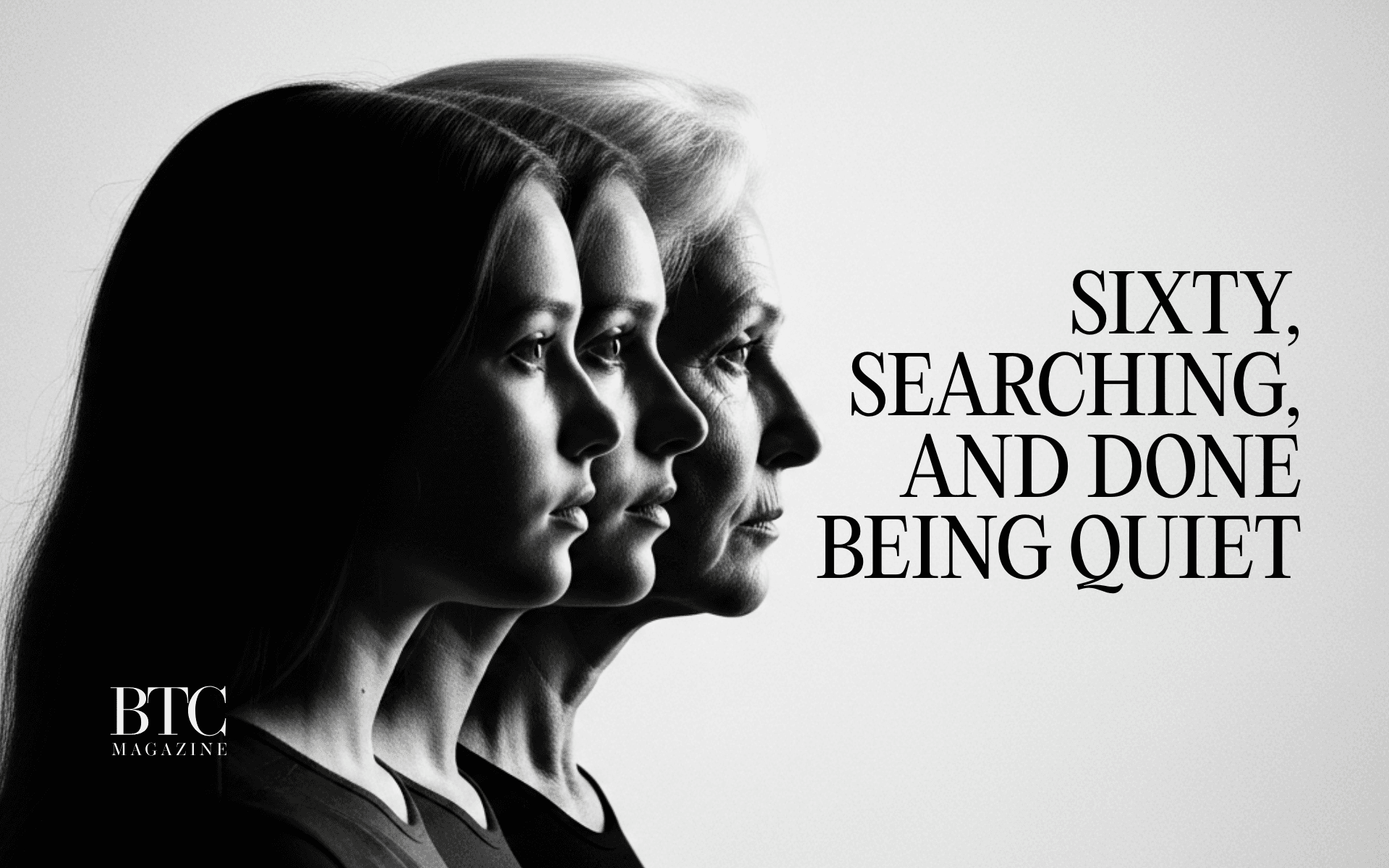
Have you noticed it too? How our generation—the Gen X women who were raised to be independent, resilient, and endlessly adaptable—are now quietly leading the most important rebellion of our lives? We may not be the loudest or the flashiest, but we are the ones who are finally saying enough. Not from anger. Not from spite. But from a bone-deep understanding that abandoning ourselves for others doesn’t earn us respect or appreciation. It only leaves us depleted, invisible, and surrounded by people who still expect more.I grew up watching my mother exist like that. She slipped into her rehearsed role with a kind of practiced ease, the martyr who kept everyone alive and everything functioning. And she resented it with the force of a hurricane. Her anger lived inside the walls of our home. Her bitterness was the soundtrack of my childhood. She loved us, but she hated her life. We learned not to approach her with our needs. And I remember thinking, I will never be like her. Not ever.So imagine the shock of becoming a mother myself and realizing—slowly at first, then all at once—that I had turned into the very version of her I despised. And I only had one baby while she juggled five. It is impossible to explain the panic that rises in your throat when you recognize in yourself the exact rage that once filled your childhood home. I thought I had lost my mind. I thought I was a horrible mother. I thought something was deeply wrong with me.When my daughter was six weeks old, I took my first commercial photography gig. She was literally attached to my boob as I worked, and the client was impressed that I could shoot a national campaign while breastfeeding. My confidence grew from that, but so did my exhaustion. The glorification of the self-sacrificing mother is powerful—and powerfully dangerous.I had the strength and the enthusiasm. I made motherhood look easy. Too easy. My husband felt comfortable enough to criticize me for not having the house spotless after another week of two-hour sleep stretches. He laughed at me for going to bed at eight-thirty. Meanwhile, he was getting his full night’s sleep and eight peaceful hours at work while I was spinning like a circus performer, balancing fire on my head to serve him his dinner on time.I know this wasn’t just my story because the hashtags began popping up. #Hotmessmama and #Mamaneedsadrink became confession booths where women everywhere were commiserating about being the default parent, the fixer of marriages, the household manager, the one researching dinner ideas at four o’clock and trying to figure out why the baby hasn’t pooped in two days, the only one worrying about a million little needs of our families and still facing weaponized incompetence. We all thought our exhaustion was a personal failure instead of the obvious outcome of carrying entire families on our backs.Then we were given the strange gift of clarity in the form of lockdowns.And because every Gen X woman has rebellion for her default middle name—along with the skill of survival and that stubborn independence that could move mountains—I said enough. Enough of men who want to be mothered. Enough of emotional labor that goes unrecognized. Enough of carrying the mental load of five people while being told I have it easy at home all day. I walked away from my marriage, and the second I did, I suddenly had more time than I’d had in years. Half my weekends. One evening a week.After I washed off all the guilt and shame for refusing to play the martyr my mother modeled so diligently—while resenting her life—in a salt bath, I discovered gratitude for having found the strength to rediscover self-respect. My ex hated having to step up as a parent, but when a woman stops participating in her own erasure, there is no going back.The first thing I did with that time was book a vitamin IV. I sat in the recliner with my feet up and a blanket over me, with a nurse checking on me as if I was a real human being who deserved care. The weight of feeling undeserving was palpable. But the true revelation came when I left the clinic and stepped outside. The world was colorful. I mean literally colorful. For years it had been gray due to depletion, and I didn’t even realize it until that moment.My body had been drained of two pounds of minerals during pregnancy. My coffee habit had kept me going and kept depleting me further. The oxytocin made self-sacrifice feel like I was living out my purpose. The lack of support meant I barely had time to rest or eat. The anxiety from being judged and shamed for asking for help drained my adrenals. The overwhelm dragged me into shutdowns that were my nervous system’s last-ditch attempt at survival. I wasn’t living. I was barely functioning.And here we are, the Gen X women who were told to build careers first, wait to have kids, get financially stable, and then everything would fall into place. Except the place it fell into was burnout. We had our babies in our mid- and late-thirties, already deep into careers, living far from family, carrying financial responsibility, raising babies with no village, and hitting perimenopause depleted at the exact moment when we needed support the most. Our hormones shifted, our capacity shrank, our patience thinned, and our exhaustion settled into our bones. This isn’t a mystery. It’s math.The rebellion wasn’t leaving my marriage. That was just the side effect. The rebellion was choosing myself and stepping away from the prescribed role, and focusing on my needs for the first time in many years. I devoted my reclaimed time to resting without apology, reconnecting with friends, creating for my business at a human pace, finding joy in my own body again, slowing down, and savoring moments I used to rush through. I started to rebuild myself from the inside out.And no, it wasn’t glamorous. I wasn’t going on spa retreats and lighting two-hundred-dollar candles. I was taking slow aromatic baths because they soothed me. I was massaging my face with rose oil because it healed my heart. I was dry brushing because it energized me. I was drinking hot chocolate or warm broth in the afternoon because it grounded me. I was moving my body because it helped my anxiety. I was meditating in silence because it helped me hear myself again. I was turning mundane routines into rituals that reminded me I am a person, not a machine.I rebuilt myself with small moments. Micro-moments that belonged only to me. And that was enough to bring me back to life. My daughter became more calm and less stubborn, and we created rituals for both of us to enjoy together. Now she is the queen of self-care and listens to her body like a pro. I couldn’t be more proud.Self-care rituals didn’t fix my life. But the rhythm they created and the self-love my body could feel supported my nervous system in ways I didn’t know I desperately needed. They brought me back into my own body. They kept me from spiraling into anxiety when life felt like too much. They softened me. They steadied me. They reminded me how to feel joy again. They helped me forgive myself for allowing myself to become the default parent and heal my nervous system so I could enjoy my creativity and my motherhood journey again.I never had a close relationship with my mother. It took me decades to let go of the fantasy of being held safely in that relationship. But I have grown to forgive her because I now have clarity and understanding of just how hard it is to hold everything together and how challenging that is for a woman’s nervous system. And having this life experience has also helped me forgive myself, which is always the most important step in healing oneself and in breaking the cycles we were programmed with.I celebrate our generation of women refusing to spend the next half of our lives disappearing behind duty and expectation. I refuse to be everything to everyone while slowly becoming nothing to myself. The rebellion is simple. It is choosing yourself. Not selfishly, but honestly. Not once you collapse, but now. Not as a treat, but as a daily commitment to your own humanity.This is what women my age are discovering everywhere. We don’t want to burn down the world. We just want to come home to ourselves. And that, truly, is the most radical and most feminine rebellion of all.About the AuthorHenrieta Haniskova is a nurse and clinical aromatherapist exploring the intersection of psychodermatology, women’s health, and sensory ritual. Through her practice, she helps women restore nervous-system balance and emotional vitality using nature’s most intelligent language: touch, scent, and presence.

.jpeg&w=3840&q=75)
.png&w=3840&q=75)